
In 2022, the global perfume market should reach $70 billion. With a 30% annual growth, the perfume market is one of the most profitable in the world. Surprisingly, it is the only market where China is not the first market. Indeed, back in 2014, only 1% of the Chinese population was using perfumes compared to 60% of Europeans. Today, the young generations and especially the Millennials are boosting the perfume market in China. Why? Fragrance personalization is everything in China. When international perfume brands want to perform in China, they should retain one thing: customization is the key!
Understand Allegra Perfumes Success: Customization
What is Allegra, The New Bvlgari Perfume Line?
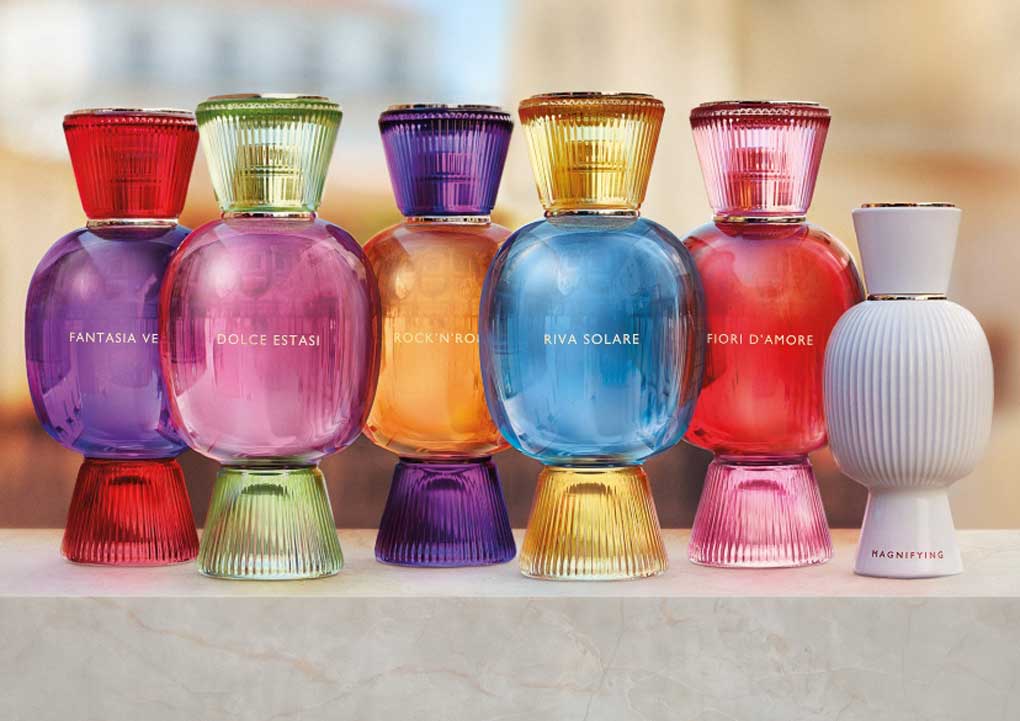
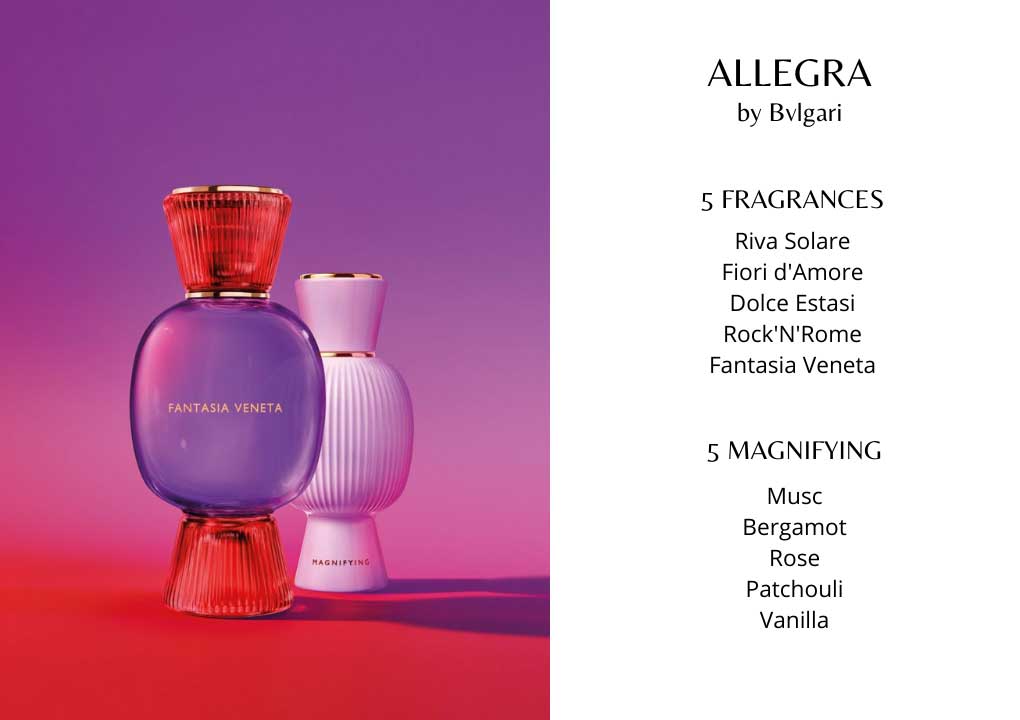
Launched in January 2021, Allegra is composed of 5 fragrances and 5 magnifying scents. They are supposed to embody 5 moments and 5 emotions inspired by an Italian escape. For instance, Rock’N’Rome shares the sensoriality of an Italian “aperitivo” in Roma while drinking a Spritz with zesty notes. In a word, you can feel emotions and travel only thanks to a fragrance. And not any fragrance… You have the possibility to create your own fragrance as unique and bold.
For their communication strategy, Bvlgari insists on the “let go”. You have the ability to reveal your true self and be even more beautiful by just being you. They launched the hashtag #MagnifyForMore to gather a community on social media. Users mainly post the hashtag on Instagram and start to post it on Little Red Book and Weibo.
Chinese Taste for Personalization and Customization
In China, the perfume market is driven by Millennials. This segment of the population is more open-minded but more individualist compared to older generations in China. They are always looking for the latest editions and latest trends to differentiate themselves. It clearly explains why fragrance used to be less attractive for Chinese – because everyone wears the same. The most popular international fragrances from Dior or Yves Saint Laurent have then a specific name among Chinese youth: the “street scents”. They want perfumes that are both unique and original.
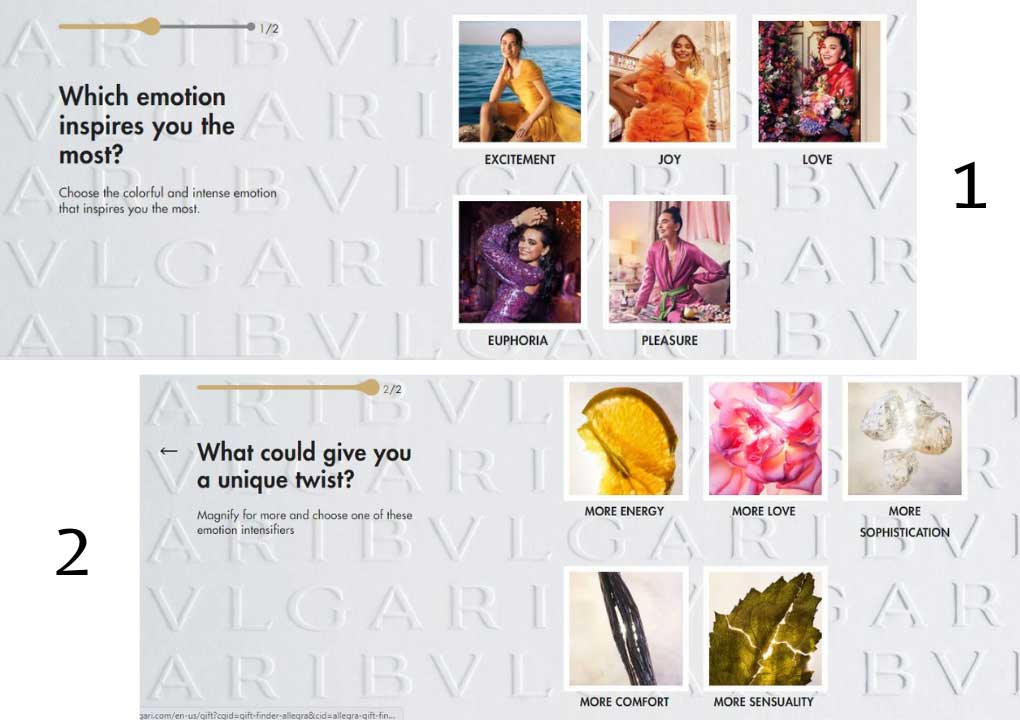
For Bvlgari, the ability to customize your fragrance depending on your emotion is unique. Chinese fragrance lovers have the possibility to create different scents and claim to be part of the “Allegra family” while having their own particularity. The authenticity of each person prevails. For instance, on their website, you can find a quiz to help you find your perfect Allegra fragrance only by chosing an emotion and an ambition.
Chinese Luxury Shoppers Buy A Perfume Like a Jewel
In China, the price is often associated with the quality of the product. The more it is expensive, the more it is qualitative. Bvlgari is the perfect example of a pricing strategy that suits Chinese preferences: reflect the premium quality of the fragrance with a high price. Indeed, the “street scents” or the luxury brands’ perfumes are often about $100. With Allegra, the perfume cost $230. The Chinese consumer has the feeling to buy a luxury product instead of a mass fragrance.

Bvlgari wanted to showcase an image of quality thanks to expensive fragrance but also thanks to precious packaging. The bottle of Allegra is a jewel. It is the first step into the universe of the jewelry brand.
In China, it is a profitable strategy as it could be the first step into a luxury purchase for Millennials. After acquiring a Bvlgari fragrance, Chinese young consumers will look to buy a jewel or a bag from a luxury brand. In China, consumers are not loyal. If they purchase a bag they will not come back to your brand, they need to find a wider range of products or extraordinary products.
What Are the Key Success Factors for Fragrance in China?
Young KOLs – Target Millenials
If you launch your perfume brand in China, you should better target millennials and young consumers. To do so, Bvlgari decided to use famous KOLs among Chinese youth. For instance, Chinese millennials want to purchase brands they feel close to. How? By being represented. Having a Chinese model or a local KOL that people can identify with is a key strategy.

Bvlgari decided to benefit from the success of Korean music in China by working with Black Pink. Since 2020, the brand ambassador for perfumes in China is Jackson Yee. For the occasion, he highlighted his favorite fragrance among all Bvlgari perfumes: Rose Goldea Blossom Delight. His community wanted to purchase the same fragrance and Bvlgari sales rose. The luxury brand decided to surf on the trend of KOLs by inviting young Chinese KOLs to its PR events.
Weibo – Increase Brand Awareness

Weibo is the Chinese Twitter… with way more users. Some figures for you to understand the power of this social media, there are 326 million monthly users on Twitter compared to 523 million monthly users on Weibo. It is the number one “buzz apps” in China. The moment you share content on Weibo, you can expect great visibility from Chinese netizens.
If you are a fragrance brand, you definitely need to create a Weibo account. You can increase brand awareness by posting content, interacting with your community, and hosting live streaming sessions. The possibilities are numerous, you just need to understand what the Millenials are expecting to watch on Weibo. You should repost fan posts or user-generated content (UGC) to increase your brand awareness. The more you have followers, the quicker you will build a community.
Little Red Book – Increase Brand Engagement

Little Red Book, now called RED, is the Chinese Instagram. On this social media, netizens could spend hours sharing content and watching videos. Today, there are more than 300 million registered users on RED. Among them, 70% were born after the 1990s. This is the perfect app to include in your strategy in China to target Millenials and Generation Z. They will be more sensitive to your brand and you will reach a higher engagement.
For instance, when Jackson Yee mentioned the Bvlgari fragrance, reactions on RED were huge. The functioning of this app is based on word-of-mouth. In China, people pay a lot of attention to product reviews and recommendations. Then, RED is the perfect platform to build your e-reputation. Any information is spread very fast on Little Red Book… including bad buzz. You definitely need to monitor your reputation online.
Read as well: Xiaohongshu Marketing Guide
Build your brand image and your e-reputation in China
From the creation of your social media account to the partnership with local KOLs, you need to find a local agency to rely on. Thanks to our 70+ dedicated team of experts, we can help your fragrance brands to perform in China. You can submit your project in China here.