
Every foreign brand promoting itself on the Chinese market, if doing it successfully, will reach the point when it needs to find reliable China distributors or trading companies that will sell brands’ beauty and wellness products in China cosmetics market.
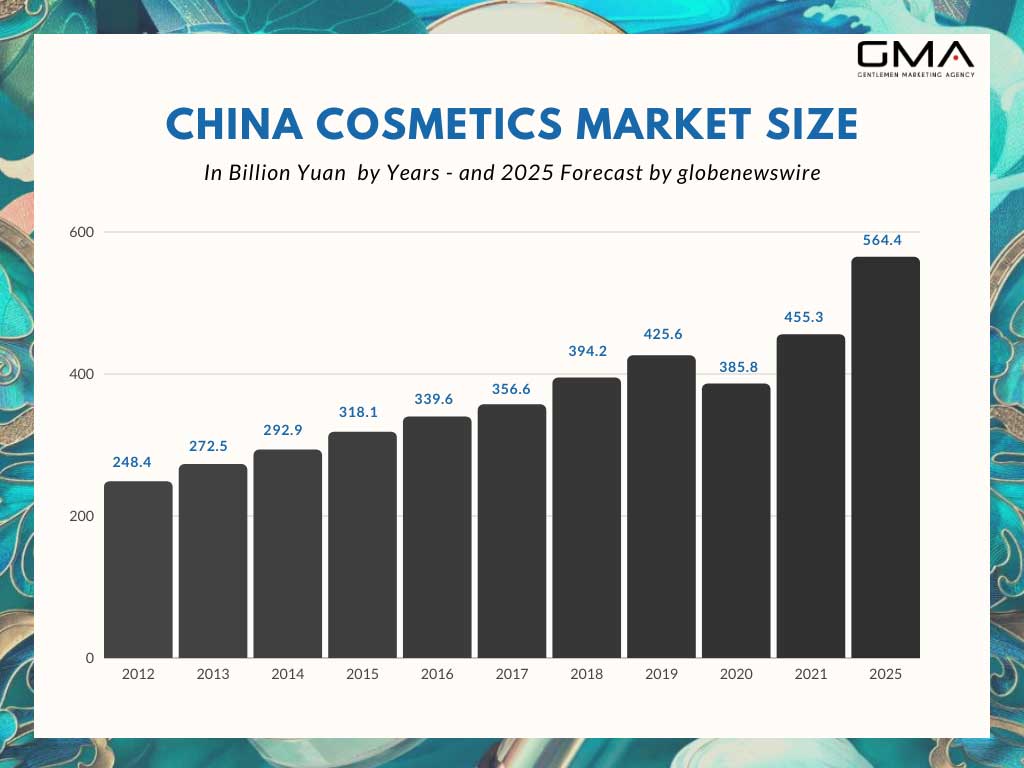
The Chinese cosmetics market is the second-largest in the world, predicted to reach 564.4 billion yuan by 2025. The time for companies selling beauty products is now. Although there are many foreign businesses in the Chinese market, that sell products to Chinese consumers, the demand for good-quality beauty products is still growing. Therefore, this blog post will show you the best ways to attract Chinese distributors and manufacturers on the wholesale markets to your brand.
Overview of China’s beauty & cosmetics market and its trends
In 2012, the cosmetics market in China was worth 248.4 billion yuan, while in 2021 the number nearly doubled. It’s expected that the market will reach 564.4 billion yuan ($87.64 billion) by 2025, with an annual market growth of 13.76%.
Chinese shopping behaviors are changing, as the driving force of the Chinese cosmetics market has shifted to younger generations. More and more consumers start to invest in good-quality skincare products and other cosmetics and makeup products, especially when it comes to Millennials and Gen Z.
One of the biggest trends from recent years in the cosmetics market is natural cosmetics. Chinese young generations are more health and environment conscious and want to buy products, that are not harmful to either of those. As they become more health aware, they also invest a lot in dermo-cosmetics and medical skin care, purchasing facial mask products, anti-aging creams, and other skincare products for sensitive skin.
And, two more big segments that are recording big growth are male cosmetics and baby skin care. Men want to look good and they don’t look at cosmetics and skin care products as something that is reserved for women. They invest in good creams and gels and a sensitive skin product range, usually preferring products from foreign companies to Chinese companies due to the product quality.
Where to find the best cosmetic distributors in the Chinese market
- Supermarkets like Auchan, Carrefour, Wall-Mart
- Specialized beauty Store chains like Sephora
- Local Stores
- Para pharmacies stores like Watson
- Stands – events in Commercial Stores
- Online Beauty websites
- Taobao / Wechat Resellers
- Tmall / JD resellers
- Special beauty apps or
- Daigous– resellers
There are many different ways to distribute your cosmetics in the Chinese market, but before thinking of where you’d like to distribute your brand, it’s important to have a good strategy for how to attract local distributors to your brand.
How to attract beauty products distributors in China?
The most important thing in China is expanding a strong network and valuable connections in the Chinese market. China distributors don’t want to do business with people that they never heard of (from people they know, but also online). In order to find reliable local distributors, you need to work on your relationships by participating in events and trade shows and branding your company online. If people know who you are, they’re more likely to trust doing business with you.
Chinese website + Baidu SEO
A good website in Chinese hosted in China is the first step to make. Chinese distributors and consumers search for products and brand information online and the first place they check is Baidu (international businesses and foreign companies won’t be treated differently in this sense).
A Chinese website works like a hallmark of your brand, so you need to make sure that you provide all the necessary information on the site. Remember about a chat box, so distributors can get fast answers from you, and work on your search engine optimization so that you rank on the first page of Baidu SERP and other search engines in China.
Chinese forums and PR
Participating in forums has many advantages. It’s one of the easiest ways to build branding and e-reputation. As customers speak about your goods, they demonstrate an interest that will not go unnoticed by Chinese distributors and qualified suppliers.
Participating in forums also helps your Baidu SEO, and so is the PR strategy. The more people talk about you online, the bigger chances are that you attract customers and China distributors to your brand and the luxury goods you offer.
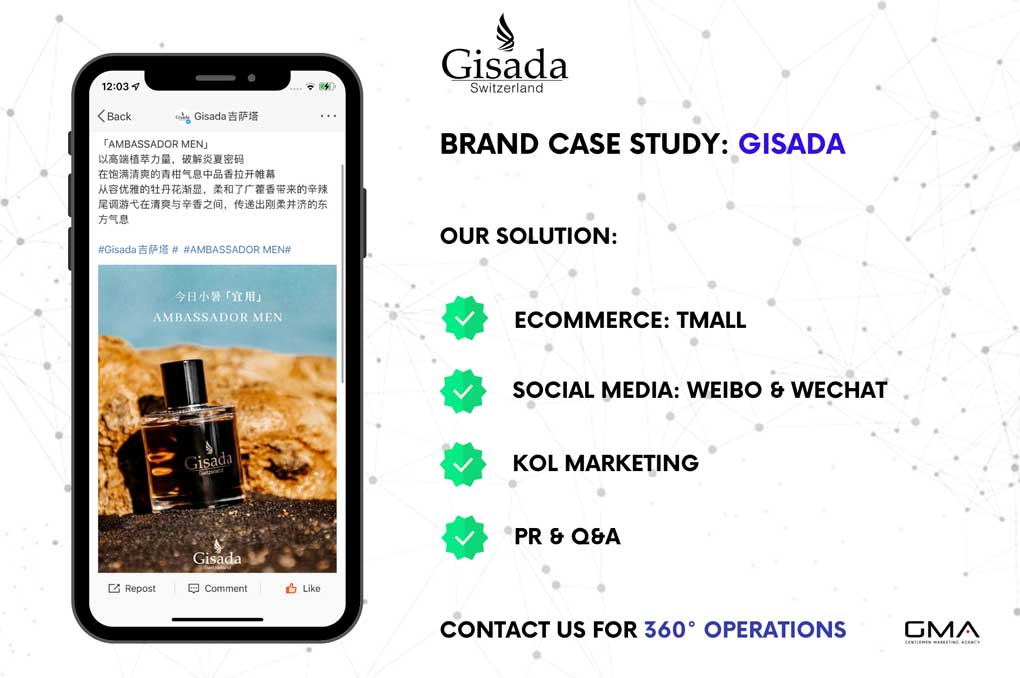
Chinese social media accounts
Although having a website is also important, as it’s a hallmark of your brand on the Chinese internet, when it comes to branding and e-reputation, the most important tools are Chinese social media. People in China use social media to communicate with friends, check the news, brands they like, influencers they admire, and many more. If you have a cosmetic product to sell, there is no better place than social media.
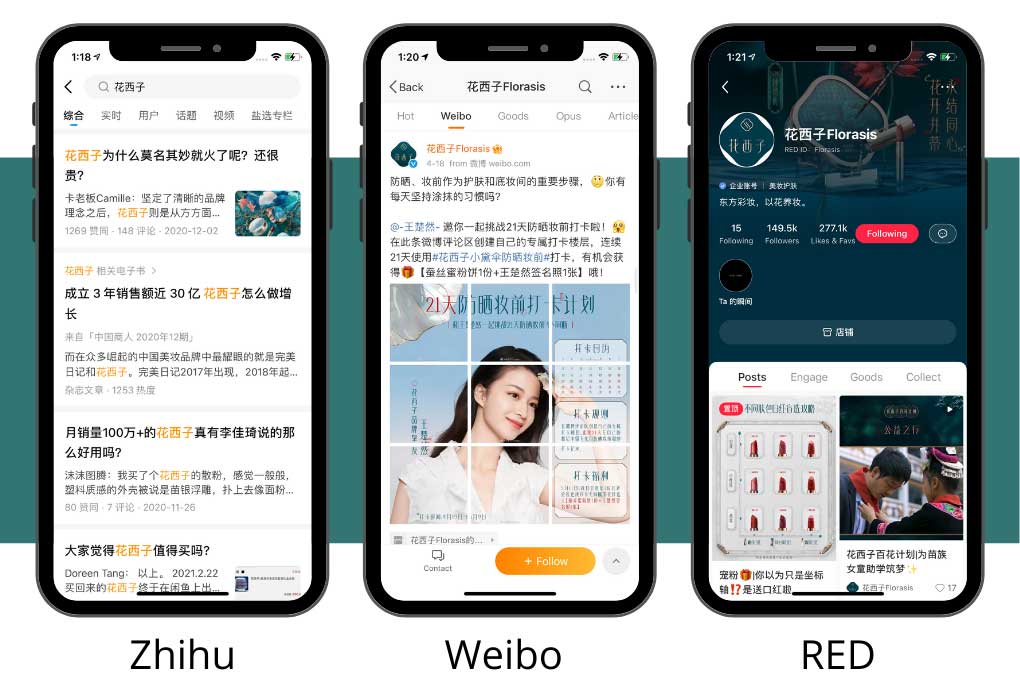
The most important platform for branding, but also for communication with distributors is Wechat. All the good brands have official accounts and stores on the platform, where 1.26 billion people look for information every month. It’s the go-to platform for all Chinese netizens on a daily basis.
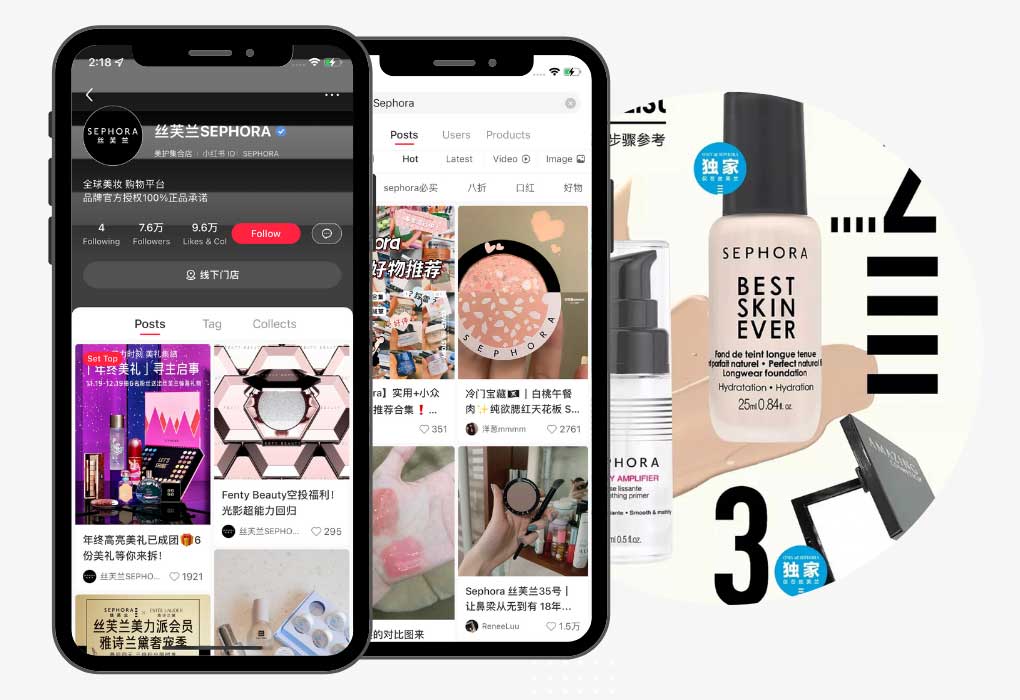
Another good social media platform, especially when it comes to China cosmetics market is Xiaohongshu. Sometimes called Chinese Instagram, Xiaohongshu gained popularity thanks to its user-generated content, where users share product reviews and recommendations. Xiaohongshu is also a very popular platform for Chinese influencers.
We can be your agent in China
- Contact us
- Send us your Products information and company profile
- Your Brand value and story
- and all information you have in Chinese
All over China, you can find resellers, wholesalers, and online Sellers offering their services at affordable price. To own your own offline official shops all over China is no longer the only strategy and e-commerce platforms and e-payment has already become the new style of shopping.
We help international businesses to reach out to Chinese people and start importing products to the Middle Kingdom for more than 10 years. Over this time, we built a good relationship with many China distributors and we can help you build a good relationship with a potential partner of your brand in the Chinese market.
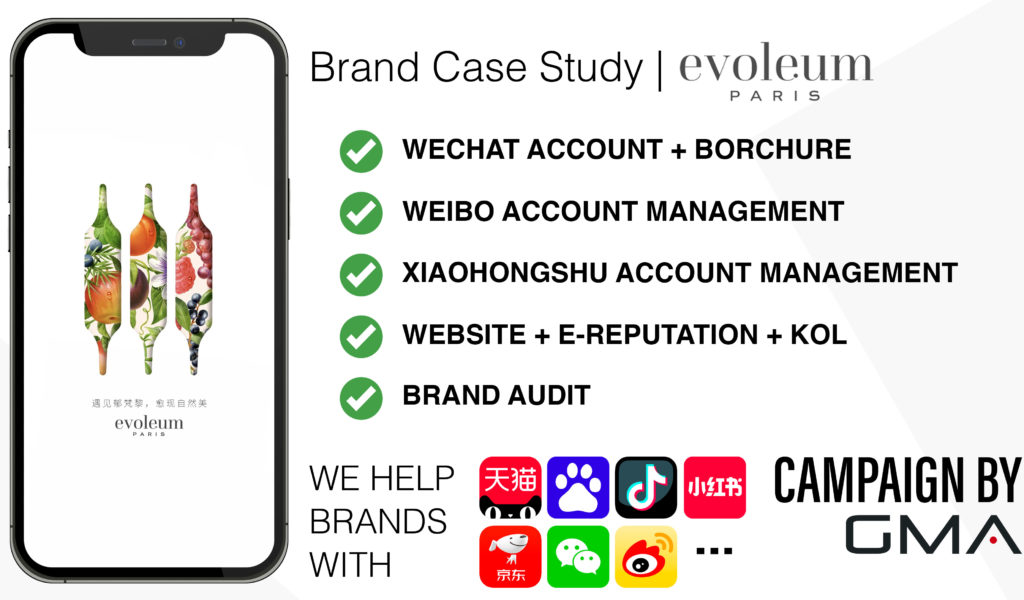
Your Distributor/Agent in China
We Can be your Distributor / Agent in the Chinese market if your Brand has potential.
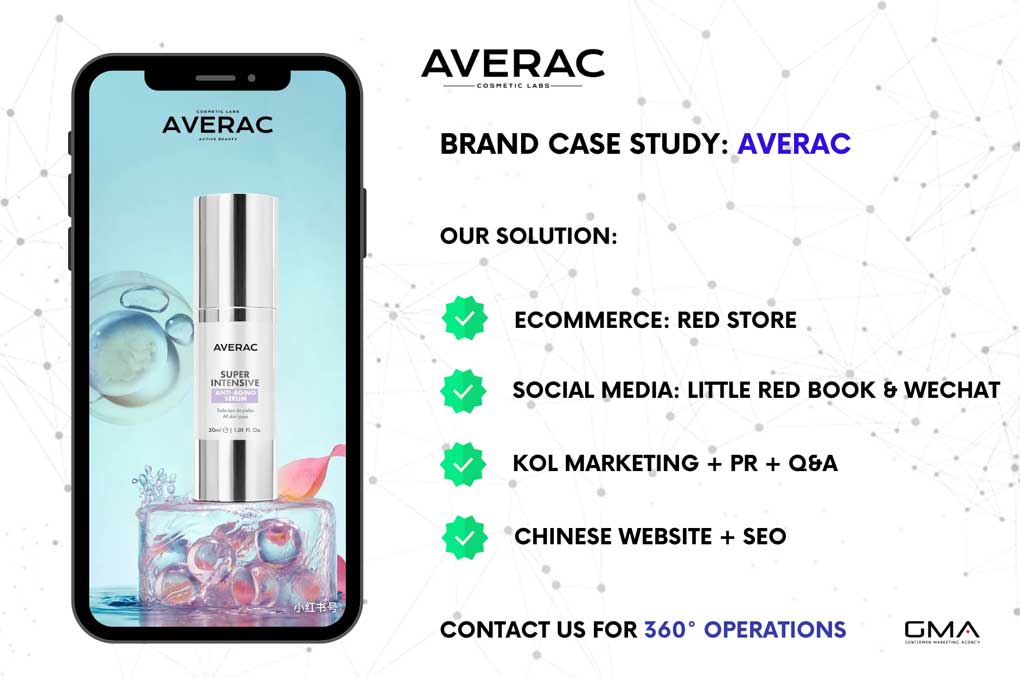
If your Brand meets the Chinese Distributor’s requirements and is already popular in the Chinese market. We will be glad to have a call with you to understand how we can help you. If you didn’t build a presence in the country yet, we can help you with your marketing strategy, so you’d attract wholesale clients and partners that will be interested in beauty and makeup product distribution.
We also can use the Tmall B2D strategy to resell your Brand all over China.
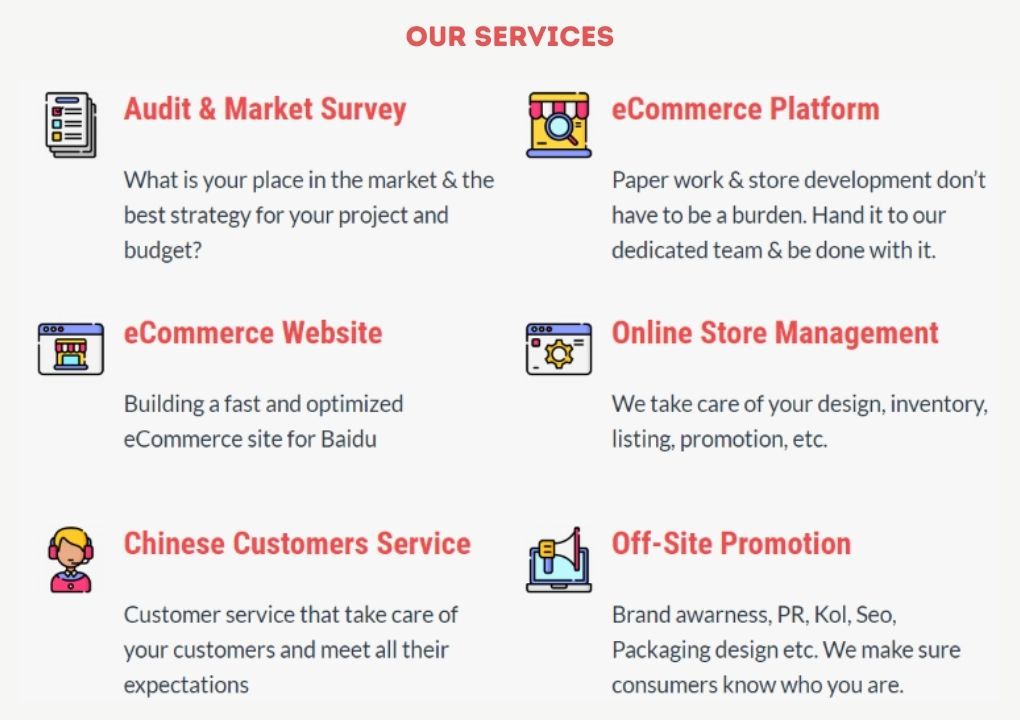
Your Marketing Agency in China
The key to unlocking distribution in China is Marketing. Strong Branding can & will attract a lot of resellers & Distributors.
Over more than 10 years in business we managed to build strong relationships with many distributors in the cosmetics industry in China. We can help you find the best distributor for your needs. Don’t hesitate to leave us a comment or contact us to discuss your options in China.
47 comments
Mert Ömeroğlu
Hello, This is Mert from KIRMIZIGUL COSMETICS Istanbul-Turkey. (our web site https://www.kirmizigulkozmetik.com/)
We are one of the leading Hair care products manufacturers, established in Istanbul and has 25 years of experience in the sector, and we are looking for a distributor in China, please contact me.
admin
We will contact you for sure
Sahar
Hi I’m in China over Christmas please contact me to discuss potential markets
Rocky
Hello There,
How are you? We are a vegan and sustainable Korean skincare brand. We are selling on Amazon also. Now we want to sell our product in Chinese market. Please let me know details procedure like how much you will charge. Thank you.
Rocky
Rakesh
We are marketing company having facewash, gels and soap products. Let me know how can i get help for distribution of our brand.
Zeeshan Hassan
Hi,
My name is Zeeshan, and I am the Sales Manager of EVERGREEN COMMERCE LLC based in the United States.I am looking to add a supplier where I spend the amountof $10-20,000 a month profitably. I have the authority to purchase the inventory.
I have my own website https://egcus.com where we sell the product, also I do sell on Amazon, but please keep in mind that I’m not an “Amazon Seller”. I’m an e-commerce business person who sells on Amazon because it allows me to spend more money with my suppliers each month. We do prefer MAP policies with suppliers, do you have a MAP policy in place?”
“I’m looking to spend another $10,000-100,000 a month with a new supplier and if I can profitably spend $50,000 a month and don’t have the capital, I’ll go find the capital”.We’re building a real business and looking to add wholesale accounts where you can profitably spend a large amount of money each month.
if you have SKUs that fit my buying criteria I’d love to carry them.please provide me with the following information.
1) Prerequisites to open a business account
2) Price list
3) MAP policy
4) Minimum order quantities (MOQ)
What requirement do you need from my side to open a business account I am happy to provide you as early as possible.
I had a look at your website and I found some amazing products I am very interested in opening a business account with you.
Please email me at [sales@egcus.com] or call me at (315-636-5256) so we may speak further.
Best Regards,
Name: Zeeshan
Designation: Sales Manager
Company Name: EVERGREEN COMMERCE LLC
Company Address: 1415 RALSTON BRANCH WAY, SUGAR LAND, TX 77479
Email Address: sales@egcus.com
Phone Number: (315-636-5256)
Website Address: https://egcus.com
Sales Tax Number: 32086475632
EIN: 88-4131898
Joey
Hi
I am looking for distributor to supply me beauty cosmetics/ products which i can resell in my country.
B2B sales, looking forward for some reference or recommendation .
Thank you.
Anis
Greetings.. Masha Cosmetica is a cosmetic products company. We have a range of skin care products and a very unique prickly pear seeds oil as anti-aging product.
We are looking for a partner in China to market our products.
For contact: info@masha-cosmetica.com
Leogirl
I am Leo girl, looking for a wholesaler that can disturb body cosmetics products to my country at a affordable rate
Xavier
Hi contact me at xavierlarralde@gmail.com
We have lots of branded cosmetics
Dolores Admin
Hey there,
Please drop us a request here and lets have a talk about your need in China 🙂
Xavier
Hi, I have contacted you through email, waiting for your reply.
I want to sell famous brands in China, especially secondary market and wholesale
Wechat: XavierLB
Tel: 13681834014
Vitaliy
Hello,
We are looking for a distribution partner for China. We have high quality, Swiss formula positioned brand in skin care.
Please contact me in the convenient way to discuss the potential partnership.
Thank you!
Kind regards, Vitaliy
Jerry
Hello
We are a distributor of Beauty products online, and we are searching to collaborate with Brands from foreign country.
We need good packaging for China, and good popularity.
The brand should be good quality.
Open to negociate setup fees and commission
Anis Arioua
Greetings from Tunisia, from Mediterranea,
We are a skin care company based in Tunisia, we have a range of skin care products mainly serums. We are looking for a partner in China to import and sell our products.
Please do not hesitate us if our proposal is of your interest.
Best regards
Anis
Hello, please contact us at info@masha-cosmetica.com
Christophe GOËHEN
Dear Jerry,
We are looking for partner to distribute on a large scale our brand in China. New french luxury brand.
We would like to discuss with you on this opportunity.
Can you please PM me @: christophegoehen@hotmail.com
Best regards,
Christophe
John
Hello Jerry,
Thank you for contacting us.
we have add you to our distributor list, and we will send you brand that want to enter the Chinese market.
Pat Pattama
Hello
May I have your permission to post an advertise on your wechat group for distributor please?
Sale 30 baht 50ml
Anyone who wants a hand washing gel, size 50ml, wholesale price at 30 baht, there is no additional addition because we wholesale at manufacturer prices. Products meet FDA standards, clean, safe, and easy to carry. We are the manufacturers themselves. Can be bought at the manufacturer There is no shortage We have for sale throughout.
Anyone interested please contact me. Thank you.
Jing
Hello.
Please contact me if you would like to sell or Market your product into China. I am based in New York and our professional distribution agency is located in Shenzhen.
Contact:
Thanks
Christophe GOËHEN
Dear Jing,
We are looking for partner to distribute on a large scale our brand in China. New french luxury brand.
We would like to discuss with you on this opportunity.
Can you please PM me @: christophegoehen@hotmail.com
Best regards,
Christophe
Lama Abbasi
We are manufacturers of skin & hair care products based on Dead Sea minerals. Our product range have gained popularity in Europe, Eastern Europe, South East Asia, Austria & the Middle East for their healing, soothing and relaxing effects. ALZARA natural product range comprises of the following : Dead Sea Bath Crystals, Dead Sea Black Mud Mask, Magic Mud, Dead Sea Salt Scrub, Facial Wash, Mineral Scrub, Black Mud Soap, Olive Oil Salt Soap, Anti Wrinkle Cream, Nourishing Night Cream, Eye Gel, Face Moisturizer, Hand Cream, Foot Cream, Mineral Shampoo, Mud Shampoo, Hair Conditioner, Body Wash & Body Moisturizer.
We are looking for agents to import our products to China in bulk form.
If interested, please contact me. Thank you
admin
We add you in our distributor database 🙂
Youssef ADROUJ
MORGANICOIL is a Luxury moroccan skincare brand, have a look at our website and let me know your thoughts.
admin
We can help you to first adapt to the Chinese market, and then find partners, resellers and distributors or sell directly in China.
Mo
Hello,
We are a manufacturer of healthcare products in the middle wes, and we would like to identify potentials partner, distributors and wholesellers in China. We have tried to contact several without success, and participate for 2years to exhibition in China, without succes.
How can you help us?
John
Yes sure we can help you. We already contact you 🙂 Mohammed and hope we can collaborate soon when you are ready.
Vicky Ren
HI,
We would like to Re sell new Brands from Europe to China, cosmetics skin care, it s all ok. We are a live streaming group, with hundreds of live streamers. We are selling products only on commission, and we mainly work with good brands , already popular.
John
Hello
We add you in our distributor list 🙂
We will introduce our clients
Wangxiao
Hi
We are a Distributor online of Beauty products and want to resell foreign Brands. Contact me
Anis
Hello, we are interested in your offer. Can you kindly write us at info@masha-cosmetica.com
EMANUELA VILLANI
Hello, we are an italian wholesale company dealing with luxury brands such as Ysl, Givenchy, Gucci, Estee Lauder and so many others.
We are now collecting orders for YSL Slim lipsticks!
Contact me to exchange information!
Leon J. A. Van Keeken
Please send us your company profile.
Liza Platunova
Hi,
My name is Liza and I work for Teana Labs. For almost 12 years now, TEANA has been producing unique professional cosmetics.
Please, contact me at aak@teana-labs.ru
Thank you!
Youssef ADROUJ
Contact me please at contact@morganicoil.com
admin
I send you a wechat message.
We will add you to our distributor list, thank you Wangxiao.
Valaryk
Hello
We would like your assistance to Sell an organic Brand to China.
Imperial crown
admin
Sure, we would be glad to help you. Email please always more effective than comment
Chris
Chinese are dealing with Wholeseller and it i is a LOT different than dealing with Distributor in Europe or in the US.
They don’t reallycare about permits or certificates. You don’t need to have a sellers permit, brand value…
You need to come across as someone who has purchasing power when you first contact them, so pretend to have a Great Brand
nice looking website, Followers on instagram, Weibo Red, you need to have media coverage and KOL, they love KOL.
admin
Thank you for this information, you are 100% right Chris.
Cindy
Hello ,
We have a distribution network across more than 30 cities, covering department stores, cosmetic boutiques, large supermarket chains and electronic … operation and development mechanism, achieving a leading position in the Chinese beauty market. We would like to collaborate with you.
Najla
Hi
We are a Moroccan company specialised in bio cosmetic products. We have a large variety of products based on argan oil, saharanpur plants and camel fat.
We wish commercialised our products in Chinese market and wr look forward for an eventual cooperation.
Leon. J. A. Van Keeken
Dear Cindy, please send us your company profile.
Leon.J.A van Keeken
Dear Cindy, please send us your company profile, website and references for a possible business cooperation. Our Email is : leon@imdsglobal.com
admin
We add you to our distribution network. You are working for a famous brand and want to help / integrate other Brands in China with different segment.
😉
Eduardo Emilio
Vida For You is a Luxury skincare brand, have a look at our website and let me know your thoughts.
Thanks
Eduardo Emilio
admin
I contact you several times, but you never reply. Strange