
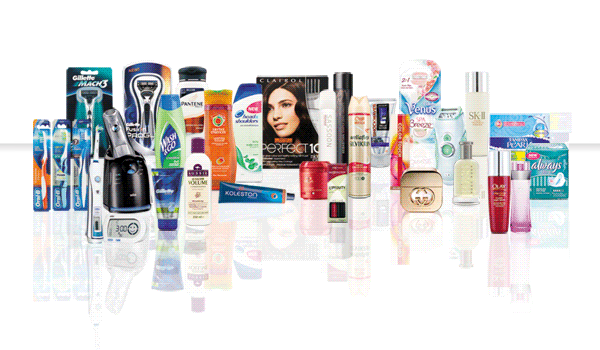
Market competition is increasingly coming from Asian and other Western companies. European cosmetics brands should proceed with caution in the Chinese market. The departure of Garnier from China in 2013, and Revlon’s exit, showed that European brands must adapt and innovate to survive. L’Oréal decided to pull Garnier and focus on Maybelline and L’Oréal Paris instead. In 2026, the lesson is even clearer: positioning and channel strategy decide everything.
China’s cosmetics market has grown from $21.9 billion in 2013 to over $67 billion in 2025. The opportunity is massive, but so is the competition. Korean brands (AmorePacific, Sulwhasoo, Laneige) and Chinese domestic brands (Florasis, Proya, Perfect Diary) are faster, cheaper, and more culturally fluent than most European newcomers.
The barrier for Western brands is not market size, it’s the failure to beat local competition on relevance. European companies often develop products for Western skin tones, while Korean and Chinese brands are formulated specifically for Asian skin. Add the cost of NMPA registration, complex logistics, and a digital market that changes every six months, and you understand why so many European brands struggle.
2026 Trends: What’s Driving the Chinese Cosmetics Market
- Domestic brands are winning on social proof: Chinese brands like Florasis and Proya dominate Xiaohongshu (Little Red Book) with authentic UGC content and KOL partnerships that European brands struggle to replicate.
- Skincare beats makeup: Post-pandemic Chinese consumers invest heavily in functional skincare, serums, actives, medical-grade products. Brands without a clear ingredient story lose ground fast.
- Cross-border e-commerce (CBEC) is the entry door: Tmall Global and JD Worldwide allow European brands to sell in China without full NMPA registration, reducing time-to-market from 18 months to 3.
- AI and GEO reshape discovery: Chinese consumers use Doubao, Kimi, and Baidu AI to search for beauty products. Brands not optimized for AI-generated answers are invisible.
- Luxury positioning still works: Premium European brands, Sisley, La Mer, Guerlain, succeed because Chinese consumers trust European heritage in the luxury segment. Mid-range European brands face the hardest battle.
Questions Marketers Ask About Entering the Chinese Cosmetics Market
Do I need full NMPA registration to sell in China?
Not immediately. Cross-border e-commerce via Tmall Global or JD Worldwide lets you sell without full registration. It’s slower for growth but removes the 12-18 month registration barrier. Once you validate the market, move to full registration for domestic channels.
Which platform should I start with?
Start with Xiaohongshu (Little Red Book) for brand awareness, then move to Tmall or JD for conversion. XHS is where Chinese consumers discover new beauty brands. A brand with zero XHS presence in 2026 is a brand Chinese consumers don’t trust. For luxury brands, WeChat private domain adds a retention layer.
How much budget do I need to launch in China?
A realistic test launch via CBEC with 3-6 months of KOL activity on XHS requires â¬80,000-â¬150,000. Full market entry with NMPA registration, Tmall flagship store, and sustained KOL program starts at â¬300,000 per year. Brands that enter with less either exit within 18 months or plateau at low revenue.
Little Red Book (Xiaohongshu) and UGC: The Real Entry Point for European Brands
Xiaohongshu has 300 million monthly active users in 2026, and 80% of them check XHS before buying a beauty product. For European brands, XHS is not optional, it’s the first point of contact. The platform combines Instagram-style visuals with review credibility. UGC (user-generated content) on XHS drives more purchase intent than any paid ad. The strategy that works: seed 20-30 micro-KOLs with your product, let them post honest reviews, then boost the top performers with paid promotion. European brands that try to control the message too tightly fail. The ones that trust the platform’s review culture win.
I have worked with brands including L’Oréal, Sisley, Clarins, Novexpert, Yon-Ka, and Beiersdorf on their China digital strategy. The pattern is consistent: brands that invest early in XHS content and KOL seeding build a foundation that paid channels boost. Brands that skip XHS and go straight to Tmall ads spend 3x more for the same result.
Read also: Most Brands Failed Because They Didn’t Understand China | The 5 Topics That Truly Matter to Chinese Beauty Consumers | The Functional Face Serums & Creams Market in China
Free Social Media Audit for Your Cosmetics Brand
Not sure if your brand is ready for China? We offer a free social media audit, we analyze your brand’s current positioning, identify the right entry channel, and give you a clear action plan. No obligation. Book your free audit here.


