

Focus on Wechat, Social media leader in China
You have probably heard about Wechat, often compared to the American giant Facebook? The comparison here is not really valuable because Wechat and Facebook cannot be compared.
First because Facebook didn’t succeed to be the social media leader in China due to censorship and second because unlike Facebook, Wechat has perfectly understand Chinese consumers’ needs and how to attract international brands. Some figures:
65% of Chinese are using Wechat
More than 600 million users and 100 million of them are outside China
Wechat is owned by the giant Tencent
Here we will give you some reasons why Wechat has succeed to be the leader of social media in China.
Wechat is a complete social tool
- The architecture and the design of the platform is well made. If you are looking closely to the design of Wechat, you will see that it can be compared to mobile phone’s functions in all in one: messages, contact and photo tab. Here below a picture of mobile and Wechat at the right
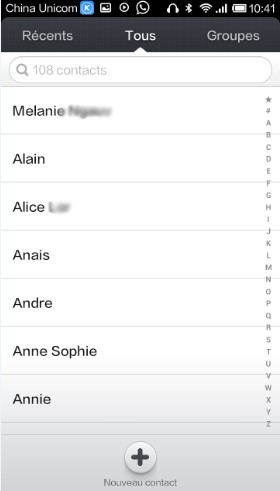
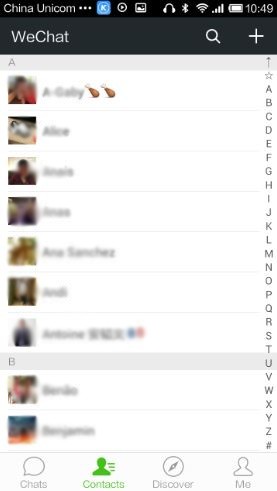
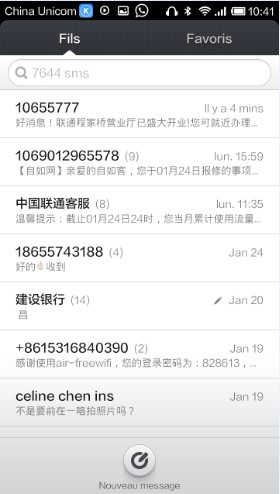
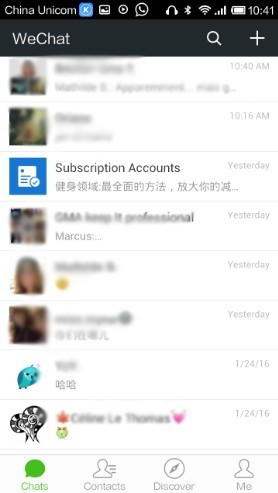
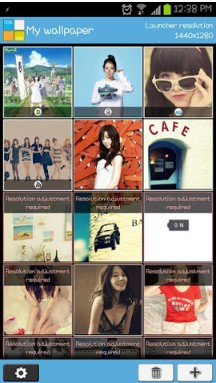
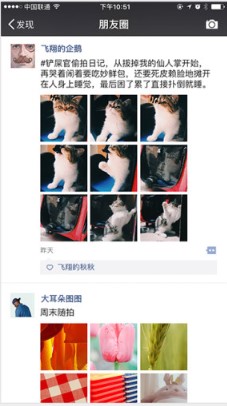
It is more convenient to go on Wechat than surfing and switching among 3 different tabs.
- Wechat is an advanced social tool in terms of value.
It is not just chatting with your friends but it is sharing interesting content and discussions about a link or a video. It is not texting but it is sending video message, audio message and animated message with emoticons. It is not sharing just pictures to your moments but it is about sharing your passions, what you like, what you are doing and what you have purchased, a way to show your social status. It is not about having just friends or relatives contact, but it is also about building a professional networking.
- Talking about professional networking, Wechat has developed different tools dedicated to a more professional aspect of this social network. For example the calling tool for free, you can video call or voice call for a meeting, conference call with 9 people…etc. Wechat tends to be a social tool but also a professional tool.Here a really interesting article about Wechat success as a complete social tool, you can click here.
We can do almost everything on Wechat
“Wechat gave me the feeling that I can do everything on it, purchasing goods, sending messages to my friends, pay the doctor and hailing taxi…etc. Wechat is incredibly useful.” said, Jennifer, marketing executive of fashion brand.
You can actually find all your need in Wechat that is the reason that explains the success of this social media in China and bring it as a leader position.
It is an all in one application because the application is gathering everything that a common Chinese people need in his everyday life: discussing, sharing, working, entertaining, purchasing and planning, paying and meeting new people.
Discussing: Basically Wechat is a social media tool allowing you to discuss with people by texting with them or sending audio messaging.

Sharing: You can share links, interesting contents, promotions, videos, pictures and music with your friends and contacts to your moments. This so called “sight video”, shorting determined term video is allowing users to share the most important thing with the visual support.
If there is an interesting promotion offer on KFC you can actually share it with your friend.
Working: As mentioned before, Wechat is now integrating to the professional sector. In China, if you want to do business, your Wechat ID should be indicated on your visit card. Why? Because doing business in China is part of your social life, work is essential. That is the reason why Wechat is offering to users: a social and professional platform.
Entertaining: Wechat is offering you a wide range of different games. If you are feeling boring, you can play videos games. If you are a big fan of famous superstar, you can have access to celebrities’ content.
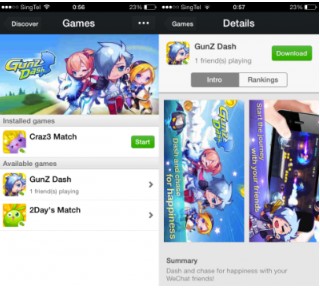
Purchasing and planning: On Wechat, you can purchase goods, ordering foods, buying movie tickets, hailing taxis, planning a meeting appointment with the doctor…etc.
Paying: You can use Wechat Wallet as a way to pay your goods online or even offline. Your bank card is linked to Wechat Wallet. The O2O revolution trendy wave allowed Chinese to purchase online and get the products directly in stores.
Meeting new people: You all have already probably try the look around tool, shaking tool or even the Drift Bottle. All these tools are allowing to meet new people.
Just look around and you will see who are looking around at the same time within max 1KM.
Shake your phone and you will who is shaking at the same time…Same for drift the bottle.
Engaging your customers into a digital experience
Wechat has succeed to find a link between two different worlds: digital world (abstract) and social world (reality). You have probably heard about heated debates around the digital revolution which is overshadowing the real social life.
Well, Wechat has succeed to bring closer these two worlds in a different way, by working on people linking to their brands experience and after linking to their contacts or friends.
Wechat has turned the word”interactive” to a real meaning allowing brands to interact with people. This application is delivering personalized experience to users with attractive content that is engaging the consumer.
Most of the brands have succeed their marketing campaign because they know how to engage consumers in this digital experience. Remember, communication on Wechat is essentially a one to one personalized communication.
For example, Burberry has built a really interesting campaign for the Chinese New Year in 2016 by engaging Wechat’user. You can enjoy unwrapped a gift by swapping and touching the phone’s screen and after that sending an e-personalized cards to your Wechat contacts. Here, the idea is to engage customer to live a digital experience and after that enhancing the social part by sending cards to friends.
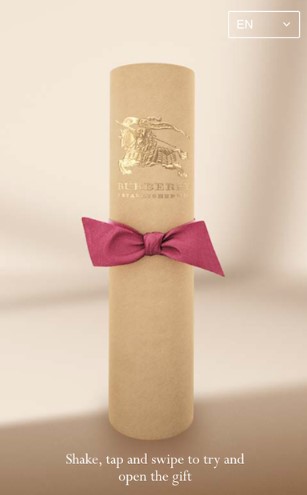
The meeting tools offered by Wechat such as shaking your phone is a way to engage your customer to digital experience in order to increase social aspect by meeting new people.
Successful brands on Wechat understand this point and optimize it: get live a digital experience to the user and push these users to share it with friends. This is the key of successful marketing campaign.
If you are interesting to check really interesting campaigns on Wechat, you can click here.
To conclude Wechat is the social media leader in China because it has succeeded to understand customer’s needs in a perfect way not only by focusing on the restrictive social network use but by linking this social aspect to others activities.
Further readings
http://www.cnn.com/2014/02/27/business/tencent-wechat-unseats-sina-weibo/index.html
http://www.forbes.com/sites/techonomy/2014/05/23/how-tencent-uses-wechat-to-target-alibaba/