I’ve been working in China’s beauty market since 2009. I’ve watched international brands arrive with confidence and leave with losses. I’ve also seen smaller brands with the right approach build profitable businesses within 18 months. The difference is almost never the product. It’s the strategy.
In 2026, the Chinese cosmetics market is not what it was five years ago. Consumer behavior has shifted. Platform dynamics have changed. Domestic competitors have gotten sharper. And AI-powered discovery is rewriting how people find beauty products. If your China playbook is older than two years, it needs a hard look.
The Chinese Cosmetics Market in 2026: What the Numbers Say
The data is clear: China remains the world’s second-largest beauty market, and it is still growing. According to iMedia Research, China’s cosmetics market reached approximately RMB 530 billion (about USD 73 billion) in 2025, with projected growth of 8 to 10 percent into 2026. Skincare leads, accounting for roughly 55 percent of total market value.
But aggregate growth numbers hide a more complex picture. Premium skincare is growing. Mass-market color cosmetics are under price pressure. Domestic brands (C-beauty) now hold roughly 38 percent of total market share, up from under 25 percent five years ago. The international brands that are growing in China are doing so because they adapted, not because they coasted on reputation.
QuestMobile data from early 2026 shows that Chinese consumers now spend an average of 4.2 hours per day on mobile, with beauty content accounting for a disproportionate share of engagement on Douyin and Xiaohongshu. The discovery-to-purchase journey has compressed: 61 percent of beauty purchases on Douyin now happen within 24 hours of first product exposure.
Platform Strategy: Where You Need to Be
Xiaohongshu: The Beauty Discovery Engine
At GMA, we’ve worked with brands that treated Xiaohongshu (XHS) as optional. Every single one underperformed. XHS is not optional for cosmetics brands in China. It is foundational.
As of early 2026, XHS has over 320 million monthly active users, with 72 percent female and heavy concentration in the 18-35 age group across Tier 1 and Tier 2 cities. More important: 78 percent of XHS users say they’ve purchased a product they discovered on the platform. That conversion path, from UGC review to purchase intent, is stronger here than anywhere else in Chinese digital.
The approach that works is sustained seeding, not one big KOL post. A layered mix of micro-KOL and KOC content, 200 to 500 posts over 90 days, that builds a search footprint. When a Shanghai consumer searches for “sensitive skin moisturizer” or “Korean-style lip tint,” your brand should appear in organic results. That doesn’t happen by accident. Learn more about our approach to Xiaohongshu marketing for cosmetics brands.
Douyin: Live Commerce is Not Slowing Down
I know some brands tried Douyin live commerce two years ago, had a disappointing result, and moved on. That was a strategy failure, not a platform failure.
Douyin’s live commerce GMV for beauty and personal care exceeded RMB 180 billion in 2025. In 2026, the dominant trend is what Douyin calls “interest commerce”: algorithmic matching between content and purchase intent, driven by AI recommendation layers. Brands posting consistently, running targeted short video ads, and using a mix of brand live rooms plus mid-tier KOL collaborations are winning.
Florasis (Huaxizi) is the clearest example. After facing a KOL crisis in 2023, they rebuilt their Douyin strategy around diversified content: more mid-tier KOLs, stronger brand live room infrastructure, tighter product storytelling. By 2025, they had recovered and grown. The lesson: Douyin rewards consistency and product-content fit, not just spending.
For international brands, Douyin advertising now offers more precise targeting by beauty category, skin concern, and purchase history. CPM has risen, but so has conversion quality when campaigns are structured correctly.
WeChat: Retention and High-Value Customers
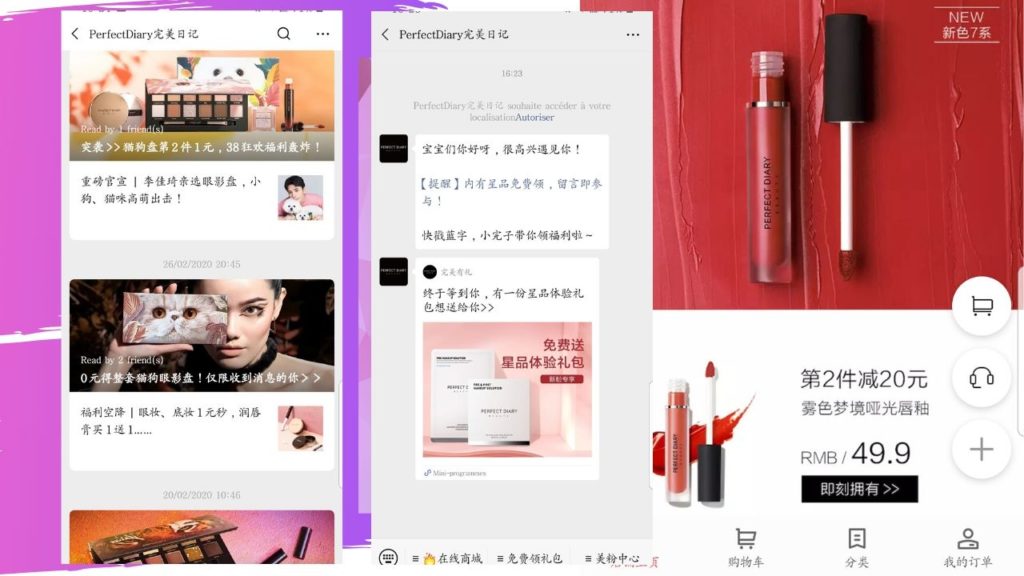
WeChat is where you keep customers after you acquire them. Mini-programs for reorders, WeCom for personalized CRM, official accounts for loyalty content. L’Oreal’s WeChat Mini-Program has over 40 million registered users in China. That is not a nice-to-have, it is a retention engine.
In 2026, the fastest-growing brands on WeChat use AI-assisted personalization inside Mini-Programs: product recommendations based on skin type assessments, repurchase reminders timed to product lifecycle, loyalty tier upgrades. This is where the high-LTV customer relationship lives. Our work on WeChat marketing for cosmetics covers how to structure this correctly from day one.
Tmall: Still Where Serious Volume Happens
Tmall flagship stores remain the credibility anchor for international brands. Chinese consumers still check Tmall to verify a brand is legitimate before trusting what they see on XHS or Douyin. In 2026, Tmall has integrated AI search more aggressively: search rankings now factor in review recency, short video content, and live commerce activity linked to the brand.
Brands that ignore their Tmall SEO while running platform campaigns are leaving money on the table. Your Tmall strategy needs to connect directly to your content activity on other platforms.
Consumer Behavior in 2026: What Has Changed
The post-2024 Chinese consumer is more careful and more informed. Economic uncertainty has made mid-tier consumers more selective, but it has not killed premiumization. What it has done is raise the evidence bar. Consumers want proof: dermatologist endorsements, ingredient transparency, real before-and-after documentation from real users.
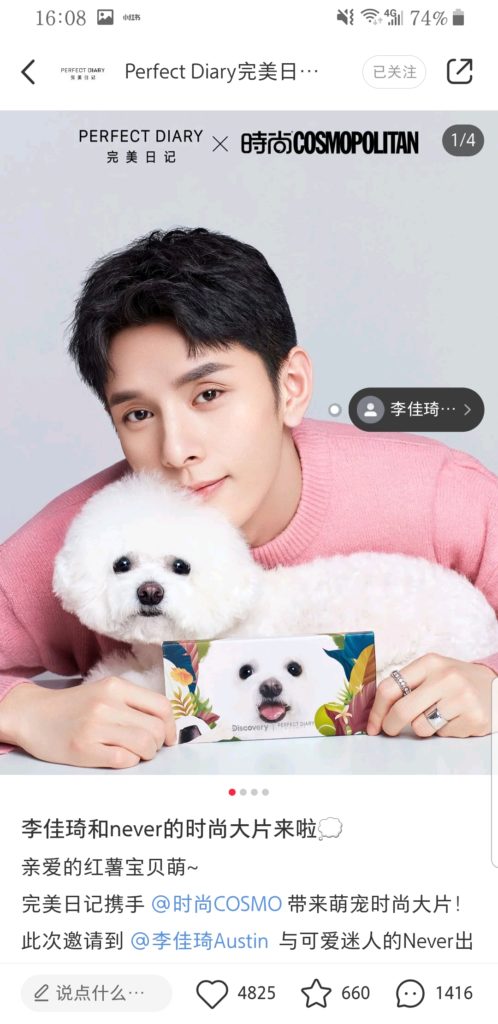
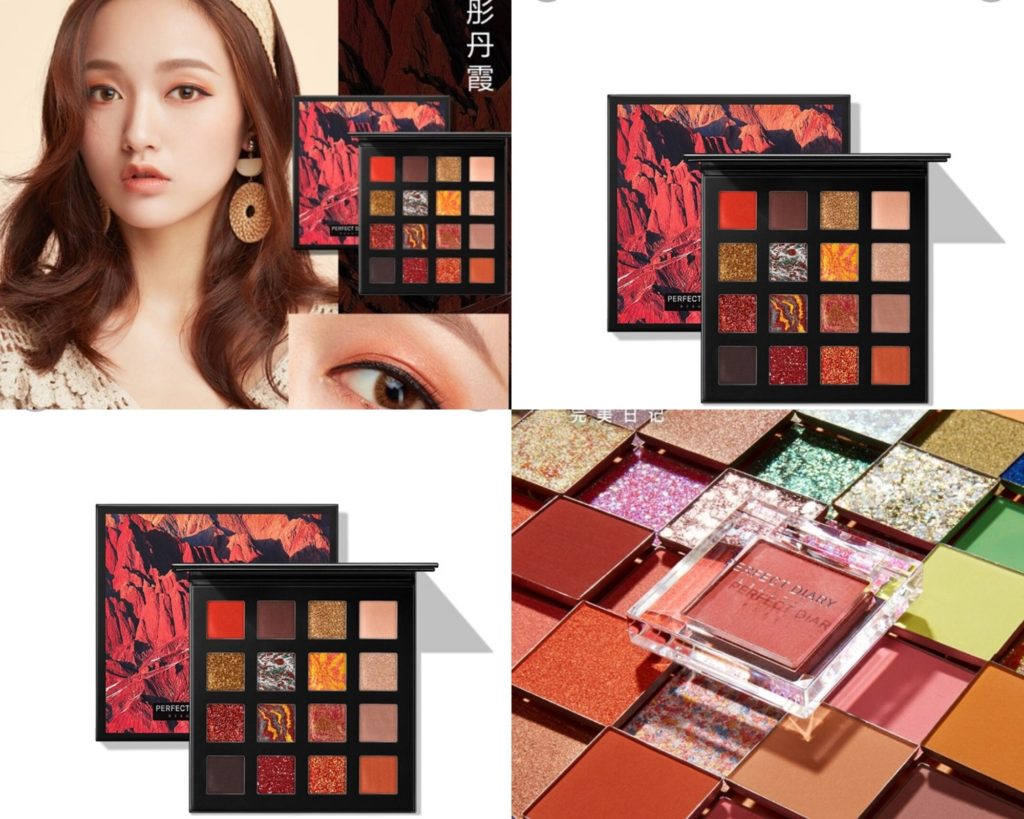
The trade-down narrative is too simple. What is actually happening: consumers are trading down in some categories (color cosmetics, body care) while staying premium, or even trading up, in high-efficacy skincare. If you sell a RMB 400 serum with clear efficacy claims, backed by strong XHS content and clinical data, you can still command that price point. If you sell a mid-tier foundation with no differentiated story, you are competing against Proya and Perfect Diary on price, and you will lose.
AI-Powered Search: The Shift You Cannot Ignore
In 2026, a meaningful share of Chinese beauty consumers use AI assistants to research products before buying. Doubao (ByteDance’s AI) and Kimi (Moonshot AI) are now integrated into how consumers ask questions like “what’s the best vitamin C serum for combination skin” or “which Chinese skincare brands are dermatologist-approved.”
This matters for your content strategy. AI answers pull from indexed content: brand websites, XHS posts, Baidu articles, Zhihu threads. If your brand has thin Chinese-language content infrastructure, you are invisible in AI-assisted search. I’ve seen brands with strong product quality get completely overlooked because their Chinese digital footprint was too shallow for AI systems to surface them confidently.
The fix is not complicated, but it requires consistency: Chinese-language brand content across multiple platforms, regular updates, strong ingredient and efficacy documentation in Chinese. This is now table stakes.
What Is Working for International Brands Right Now
Shiseido’s China recovery in 2025 came from three moves: doubling down on skincare science content on XHS, rebuilding their Tmall SEO infrastructure, and launching a WeChat Mini-Program loyalty program that tied offline counter purchases to digital rewards. Simple execution, done well.
A mid-size French skincare brand we worked with at GMA launched in China in early 2025 with zero brand awareness. Within 12 months they had 50,000 Tmall store followers, consistent XHS organic traffic, and a live commerce GMV run-rate of RMB 3 million per month. The strategy was not complex: XHS seeding first, Douyin short video second, Tmall store launch third, WeChat CRM from month six onward. Sequencing matters.
The brands that struggle are the ones that launch every channel simultaneously with insufficient budget for any single one, or that run a six-week activation and expect lasting results. China digital marketing is not a campaign. It is an operation.
KOL Strategy: Smarter Beats Bigger
I’ve seen brands spend RMB 2 million on two top-tier KOLs and get almost nothing back. I’ve also seen brands spend the same budget across 400 micro-KOLs and build a durable organic presence that pays dividends for 18 months. The math is not close.
In 2026, the KOL market has matured. Fake follower inflation is much harder to hide. Platform algorithms have gotten better at detecting inauthentic engagement. The brands winning now run structured programs: clear content briefs, authentic product seeding rather than scripted endorsements, and attribution tracking from KOL content to actual Tmall or Mini-Program conversions. Our KOL marketing approach for China is built around measurable outcomes, not vanity metrics.
Building a China Cosmetics Strategy That Lasts
The brands that succeed in China over a three-to-five year horizon all share one thing: they treat China as a distinct market, not a translation of their global strategy. Different consumer psychology, different platform mechanics, different KOL relationships, different retail infrastructure.
Start with your positioning. What does your brand stand for in China, specifically? Efficacy and clinical proof? Heritage and luxury? Clean beauty with ingredient transparency? The positioning drives everything: which platforms you prioritize, which KOLs you work with, how you price, how you structure your Tmall store.
Then build your platform stack systematically. Most brands should start with XHS for organic credibility, add Douyin for scale and conversion, lock down Tmall for transaction infrastructure, and build WeChat for retention. That sequence is not universal, but it works for most international beauty brands entering or relaunching in China.
I’ve seen too many brands skip the foundational steps because they wanted fast results, and then spend twice as much fixing the gaps later. The brands we work with at GMA that grow fastest are the ones willing to build the base properly before pushing for volume. More on our full approach at cosmetics marketing in China.
Our digital marketing agency for China specializes in cosmetics brands. Contact us for a free audit of your China strategy.