
Looking to start selling on JD? This guide will show you how to get started quickly and easily. We’ll cover everything from setting up a seller account to listing your products and managing orders. So whether you’re a brand looking to expand into new markets or an existing retailer looking for a new sales channel, read on for all the information you need.
Steps-One: Choose from the Different JD stores available
JD eCommerce has different types of stores for different online sellers to suit their needs and their market.
JD.com Direct Sales
JD.com Direct Sales is for merchants based in China. These are for reputable brands locally available which JD.com can source directly and sell directly to the market via the company’s website and mobile platforms.
JD.com Marketplace
JD Marketplace partners with reliable third-party sellers to sell products directly to customers through the company’s website and mobile platforms. Sellers may enjoy the many value-added functions and benefits of partnering with JD Marketplace, such as financing, marketing, logistics partnership and fulfillment method, and customer niching services.
JD.com Worldwide
JD Worldwide is a cross-border eCommerce platform that has established relationships and partnerships with worldwide logistics companies — such as DHL, Australia Post, and YAMATO — to provide global shipping and warehousing solutions. International sellers now have the opportunity to offer their products directly to the Chinese market. Even without a physical store in China, JD.com can allow brands, retailers, and traders legally registered outside China to sell products from outside of the country. This provides Chinese consumers with a wide array of international high-quality products to choose from.
Breaking News: JD Worldwide and Shopify are now cooperating easing and shortening the registration process of international sellers.
How to become a Seller on JDcom
Signing up with JD is quite easy, with only four steps to follow. The application process to become a merchant includes four steps only:

- Make sure you have a collection of background information and proper documents to prove you are a legal entity qualified to do business in China.
- Log on to the registration page and fill in the required information about your company, and upload all materials needed.
- Allow JD one to three working days to review your application.
- You’re ready to launch as soon as JD notifies you by email, and you settle the necessary fees.
JD only accepts well-established, reliable third-party sellers on its platform. You must be a legitimately registered business entity to qualify for JD’s roster of merchants.
The fees collected by JD from its merchants vary depending on how big your company is, your scale of revenues, and the industry you belong to, among other things. An initial management fee between $8,000 to $50,000 is collected, and an annual fee of $1,500 to $10,000 must be paid. Additionally, JD gets a commission of 5-8% for every item you sell.
Read this post to learn how to register a store on Tmall, JD’s biggest competitor!
Optimize Your Product Listings for Sales Conversion
There are many ways to optimize your product listings on JD. Explore here some of the best practices to convert your listing into massive sales.
- Incorporate persuasion triggers into your product image: Social proof works. When you feature this in your product image, it triggers the buyer to have a sense of urgency to purchase. When they see that your product is fast-selling, they develop a fear of missing out and ultimately close on the buying decision process and make the purchase. Display different headlines or banners on the images — such as BEST selling, #1 in China, trending, or going fast.
- Offer price deals and savings: Make sure buyers can easily spot your price-saving deals. Price is one of the biggest considerations in a purchase. If buyers see the value for money of your product, they will be urged to purchase immediately. Discounts, promo bundles, buy one take one deals, and other price-saving strategies are very attractive to consumers.
- Provide more information: Buyers need to know what they are purchasing. By providing correct and complete information about the product, the consumers do not need to go away from your listing page to research more about the product. You’ll have to remember that buyers value being informed in their buying decision process.
- Maximize the best in product photography: The best product photography is the key to making consumers click on your product. How your product photos are done impact the buyer’s perception, so you should aim to impress visitors with compelling images that practically sell themselves and make the consumer think “I should get this product now!”
- Feature products in action: Seeing products being used or applied is so much better than seeing them in boxes and packaging. Consumers will appreciate and shorten their buying decision process if they are able to see how, for example, that new kitchen appliance works.
- Flex your product ratings: You can convince and convert prospective buyers to purchase when they see your product ratings. The higher the ratings, the more likely they are to buy!
Optimize your online presence and place your products with JD.com. Watch your sales hit the roof before your very eyes, and trust the most reliable and the leading eCommerce platform to get this done for you.
JDcom is One of China’s Top eCommerce Platform
JingDong (JD) is China’s leading eCommerce platform with over 550 million active customers with direct access to high-quality products that allow different brands, whether local or international, to penetrate the ever-thriving eCommerce market in China. It has a same-day or next-day delivery promise to its clients with service levels that no other company in the world can match. They have a widely established logistics network and fulfillment method that ensures to hold true this promise every time.
This is JD’s biggest advantage over its competitor TMall. JD owns stocks for most of the products sold on the platform, so they are able to deliver within a day — unlike TMall which takes several days to fulfill an order since third-party sellers hold the stock.
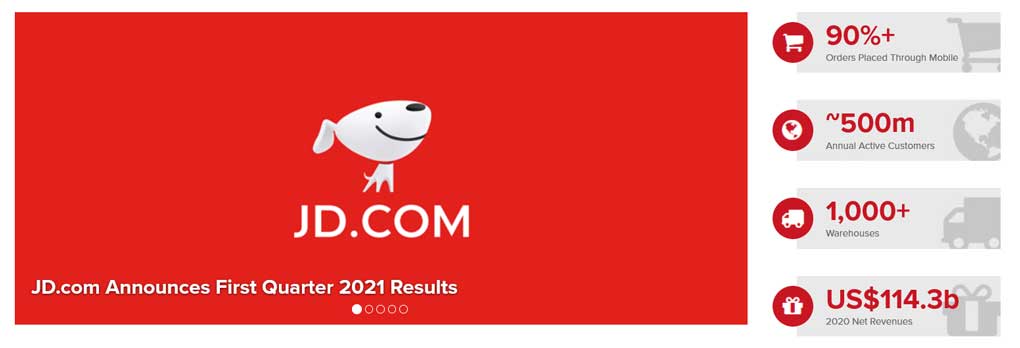
JD has revolutionized the online shopping experience for the Chinese market by providing a vast and varied roster of products from every major category you can think of. They deliver at top speeds, enhancing the shopping experience of the Chinese consumer by being a one-stop shop. JD used to be known as a platform focused on selling electronics, while TMall was focused on fast-moving consumer goods (FMCG) and fashion. JD now carries luxury brands in fashion and other FMCG products offering consumers a wider range of purchase selections from trusted global brands.
As JD is to Tencent, TMall is to Alibaba, thus expanding JD’s exclusive integration into WeChat and TMall’s into Weibo and Baidu. WeChat is the largest social media platform in China with over one billion monthly active users — which is most suitable for target marketing — making JD a more viable platform to establish relationships with its customers and gain a long-term loyal following. Searches done on WeChat will exclusively showcase results from JD and not from TMall.
If you are looking to sell your products online, JD will be your best option in tapping into the high-spending, high-volume purchasers in China. You can sell from anywhere in the world to Chinese consumers without having to open a physical store in China. For the Chinese market, this is a valuable platform where they can buy high-quality products from all over the world and have them delivered directly with just a few clicks.
Online Store vs. eCommerce Marketplace (more reasons you should join JDcom)
The buying process of consumers has changed drastically over the years. Consumers have become rabid researchers online where they seek information about products and services they need even before they speak with an actual salesperson. They are able to research and purchase items online using their smartphones even without stepping inside a physical store. Online shopping reached its highest peaks when COVID-19 struck the world. However, Chinese consumers distinguish themselves from the rest of the world by sticking to e-commerce platforms rather than companies’ website. let’s Find out why.
Both have benefits that the sellers enjoy, but if you want to rake in the sales without having to invest time and money in developing your eCommerce website, then choose to go with an established eCommerce marketplace.
Here are more reasons for you to join a Chinese Online marketplace:
- Engaged audience: eCommerce marketplaces are transaction-oriented and match buyers to sellers. They work on the premise that more buyers mean more sellers, hence making marketing activities a priority to engage the buyers deeply. Sellers benefit, obviously, from an engaged audience.
- Trend indicators: The guessing game in market trends is eliminated in an eCommerce platform because sellers and buyers alike can clearly see trends and price movements in order for them to adjust accordingly and make effective measures to ride the trend.
- Brand equity and trust: Joining a reliable and leading eCommerce platform extends brand equity — hence market trust — to the seller. If you are an approved and accredited seller of a market leading eCommerce platform, it means that your products passed the standards of a leading company and buyers are more inclined to trust you.
- Technical expertise: Managing and running your online store is limited only to as much technological advancement you know and what you can make available for your site. eCommerce marketplace platforms such as JD.com eCommerce is a progressively improving technology haven which can transcend to each of its merchants.
- Volume sales matter: More buyers on the platform equates to more prospects for you. Making your products visible and available to this huge market will certainly work to your advantage. A physical store can only accommodate and attract a certain number of foot traffic. eCommerce marketplaces such as JD.com has an already established market base. In fact, JD.com has over 550 million active customers.
Wanna get Started with JD ecommerce?

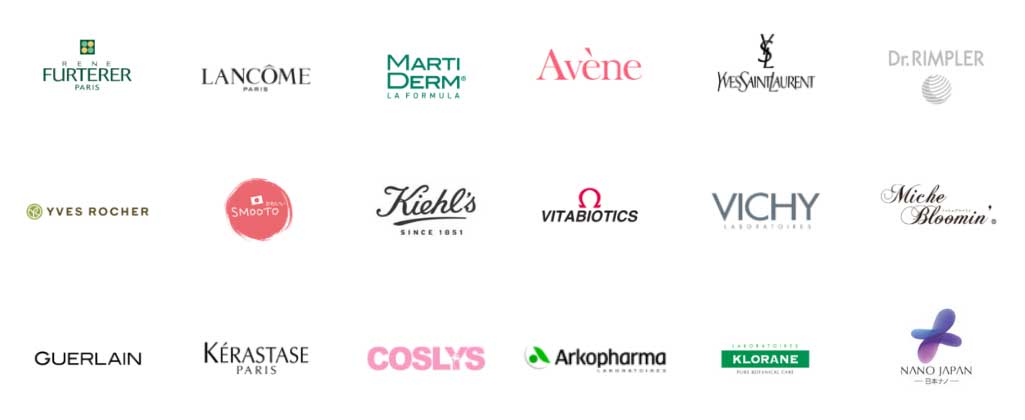
We offer e-commerce solutions for China and will accompany you in the whole process from business license to branding or logistics. See below some of our cosmetics case studies of the past few years.
Find out more about JD ecommerce and the platform’s latest news on the JDcom corporate blog!