

Regardless of exactly where they’re carrying out business, most main multinational customer models have one particular method in relation to politics: stay considerably, considerably away. But from Google to Lego and most not too long ago Lancôme, corporations have realized that this is sort of extremely hard with regards to performing business in China, wherever authorities censorship concerns invade almost each and every element of public lifestyle in a single way or another.
Chinese Government restrictions
The controversy above encroaching mainland goat manage isn’t going wherever anytime soon, as being the Occupy Central protests have proven. Contrary to mainland celebs, who will be normally held with a restricted leash from the Chinese government, Hong Kong stars usually tend to say what they want and have a younger and offended local admirer base to make sure you. Dozens of Hong Kong celebrities-including superstars like Chow Yen-fat and Tony Leung-have has spoken out in assist of Hong Kong’s pro-democracy protests, and lots of have accomplished so regardless of whether it meant becoming blacklisted from foreseeable future film prospects.
That has a retail slump driven by declining mainland vacationer quantities, numerous manufacturers are shifting their concentration into the regional Hong Kong market, that means additional Hong Kong movie star endorsements will likely be essential.
The target while in the Chinese media’s attack on Lancôme was likely supposed not to only scare brands, but also to muzzle famous people by creating them anxiety the lack of lucrative model sponsorship bargains should they communicate out.
Denise Ho expressed her fear that this is often a growing difficulty in her assertion. “This is not only about me along with the manufacturer,” she wrote. “It’s with regard to the complete scenario in Hong Kong wherever everyone seems to be currently being suppressed and everybody resides in a certain style of a ‘white terror’ that we can’t talk out publicly about everything regarding the Chinese government.”
It’s not likely being that simple to get offended Hong Congers to back again down, nevertheless. According to Ho, “Should we stop self-censoring from anxiety and begin respecting ourselves and other folks determined by excellent trustworthy work-we could all be freer,” continuing, “because the fact is always that if we decide to remain mute and do almost nothing, these would all be stripped absent from us right before we detect.”
Lancome faced the Chinese Regulations
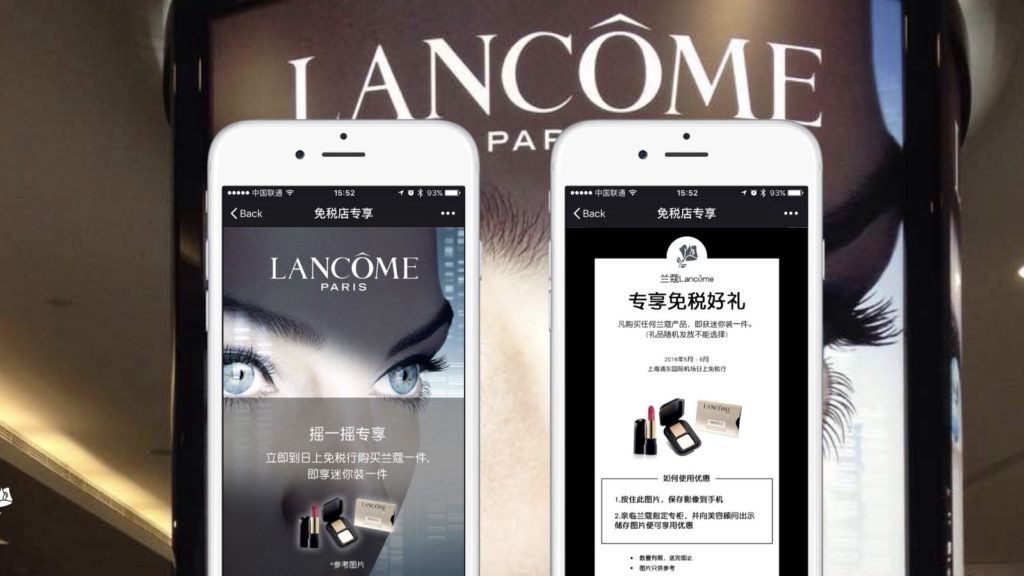
A long time ago, Lancôme identified itself within the center of a PR nightmare when Hong Kong protesters demonstrated at its counters to criticize the cancellation of a Hong Kong mini-concert by pop star and Occupy Central supporter Denise Ho. By canceling the live performance, the beauty brand inadvertently dove into straight to the present pressure that permeates Hong Kong-mainland relations.
The dispute has begun once the state-run mainland Chinese media outlet Global Instances made a decision to fire up controversy just after catching wind that Lancôme experienced invited Ho to execute in Hong Kong. It posted a particularly incendiary “survey” on its Web account asking buyers to weigh in on whatever they believed in regards to the choice to host the live performance offered her “pro-independence” sights on Tibet and Hong Kong, which was achieved using a barrage of destructive responses from mainlanders about the singer and brand name.
This social website put up was enough to lead to Lancôme to rethink its conclusion to carry the celebration, and also the splendor brand name immediately attempted to quell the controversy by citing “security concerns” in its announcement to terminate the live performance.
Regional Hong Congers’ ended up not shopping for the brand’s excuse, primarily after Denise Ho produced an announcement criticizing the manufacturer for “kneeling right down to a bullying hegemony.” As protesters took to purchasing centers to carry up symptoms near the Lancôme booths, the brand shut all 23 of its boutiques throughout town, and parent business L’Oreal did a similar for its other makes, such as Kiel’s as well as the Human body Shop. The go has also sparked the ire of customers from the company’s dwelling state of France, where a petition getting circulated calling to get a boycott has attained around eighty-one,000 signatures as of today.
Although Lancôme reopened stores on Thursday and it has presented Ho compensation for that gig, its woes continue on. Global Situations adopted up by using a gleeful short article basking inside the chaos it commenced, stating, “Apparently Lancôme is much more inclined to deal with the thoughts with the men and women around the mainland.
Bad Reputation can destroy the Brand’ image
The rationale is extremely easy: the size of the mainland industry is numerous instances that of Hong Kong. This row displays that users on the general public in mainland China have realized their impeccable ability to affect the market.” It also ominously asserted, “From now on, they’ll no longer form to celebs or anybody who would make money out of China but with the identical time criticizes China.”
Whether Lancôme canceled the live performance to appease the masses of angry Web commenter, to forestall a lot more state-led assaults on its brand name, or to actually take out any potential for an outbreak of violence at what was alleged to be described as a family-friendly advertising occasion, it realized the tricky way that accomplishing organization in China generally implies getting associated with politics, regardless of whether a corporation would like to or not.
The exact same lesson continues to be discovered by a great number of other manufacturers in the latest memory, like Google when it ran up versus challenges of censorship, Lego when it refused to market bulk orders of its toys to anyone working with them for “political” explanations, and Hollywood movie studios trying to get their motion pictures to the mainland industry.
Manufacturers that feel they’re able to stay away from Lancôme’s destiny by steering away from movie star manufacturer ambassadors with political affiliations are going to be much from immune from political controversies in China-especially when it comes to the mainland-Hong Kong dispute.
Read also:
- 5 way to win in China’s Beauty Industry
- LVMH opens First Store in China
- Once Upon a Time Luxury, Wechat and E-Commerce in China …