
Skip to content

Brands Case Studies in China ·

Why Sephora Left China: Lessons for Beauty Brands in 2026

Updated

In 2015, Sephora was expanding in China, opening stores in second-tier cities and launching a JD.com partnership to scale its e-commerce presence. Ten years later, the story ended very differently. In 2023, Sephora closed all its China operations and exited the market entirely.

For any international beauty brand looking at China in 2026, Sephora’s trajectory is required reading. Not as a cautionary tale to avoid China, but as a precise map of what goes wrong when a foreign brand misunderstands how the Chinese market works.

Sephora in China: A Quick History

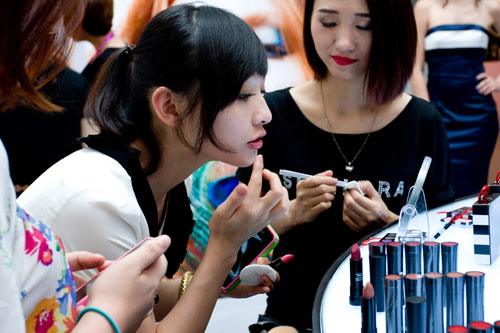
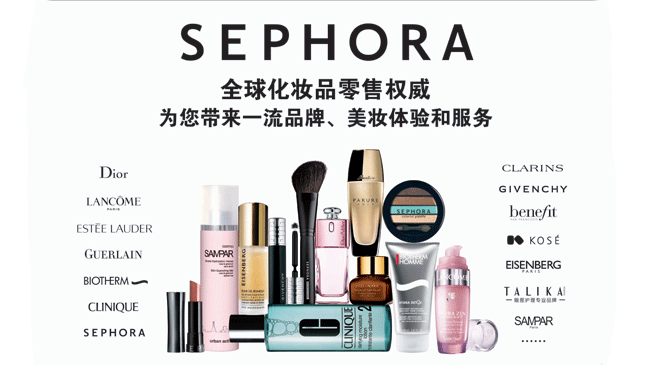
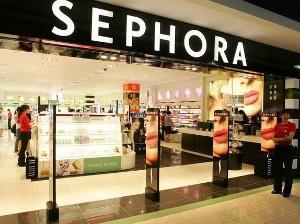
Sephora, the French beauty retail chain owned by LVMH, entered China in 2005. At its peak, it operated around 175 stores across mainland China. The brand carried its European concept: a multi-brand specialty beauty retailer offering hundreds of international brands in a self-service format, positioned between mass market and luxury.

In 2013, Sephora launched its own China e-commerce site. It failed. Chinese consumers did not want a standalone Sephora website when Tmall and JD.com offered the same brands with better logistics, better promotions, and more peer reviews.

Sephora responded by partnering with JD.com in 2015, making it one of the first major Western beauty retailers to embrace the Chinese platform ecosystem rather than fight it. At the time, JD.com’s commitment to authentic products was a real differentiator in a market still dealing with widespread counterfeiting.

But the underlying problems were not solved by the JD partnership. Store traffic declined year after year as Chinese consumers shifted purchases online. The brand’s European positioning did not translate intuitively to Chinese consumers who had different brand hierarchies and discovery behaviors. And crucially, Sephora’s model of aggregating third-party brands became less relevant when those brands could sell directly to Chinese consumers on Tmall, Douyin, and Xiaohongshu, without giving Sephora a margin.

In 2023, LVMH announced Sephora’s full withdrawal from China. All stores closed.

Why Sephora Failed: The Real Reasons

The retail-to-online shift is the obvious explanation. Chinese cosmetics online penetration went from 15% in 2014 to 65%+ in 2026. A store-based retailer in a market that moved online that fast was structurally disadvantaged. But that alone does not explain the failure. Other store-based beauty brands made the transition.

The deeper issues were strategic:

The aggregator model does not work when brands go direct. Sephora’s value proposition was “one place for all your beauty brands.” That made sense in Europe, where many brands lacked their own retail distribution. In China, every significant international brand has a Tmall flagship store, a JD store, and increasingly a Douyin live commerce presence. Why buy through Sephora when you can buy direct from the brand at the same or lower price?

Discovery shifted to content platforms, not retail. In Europe, walking into a Sephora store is how you discover new beauty brands. In China, discovery happens on Xiaohongshu. A beautifully designed Sephora store in Shanghai cannot compete with 300 million XHS users sharing skincare reviews. The discovery function that justified Sephora’s retail concept was replaced by a platform Sephora did not own.

Domestic Chinese brands out-executed on digital. While Sephora was maintaining a physical store network, brands like Proya, Florasis, and Winona were building Douyin live commerce teams, seeding KOC content on XHS, and capturing the digital-first Chinese consumer. By the time Sephora fully committed to digital, domestic brands had a 3 to 5 year head start on the platforms that matter.

The mid-market position was squeezed. Sephora sat between mass market and luxury. In China’s 2020s beauty market, that middle ground got increasingly difficult. Domestic brands dominated affordable skincare with credible formulations. Ultra-premium international brands like La Mer, SK-II, and Chanel owned the aspirational luxury tier. Sephora’s selection of mid-range international brands faced pressure from both sides.

What the China Market Looks Like for Beauty Retail in 2026

The failure of Sephora’s store model does not mean foreign beauty brands cannot succeed in China. It means the model that succeeds looks fundamentally different from European or US beauty retail.

In 2026, the China beauty market is 1.48 trillion yuan, with 65% of sales online. The winning brands in China share several characteristics that have nothing to do with physical store presence:

  • A content-first strategy on Xiaohongshu that builds organic credibility before paid media
  • A consistent Douyin live commerce presence that converts viewers to buyers in real time
  • A Tmall or JD flagship store that functions as the credibility anchor and the purchase destination
  • A WeChat ecosystem for loyalty, repurchase, and customer relationship management
  • A product range adapted, at least partially, to Chinese skin types, climate conditions, and consumer preferences

Brands that build this infrastructure correctly are growing in China. Those that rely on Western retail logic are not.

Read our complete guide to Douyin advertising for beauty brands and our breakdown of Xiaohongshu marketing services.

Lessons for International Beauty Brands in 2026

Sephora’s exit from China teaches specific lessons that apply to any brand considering China entry or expansion today:

1. Do not build a China strategy around the Western retail model. Physical stores in China serve brand awareness and experience functions, but they are not the primary sales channel. If your China plan requires stores to work, reconsider the plan.

2. Platform presence is non-negotiable. Tmall, Douyin, and Xiaohongshu are the three legs of the beauty brand infrastructure in China. Absence from any one of them is a structural weakness. Sephora tried to build an alternative to these platforms rather than working within them.

3. The aggregator model fails when brands go direct. If your business model depends on brands not having their own China digital presence, you are building on unstable ground. Every brand of significance has direct-to-consumer channels in China now.

4. Speed matters more than perfection. Sephora moved cautiously, testing city by city, adjusting gradually. Meanwhile, Chinese domestic brands moved in 6-month cycles. In a market that changes as fast as China’s, moving slowly costs you the window.

5. Local execution requires local teams. Sephora’s China team operated within a global brand framework that could not adapt fast enough to local platform dynamics. Brands that succeed in China in 2026 have dedicated local teams with real authority over content strategy, platform relationships, and product assortment.

Olivier Verot’s Take

I watched the Sephora situation closely. The JD.com partnership in 2015 was actually a smart move for its time. The problem was not the partnership. The problem was that the underlying retail model was already being disrupted by forces Sephora could not control from within a store footprint.

The honest lesson for brands today: China is not a market where you can apply your global formula and expect it to work. The distribution infrastructure is different, the consumer discovery behavior is different, the competitive set is different. You can win here. But you need a China-specific strategy, not a China adaptation of your global one.

We work with beauty brands of all sizes on exactly this. From initial market entry to established brand repositioning, the starting point is always understanding what is actually working in China right now, not what worked three years ago.

See our full cosmetics marketing in China guide for a current picture of the market.

5 Questions Brands Ask About Selling Beauty Products in China

Q1: 丝芙兰为什么退出中国市场?(Why did Sephora exit the Chinese market?)
The combination of accelerating e-commerce penetration, domestic brand competition, and the declining relevance of the multi-brand retail aggregator model in a market where brands sell direct. No single factor, but a structural mismatch between Sephora’s model and how Chinese consumers actually shop for beauty.

Q2: 外国美妆品牌进中国市场需要什么条件?(What do foreign beauty brands need to enter the Chinese market?)
NMPA (国家药品监督管理局) product registration is mandatory for cosmetics. A Chinese entity or a reliable cross-border e-commerce (跨境电商) structure. Active presence on Tmall or JD.com. A content strategy for Xiaohongshu and Douyin. Without the content infrastructure, product registration alone produces no results.

Q3: 在中国做美妆电商一定要开实体店吗?(Do beauty brands need physical stores for e-commerce in China?)
No. Many successful international beauty brands in China operate purely online. Physical stores serve brand experience and awareness functions but are not required for strong e-commerce performance. Several brands have built $10M+ China businesses without a single store.

Q4: 中国美妆市场最大的挑战是什么?(What is the biggest challenge in the Chinese beauty market?)
Competition from domestic brands that have native digital infrastructure, lower cost bases, and faster innovation cycles. International brands need a genuine competitive advantage, whether formulation, brand story, or technology, to justify the premium they charge.

Q5: 做中国市场品牌要多久才能看到回报?(How long before a beauty brand sees return from the China market?)
Realistically, 18 to 24 months of consistent investment before meaningful compound returns. Brands that expect China to generate profit in year one are consistently disappointed. Those that commit to 2 years of platform building and community development find the curve turns positive.

Sources

Planning your China beauty strategy for 2026? Request a free audit. We will map the competitive landscape and show you exactly what it takes to build a brand that works in China today.

Start here

Get your China baseline

An audit of where your brand stands in Chinese search, social and marketplaces, and what entry will cost.

Book the audit