I’ve spent 15 years working with cosmetics brands entering China. The market has changed faster in the past 18 months than in the previous five years combined. This guide covers the platforms, tools, and tactics that actually move product in 2026, based on what we see at Cosmetics China Agency every day with our clients.
China’s Online Beauty Market in 2026: Overview
- China’s cosmetics market reached USD 141 billion (RMB 1.1 trillion) in 2025 and continues to grow, with January to April 2026 sales up 5.6% year-on-year.
- 65.4% of cosmetic sales now happen online, across platforms like Tmall, Douyin, and Xiaohongshu.
- Domestic C-Beauty brands hold 57.4% of market share, their fifth consecutive year of gains. International brands are under real pressure.
- Consumers, especially Gen Z and Millennial women, are digital-first, ingredient-savvy, and driven by social proof. They no longer buy on brand name alone.
- Regulatory reforms have made cross-border ecommerce (CBEC) easier, but full registration is still required for general trade.
Key Beauty Market Trends in China (2026)
- Science-backed and functional skincare dominate over color cosmetics
- Consumers demand ingredient transparency and efficacy proof. When China mandated full INCI naming in April 2025, brands like Proya launched interactive ingredient quizzes. That is the bar now.
- Rise of niche brands with specific stories over large corporate lines
- Livestreaming is standard, not optional. Douyin beauty GMV grew 34% year-on-year.
- Beauty education content outperforms flashy ads
- Xiaohongshu + Douyin integration = the main discovery-to-purchase journey
- Fragrance is the fastest-growing sub-category, averaging double-digit annual growth since 2018
- AI search is reshaping how consumers find products. Doubao (ByteDance) overtook Baidu in Q1 2026 with 260 million monthly users.
Major Online Platforms for Cosmetics in China
1. Xiaohongshu (RED / 小红书)
- Use: Product discovery, lifestyle seeding, reviews
- Why It Works: Over 300 million monthly active users. The #1 platform for young women researching skincare, makeup, and wellness brands. Beauty content drives 5-10% engagement rates, the highest on any Chinese platform.
- How to Use: Seed UGC and KOL posts, run giveaways, use Red Ads to amplify viral posts. Average order values in beauty on Xiaohongshu reach ¥450-600 RMB per transaction.
- Popular Content:
- “Before & After with this serum”
- “What’s in my skincare fridge”
- “Top 3 foundations for oily skin”
At Cosmetics China Agency, we consistently see Xiaohongshu as the entry point for brand trust. If your brand is not seeded here, your Douyin conversions will suffer.
2. Douyin (抖音, TikTok China)
- Use: Short video virality, livestream sales
- Why It Works: Douyin now accounts for 29% of China’s online beauty sales and has overtaken Tmall as the primary GMV driver for beauty. Livestreams plus native store is a powerful combination.
- How to Use: Work with creators, launch challenges, use paid boosts. See our full guide on Douyin advertising.
- Winning Format:
- 15-second “skin hack” videos
- KOL livestreams with flash discounts
- “Try this sunscreen for 3 days” user videos
Florasis data shows that intent-aligned short-form videos drive 3.7x higher add-to-cart rates than lifestyle reels. The content format matters as much as the product.
3. WeChat (微信)
- Use: CRM, loyalty, private traffic
- Why It Works: Everyone uses it. Great for building VIP groups, offering private sales, and launching new products to existing customers.
- How to Use:
- Mini Program store
- Push offers through Official Accounts
- Host VIP skincare webinars
Read our full breakdown of WeChat marketing for cosmetics brands to understand how to build private traffic properly.
AI Search: The New Discovery Layer in 2026
This is the biggest shift I’ve seen in 2026. Chinese consumers no longer just search on Xiaohongshu or Baidu. They ask AI assistants.
Doubao (ByteDance’s AI assistant) crossed 260 million monthly active users in Q1 2026, overtaking Baidu for the first time. It is now the default search behavior for millions of young consumers. When someone asks Doubao “what is the best serum for sensitive skin,” your brand either appears in the answer or it does not.
Kimi (Moonshot AI) dominates long-form research queries. Users paste ingredient lists, compare products, and make purchase decisions based on Kimi’s analysis. If your product formulation cannot survive that scrutiny, no amount of KOL spend will save you.
The practical implication: your Xiaohongshu notes, your Douyin scripts, and your official account content all feed these AI models. The brands investing in quality educational content today are building an AI search advantage. I’ve seen brands ignore this and lose visibility fast.
At Cosmetics China Agency, we now audit client content specifically for AI search readiness, not just traditional SEO.
Top Ecommerce Platforms for Beauty Products in China

Tmall Global
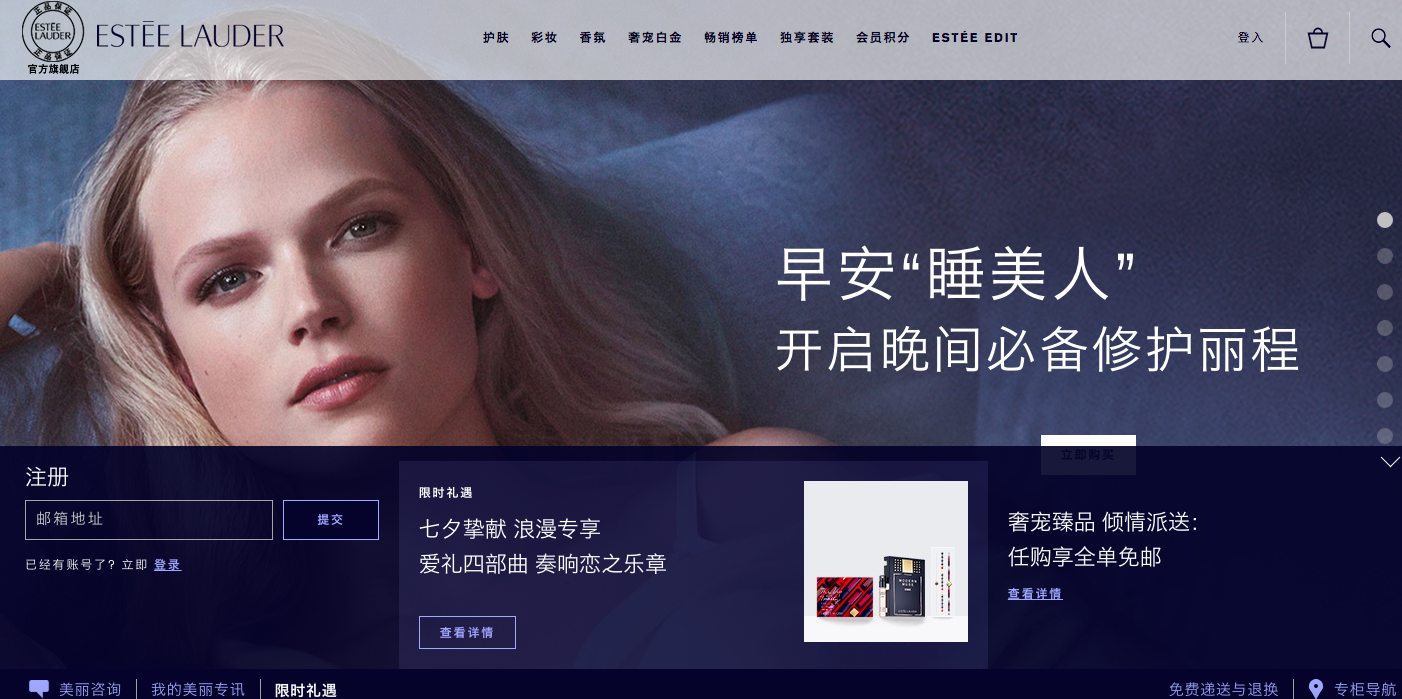
Still the trust benchmark for international brands. Tmall is where consumers go to verify a brand is legitimate. CBEC entry is faster but limits promotional formats. Full flagship stores require more setup but give you full control over the brand experience. The data is clear: Tmall converts at higher average order values than Douyin, but Douyin drives more raw volume in beauty now.
JD.com
Strong for premium skincare and for consumers who prioritize authenticity guarantees. JD’s own logistics network means faster delivery and fewer counterfeit concerns. If your positioning is clinical or pharmaceutical-grade, prioritize JD.
Douyin Shop
The fastest-growing beauty ecommerce channel in China. Direct integration between content and checkout removes friction. Proya became the top-ranked domestic beauty brand in the Douyin May 2026 sales rankings. International brands are catching up, but slowly. Success requires a content-first approach: the product listing alone does nothing without video and live traffic behind it.
Xiaohongshu Shop
Xiaohongshu’s GMV reached RMB 73.5 billion in 2024, up 64% year-on-year, with live commerce as the main driver. In 2026 the platform is pushing brand stores harder. The audience is less price-sensitive than Douyin: average beauty order values are ¥450-600 RMB. If your brand is premium, this is where you build purchase intent before customers convert elsewhere.
What Actually Works in 2026: Brand Examples
I get asked this constantly: which brands are doing it right?
Proya built its dominance through ingredient education on Xiaohongshu, then converted on Douyin live. The brand allocated 3.24% of revenue to R&D, then made that investment visible to consumers. Credibility before conversion.
Florasis focuses on Chinese cultural identity: heritage aesthetics, storytelling tied to Chinese craftsmanship. This works because it is specific. Generic “luxury” positioning does not cut through anymore.
L’Oreal uses Doubao integrations and AI-powered skin diagnostics in its WeChat Mini Programs. They are spending on the tech layer, not just the content layer. That is the gap between a brand that is present in China and one that is growing.
Perfect Diary built its early success on rapid experimentation across Xiaohongshu and Douyin, with aggressive KOC seeding at scale. The lesson for international brands: speed of testing matters more than perfection.
I’ve seen brands fail because they picked one platform and ignored the others. The journey is not linear. Discovery happens on Xiaohongshu. Decision happens on Douyin. Repurchase happens on WeChat. Miss one step and you lose the customer.
5 Trends Shaping China Beauty Right Now
- Functional over fashion: Consumers want proof, not promises. Efficacy claims must be backed by ingredient science.
- Fragrance explosion: The fastest-growing sub-category in beauty. If you have a fragrance line, 2026 is the year to push it in China.
- Live commerce maturity: Brands now run their own Douyin live channels, not just relying on top-tier KOLs. The cost of a top-tier host has gotten too high for most mid-size international brands.
- C-Beauty pressure: Domestic brands hold 57.4% of the market. International brands need a clear differentiation story, not just a heritage play.
- AI-generated content at scale: Brands are producing 10x more content with the same team size. If you are not doing this, your competitors are.
3 Questions Cosmetics Brand Managers Ask Us
Q: Should we enter via CBEC or full registration?
Start with CBEC to test market fit. Move to full registration once you have proven demand. Full registration unlocks all promotional formats on Tmall and offline retail, but the compliance cost is significant.
Q: How much budget do we need for a proper Douyin launch?
A realistic entry budget for Douyin beauty is RMB 300,000 to 500,000 per month, including content production, KOL fees, and paid traffic. Below that, results are hard to sustain.
Q: Is Xiaohongshu still worth investing in if we cannot set up a shop yet?
Yes. Xiaohongshu seeding builds the search layer that supports your Douyin sales. I have never seen a brand succeed on Douyin without Xiaohongshu presence backing it up.
Our digital marketing agency for China specializes in cosmetics brands. Contact us for a free audit of your China strategy.