

There are many differences between the e-commerce in China and in Western countries. There is a real contrast between user experiences on Chinese e-platforms and on those in Europe for example. Here are the five biggest difference.
Platform models

The offer in Europe is restricted to a short list of possibilities. E-commerce companies are generally independent retail stores. You can also find websites in B2B, they will feature in-house inventory and allow you to checkout directly.
The offer on the Chinese market is way more diverse and these possibilities range from B2C platforms to C2C/B2C platforms and retail. Most of these models have a strong logistics service, some will push lots of offers to Internet users while others will be dedicated to foreign products.
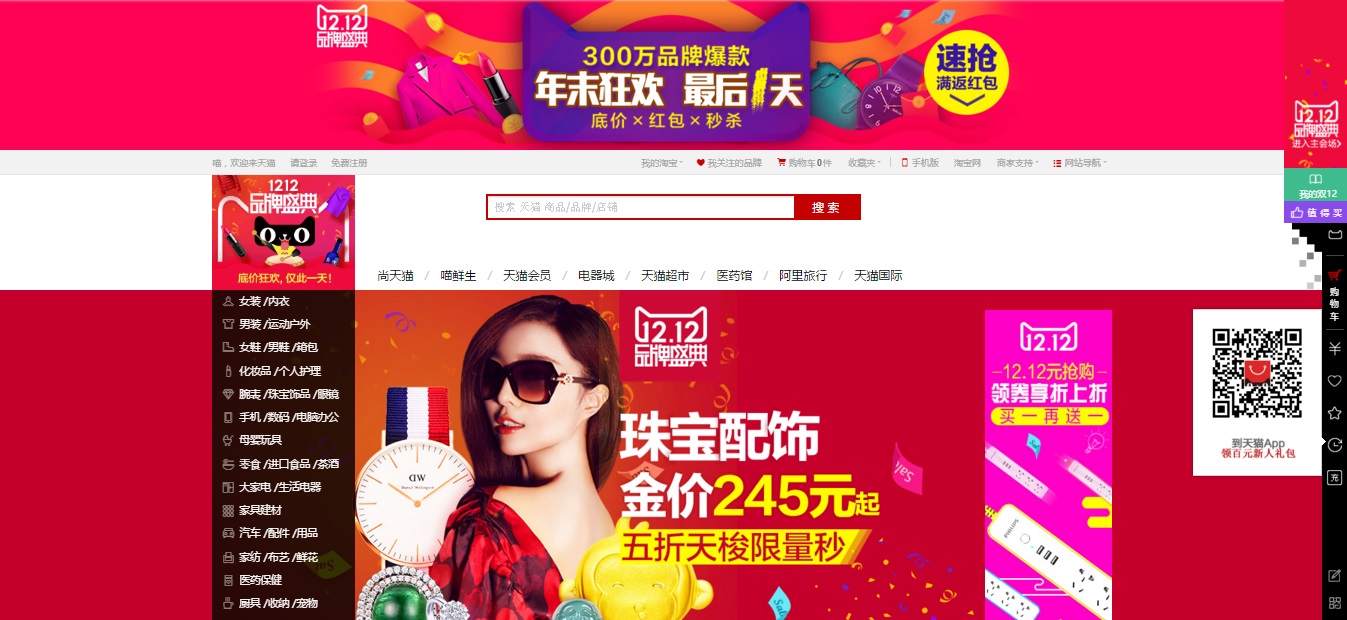
Tmall is a platform for B2C commerce, with strong logistics and sales.
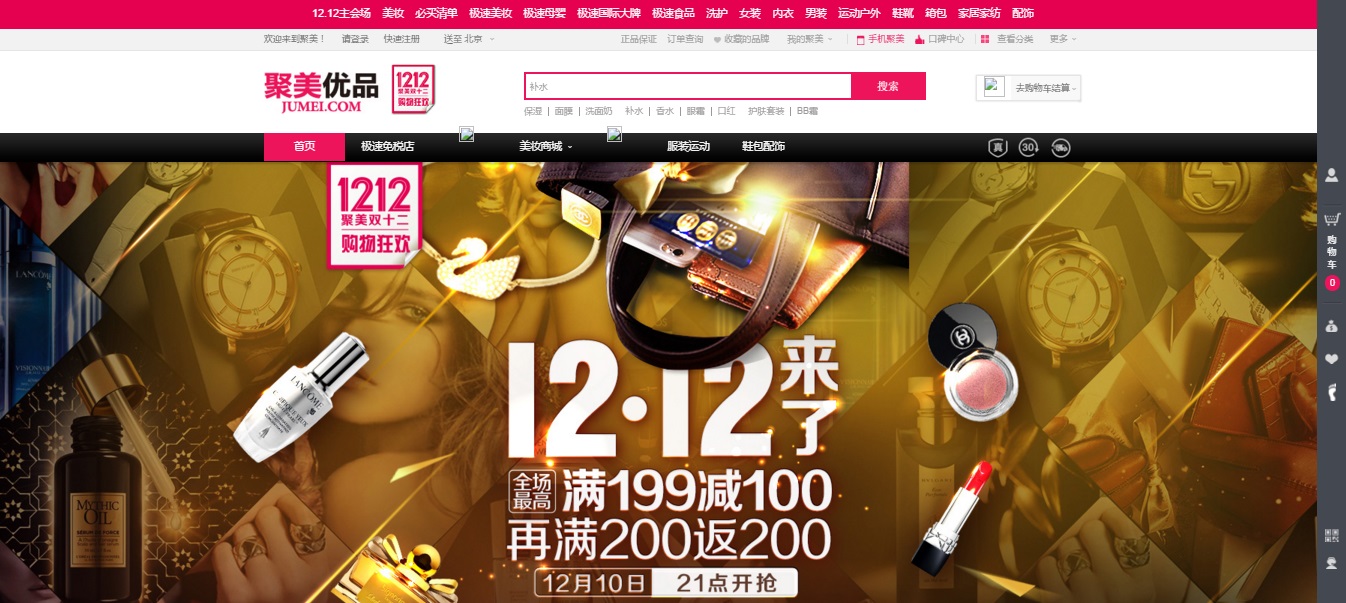
Jumei is a retail website which pushes a lot of specific promotions and suggestive contents
Online content
While e-commerce websites in Europe tend to keep it clear and simple, Chinese websites seem to provide as much information as possible.
In Europe, the information chosen to appear on webpages is classified and everything is kept concise (just a few lines, sometimes a little bit more for more technical products).
In China, the more the better. Products and services are presented at length, with many more details than what you would find in European websites (many pictures, sometimes videos, sources and packing processes for example).
Marketing tools
In Europe digital marketing strategies are usually focused on SEO and SEA actions, affiliate programs (price comparison websites), social media and email marketing.
The first way European Internet users look for a brand online is via Google, hence the importance of SEM. Email marketing is very widely used, as it is one of the preferred way for consumers to get information; some campaigns used by companies are brilliant and get very good results.
One downside though, is that regulations force you to ask consumers for their permission to send them your newsletter.
With no surprise, Chinese consumers like to get informed on their favourite brands and companies on social media and will not use price comparison sites since all business use giant e-commerce platforms. Therefore social networks are at the center of digital marketing strategies.
Unlike European one, Chinese e-commerce platforms use many flashy banners.
China does not have regulations regarding opt-ins, but Chinese consumers do not check their e-mail boxes and do not use them much in general: they will usually connect on accounts from third party social media which do not let you use an e-mail address very easily.
Regarding ranking on Baidu, there are a few differences as to what to work on: focus on the homepage rather than on deeper content, internal and external links weigh equally.
Messaging and engaging on social media
Regarding social medial in Europe, the most used platforms are, with no surprise, Facebook and Twitter, as well as Instagram and Youtube. Since these are blocked, China has its own platforms. Facebook and Twitter are replaced by Weibo. Youku Tudou is the Chinese version of Youtube. And there is WeChat, which is an aggregate of all the possible features you could think of: messaging app, social media, payment solution, online store and so on. Chinese netizens are used to scanning QR codes to access information and accounts to follow, as well as to sending personal and professional content through this app be it text/voice message or posts on WeChat Moments.
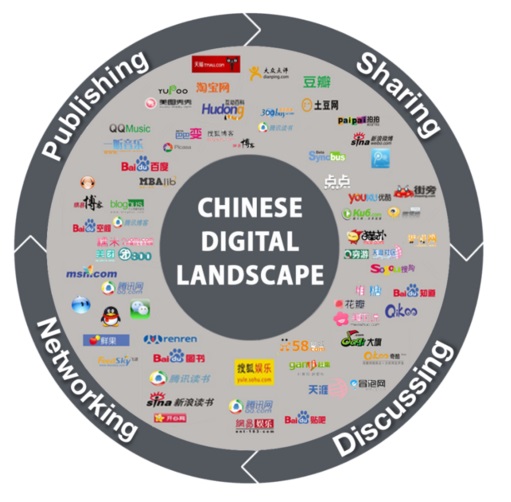
The Social Media Landscape in China
Source: Launch-in-China Operations Consulting
Brand awareness
Long term strategies are the way brands work in Europe, enabling them to get a strong brand awareness and loyalty from their customers. The latter will look for uniqueness in the products they buy.
In China, brand awareness is built through word of mouth, since user experience is very important to consumers (blogs are very popular). Therefore, consumer behavior is different: they like buying the same products as the community they participate in.
Payment solutions
Payment solutions are not developed in Europe as they are in China. Safety concerns and regulations are the main reasons for that.
In China, even though these are also issues to consumers, the possibilities are larger. The two main players are WeChat with its in-app Wallet and Alipay, which is a Paypal-like solution. The good thing about these two is that they both give you access to a wide range of services: shopping, bills, restaurants, taxis and donations are only a few examples.
Further readings: