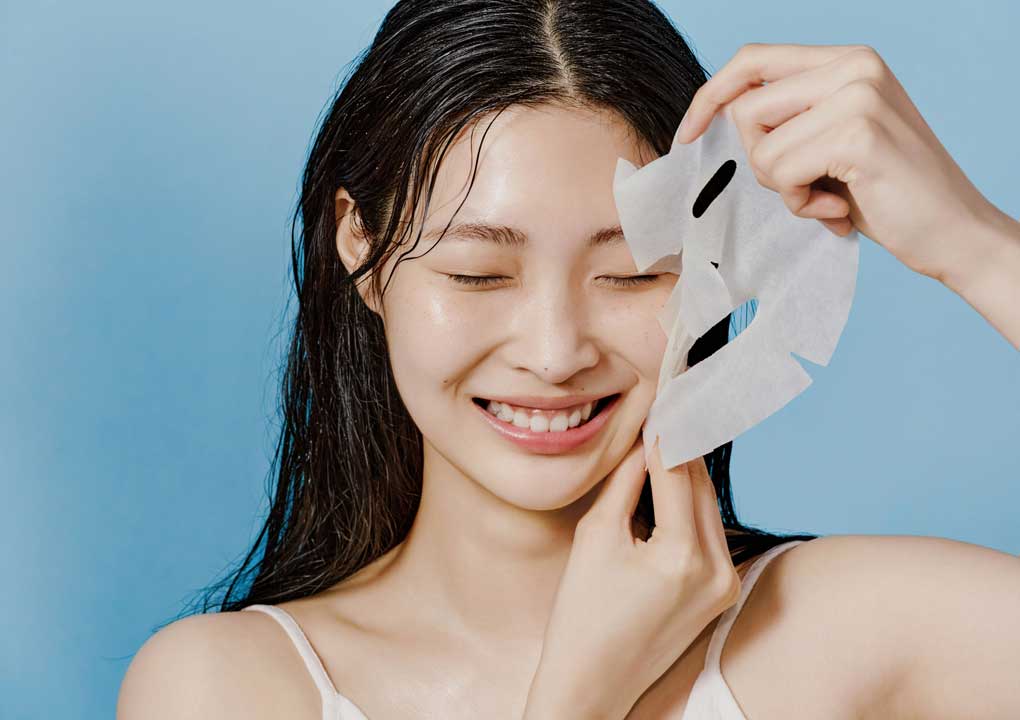
Luxury Skincare: The Rise of China’s “Luxury Skincare Muse”
(1993–present)
Zhong Chuxi, a rising Chinese actress, has been recognized by fashion and beauty circles as the “Luxury Skincare Muse” for her distinctive fusion of Eastern bone structure and global aesthetic appeal. This title stems not only from her striking “dramatic features” defined by sculpted contours, high cheekbones, and luminous skin, but also her ability to portray complex femininity: resilience intertwined with vulnerability, aligning perfectly with luxury skincare’s ethos of “inner strength meeting outer radiance.”
Source Baike China, qq news
I. Decoding the “Luxury Skincare Muse”: Meaning and Commercial Value
- Visual Scarcity
Her pronounced bone structure (sharp jawline, high cheekbones) combined with plump, flawless skin creates a rare “tension between strength and softness.” This harmony makes her face an ideal canvas for brands promoting “anti-aging,” “sculpting,” or “radiance.” - Narrative Versatility
Her roles often depict powerful strategists (e.g., Wu Zetian) or fragmented beauties (e.g., Cao An), bridging historical gravitas with modern edge. Brands use this duality: a “queen” symbolizes timeless elegance; a “dancer” embodies renewal. - Global Resonance
She challenges East Asia’s “pale, youthful, slim” beauty standard, blending Western-appealing dimensionality with Eastern subtlety. This positions her as a cross-cultural ambassador for luxury brands expanding globally.

II. Career Evolution: From “Feng Girl” to Chameleon Actor
- Breakthrough (2017)
Debuted as resilient soldier “Xiao Suizi” in Feng Xiaogang’s Youth, establishing her as a serious actress. - Reinvention (2020–2023)
- Films: Explored genres like suspense (Wild Grass) and fantasy (Knight of Shadows).
- TV: Played a soldier in The Glory of Youth, shedding her “girl-next-door” image.
- Peak (2024)
- If I Can Run: Portrayed an amputee ballerina (“Cheng Anxin”), earning critical acclaim for depicting raw resilience.
- Only the River Flows: Cemented her “independent woman” persona as a corporate elite, boosting commercial appeal.
III. Case Study: Rebranding Wu Zetian as a Skincare Icon
In the 2024 period drama Detective Dee’s Mystery, Zhong’s portrayal of young Wu Zetian became a textbook case for the “Luxury Skincare Muse” concept:
- Bone Structure as Power Symbol
Rejecting traditional opulent costumes, she conveyed authority through a lean frame and a piercing gaze. Close-up scenes of her tilting her chin upward became viral clips on XHS, generating millions of organic impressions for brands tagged in comments. - Skincare as Character Trait
Viewers associated her luminous on-screen skin with the product categories she endorsed. This is not coincidence. It is the result of careful brand-celebrity fit analysis. At Cosmetics China Agency, we have worked with brands that got this wrong: they signed a popular face without checking if the narrative matched the product positioning. The results were weak. - Cross-Platform Amplification
The drama’s peak episodes drove a measurable spike in search volume for brands she endorsed. XHS seeding campaigns ran in parallel, with micro-KOCs reinforcing the same skin narrative in authentic, review-style posts.
IV. The 2026 China Luxury Skincare Market: What the Data Shows
The data is clear. China’s cosmetics retail market is on track to reach approximately 1.48 trillion yuan in 2026. Luxury skincare is the fastest-growing segment inside that number.
On Douyin alone, Helena Rubinstein posted an estimated GMV of 623 million CNY during the May 2026 shopping festivals. That is one brand, one month, one platform. The beauty category on Douyin grew roughly 32% in 2025 year-over-year. The volume is real, and it continues to grow.
Domestic brands now hold about 57% of the China market. That is a structural shift, not a short-term fluctuation. Foreign brands that want to compete must work harder on local relevance. A figure like Zhong Chuxi creates real value here: she bridges aspirational foreign brand positioning with recognizable Chinese cultural identity.
I have seen brands fail because they assumed a Western-facing ambassador would work in China without adaptation. Zhong Chuxi works as a luxury skincare face because her image is built on Chinese values: discipline, inner strength, quiet authority. That does not require translation.
For brands looking to enter or scale in this market, read our guide on how to sell cosmetics in China before committing to any KOL strategy.
V. Platform Strategy: XHS, Douyin, and WeChat in 2026
The three platforms serve three distinct functions. Mixing them up is expensive.
Xiaohongshu (XHS): This is where Chinese women research. The platform’s seeding culture, “种草,” drives product discovery through authentic reviews, texture tests, and ingredient breakdowns. Zhong Chuxi posts on XHS generate high save rates and comment engagement. For luxury skincare brands, XHS builds consideration. Our Xiaohongshu marketing practice shows that campaigns anchored to a celebrity face perform better when supported by 30 to 50 micro-KOC posts during the same two-week window.
Douyin: This is where consumers buy. A Douyin livestream from a mid-tier beauty account with 500,000 to 5 million followers can generate between 500,000 and 5 million RMB per session for established products. Brands featuring Zhong Chuxi content on Douyin drive significant traffic to in-stream purchase links. The Douyin advertising playbook for luxury skincare combines brand-awareness clips with performance retargeting to capture purchase intent at the right moment.
WeChat: This is where you retain customers. High-value skincare buyers in China expect private-domain engagement: mini-programs, loyalty content, exclusive skincare consultations. A celebrity creates desire at scale. WeChat captures that audience into a closed loop. Our WeChat marketing for cosmetics team handles this full-funnel integration from awareness to repurchase.
VI. AI Search and Live Commerce: The 2026 Layer Every Brand Must Understand
As of December 2025, more than 602 million people in mainland China were using generative AI tools. That is a 141.7% year-on-year increase. For skincare brands, this changes the discovery model completely.
Doubao, ByteDance’s AI assistant, now integrates direct shopping links inside conversational answers about skincare. A user asks “what serum is good for sculpting and radiance?” and receives a product recommendation with a Douyin purchase link embedded in the answer. If your brand is not optimized for these AI-generated responses, you are invisible in a growing share of the purchase journey.
Kimi, developed by Moonshot AI, serves a similar role on the research side. Users query Kimi for ingredient comparisons, brand reputation checks, and celebrity endorsement histories. Zhong Chuxi’s name appearing in these AI-generated results, alongside specific brand associations, extends her commercial value well beyond traditional media placements.
The brands winning in this environment build content that AI tools can index and surface: ingredient explainers on XHS, product comparison posts with specific efficacy claims, and celebrity-linked narratives tied to verifiable skin benefits. This is not optional in 2026. It is the baseline.
For KOL marketing in China, the AI search layer means that a celebrity’s brand associations now live beyond paid placements. Every organic mention, every XHS post, every Douyin clip feeds into what AI tools recommend when consumers search for product solutions.
VII. What Brands Actually Get from a Zhong Chuxi Partnership
Let me be direct about what celebrity endorsement does and does not do.
A face like Zhong Chuxi drives brand awareness and category association. Her Cannes appearances as L’Oréal’s ambassador generated significant earned media. Her Armani Beauty partnership placed the brand inside the “independent Chinese woman” cultural conversation. These are brand equity moves, not short-term conversion plays.
At Cosmetics China Agency, we have worked with brands that spent their entire China budget on one celebrity deal and had nothing left for platform activation. The celebrity created desire. The brand had no system to capture it. Do not make that mistake.
The right structure: celebrity at the top of the funnel (awareness and aspiration), mid-tier KOLs seeding on XHS and Douyin (consideration), micro-KOCs driving reviews and repeat purchases (conversion), and private domain via WeChat for retention.
For Tmall-listed brands, celebrity content can be linked directly to brand flagship store traffic. The Tmall China search algorithm weights branded search volume heavily. A well-timed celebrity campaign moves that needle in a measurable way.
The same logic applies to cosmetics marketing in China broadly: no single channel works in isolation. The brands that grow are the ones that connect the dots across platforms, from the celebrity moment to the purchase, to the repeat buy.
Our digital marketing agency for China specializes in cosmetics brands. Contact us for a free audit of your China strategy.