

For foreign businesses looking to expand into new markets, the Chinese dietary supplements market presents significant opportunities and is worth considering. The health supplements market experienced substantial growth in recent years, and it is projected to continue expanding in the coming years.
In 2021, the market size of the China dietary supplements industry reached approximately US$ 15.88 billion. Analysts and market researchers anticipate further growth in the Chinese dietary supplements market, with an expected value of US$ 27.03 billion by the end of 2028. This projection suggests a compound annual growth rate (CAGR) of 7.72% during the period from 2022 to 2028.
If you’re looking to start selling vitamins and dietary supplements in China, there are a few things you need to know. Here are some tips on how to navigate this unique market and successfully sell your products.
Key Takeaways
- Chinese consumers value both physical and mental health, making it important for health-related brands to address mental well-being alongside physical health.
- Brands targeting the Chinese market should focus on attracting consumers under 30, as they are key customers with a high interest in vitamins and health supplements.
- Skin health is a top concern for Chinese consumers, particularly driven by beauty standards. Brands addressing skin problems with targeted health supplements can gain positive feedback.
- The COVID-19 pandemic has increased the demand for vitamins and health supplements in China, as people prioritize boosting their immune systems and overall well-being.
What are the key trends shaping the health supplement market in China?
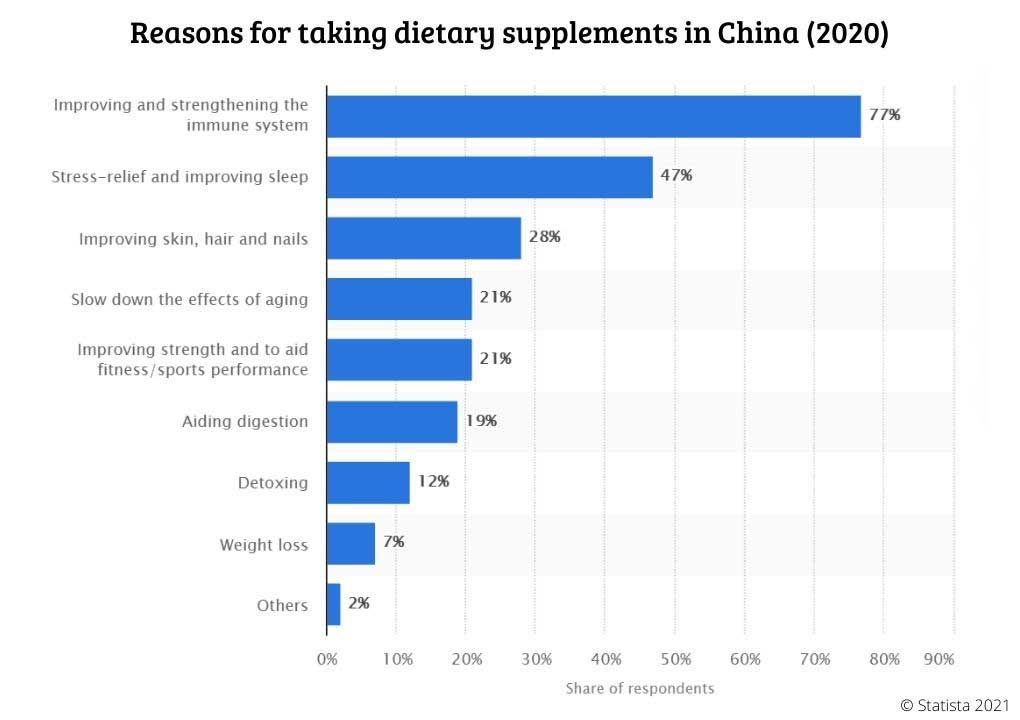
Increasing Demand for Vitamins and Other Quality Health Supplement Market in China
Consumers have started to pay more attention to health and tend to pay more to purchase quality dietary & food supplements as well as healthy food. The increasing demand for health is bringing dietary supplements into a booming business.
Chinese adult consumers prefer dietary supplements with long-term validation and strict quality control. The demands in the new era have set a higher standard for products.
Since this increasing interest in quality products, what companies should do, in their marketing strategies, is to underline the quality of their products.
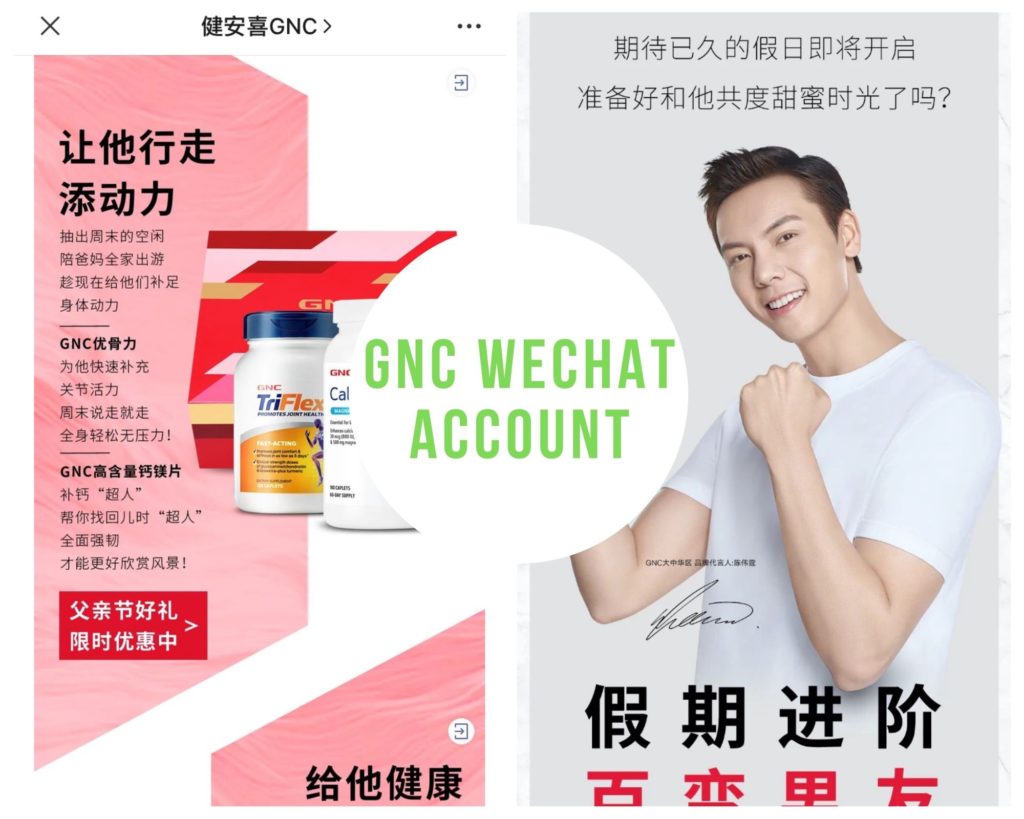
For example, GNC China pointed out that GNC always aims at providing high-quality, safe, and reliable dietary supplements to its consumers. In addition, its partnership with Remintongtai indicates its ambition in China market while also enabling Chinese people a more convenient way to obtain high-quality dietary supplements.
Current lifestyle drive demand for dietary supplements in China
Consumers are looking for ways to improve their nutrition, without invading the comfort of their lives. Numerous factors such as:
- urban pollution,
- lack of time for healthy cooking,
- sedentary lifestyle and the appearance of being overweight,
are detrimental to the quality of life creating new health problems to take into account.
Dietary supplements to improve physical appearance
Kinds of dietary supplements are used to improve physical appearances, such as facial skin or body musculature.
Indeed, strong and muscular bodies are gradually becoming the norm in China. The proliferation of content on social networks that enhances the benefits of healthy and disease-free supplements further encourages this trend.
In addition, this kind of dietary supplement is in line with the trend of “nutricosmetics”, a neologism used in the cosmetics industry for foods that improve appearance. They promise detoxification of the body, beneficial effects on skin, hair, and nails, and fight weight and cellulite.
The demand for dietary supplements in China
- increasing consumer purchasing power of the middle class
- increasing consumer health-awareness
- the aging of the population as consumers look to prevent age-related conditions
- skin issues due caused by environmental pollution
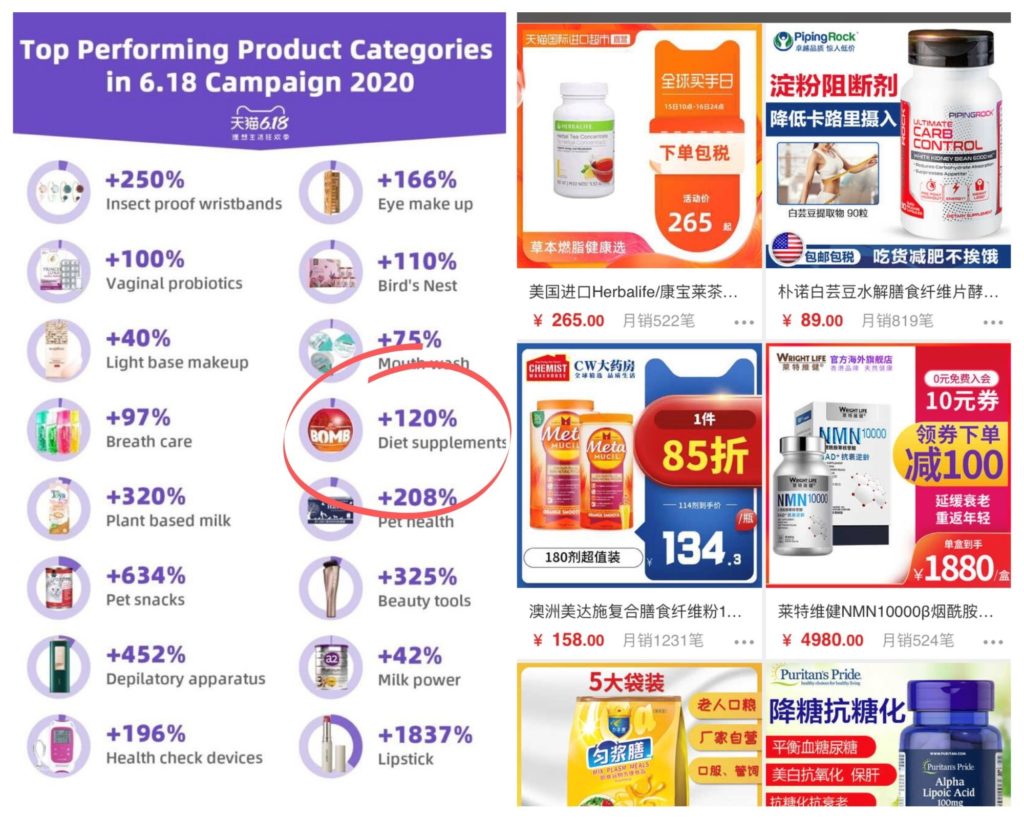
Dietary supplements are one of the top-performing product categories on the Chinese e-commerce platform Tmall. As a matter of fact, during the recent 618 Shopping festival, dietary supplements sales have seen a growth of +120% on this platform.
Chinese dietary supplements consumers groups and behavior
Women consume more dietary supplements than men
Chinese Women are mainly looking for slimming and anti-aging products, however, they have different needs based on their lifestyles.
- White-collar workers & dietary supplements
Alopecia and insomnia caused by over-stressed working have become increasingly common among white-collar workers who favor vitamin E and vitamin C for their anti-oxidant value.
To satisfy their demand, GNC, the American company selling health and nutrition products, launched customized dietary supplements for various occasions to help white-collar workers to obtain better mental and physical health.
- Baby care/mother care products in China
Young mothers, women buy more and more nutrients for their babies. Natural origin is a determining factor in their purchase decision. Vitamins like calcium, iron, zinc, vitamins, and omega-3 are preferred.
Teenagers represent a large proportion of dietary supplements consumers
This segment of the market is particularly interested in dietary supplements that can improve school performance. For the generation born after 1990, the fashionable product is konjac powder, but the high-protein milk of black rice, black beans, and black sesame is also appreciated.
Elderly people rely heavily on dietary supplements
This group traditionally consumes certain group foods and follows Chinese medicine to prevent diseases, but also for physical appearance, in particular women. Elderly consumption of vitamins as immune system enhancement is on the rise and a niche that still remains untapped.
GNC recently introduced products with higher standards in terms of quality, purity, and activity to meet the needs of the elderly to enjoy a healthy life. These products help the elderly to:
- improve sleep quality,
- weight loss assistance,
- protection of bones and joints,
- improve immunity.
What are the main dietary supplements sold in China?
Some dietary supplement products allow consumers’ immune systems and memory to be fortified, blood to be regulated, sleep quality enhanced, and organs to be protected. Other kinds of products can help people to lose weight, have clear skin, or have higher bone density.
In China, the most valued dietary supplements are those with functions over the immune system and account for 27% of sales. However, as we said before, new trends are coming up like dietary supplements to improve physical appearance.
In China, cereals, black sesame, alfalfa, red and black beans, and nuts are all popular supplements. In addition, new “superfoods” like chia seeds are growing in popularity. It is possible to find these supplements in various forms such as capsules, pills, sachets of powder, ampoules of liquid, etc.
Dietary supplements in China can be divided into two groups:
- those that play on health
- those that improve the physical appearance
How to enter China’s dietary supplements market?
China has strict regulations concerning product registration and licensing for health sector products because you need to obtain the Health Food Approval Certificate from the CFDA.
Product registration and licensing for the healthcare sector is an extremely lengthy process, even if applications are successful it can take up to 3 years to process and there is no guarantee of approval in a system where strict regulations are constantly changing.
Cross-border e-commerce is the solution!
With e-commerce, you can sell straight away without a license so long as you gain approval from the relevant cross-border platforms. Online platforms are becoming more and more utilized by tech-savvy consumers, indeed a clear majority of Chinese purchases are made online, and mobile sales growth is growing every year.
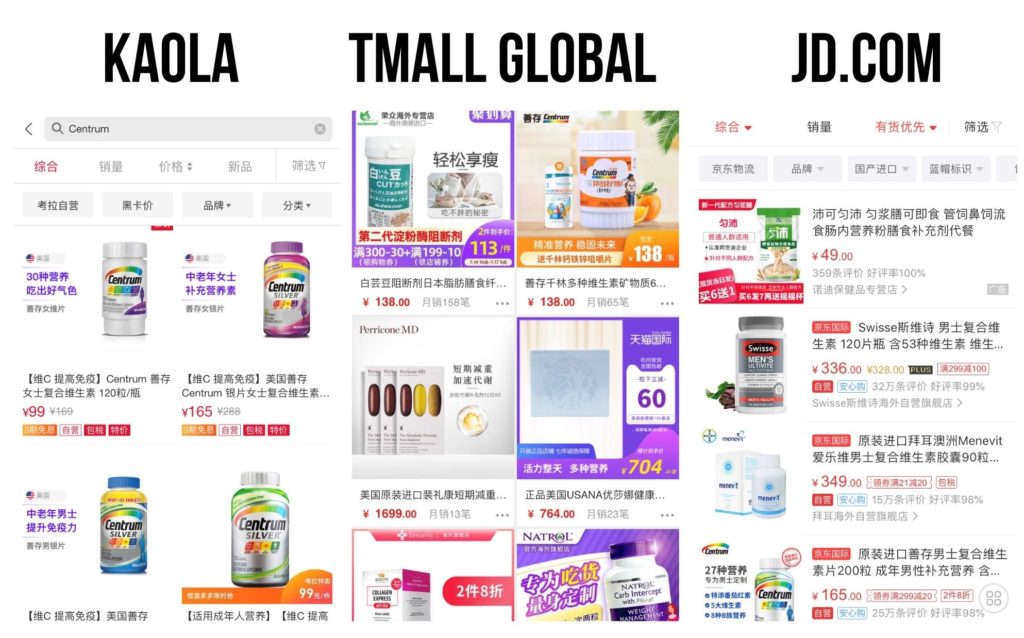
Thanks to the powerful cross-border e-commerce, international companies have been able to bypass mainland China regulations on health products and avoid local taxes. As a consequence, they can be competitive in terms of price with domestic products.
Because e-commerce will likely become one of the most popular outlets for selling vitamins and dietary supplements, an online sales infrastructure is essential.
The most suitable cross-border e-commerce platforms to sell dietary supplements are Tmall Global, JD Worldwide, and Kaola.
We would suggest larger companies set up a legal entity in China and enter the local e-commerce platforms as soon as possible. While getting their business license, labeling requirements in order, and so on, they can sell through the cross-border e-commerce option.
Access to hundreds of millions of consumers through Tmall & Tmall Global
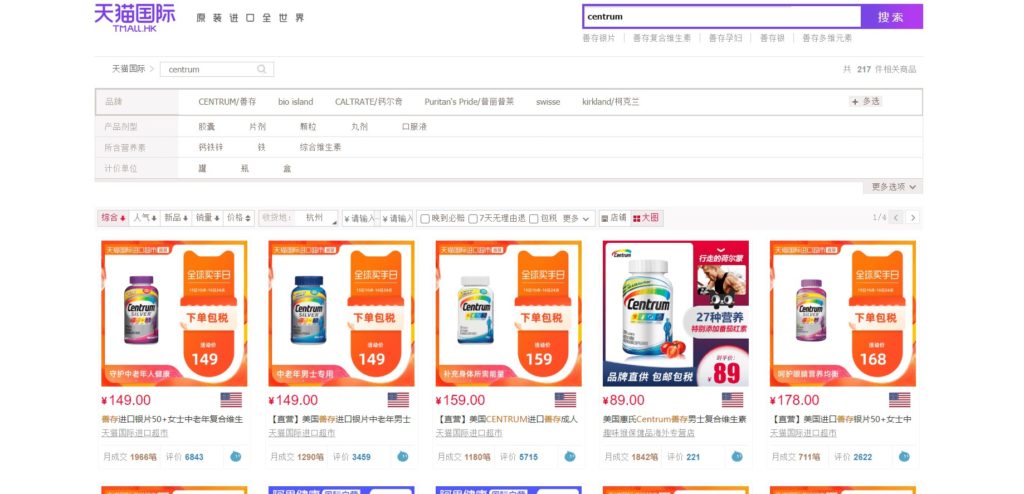
Tmall is associated with quality and authenticity in a marketplace landscape often associated with fakes & uncertainty of quality, therefore it widely satisfies the current consumer’s need for high-quality dietary supplements. In fact, buyers on Tmall need to verify that the store and products are genuine.
There are two ways to join Tmall’s platform:
- Companies with China in-country business operations can apply to Tmall.com.
- Companies with overseas licenses are eligible for Tmall Global.
Operating a Tmall.com storefront is much like operating your own B2C website, offering autonomy from design to operations to fulfillment and logistics.
Sell Through the e-commerce platform JD.com
With over 470 million active consumers, JDcom is also one of the leading e-commerce platform JD.com and enjoy the trust of the Chinese people.
Through JD and JD Global, Health care international brands can reach out to Chinese adult consumers. Truth be told, differences between JD and Tmall lie in detail as JD has evolved to look more and more like Tmall. Both apps sell varied ranges of products/Price range.
Just like on Tmall, JD’s vitamin categories have experienced growth in the last few years, boosted by the rise of online sales but also the deep impact covid 19 has had on Chinese people.
How to promote your dietary supplements in the Chinese market?
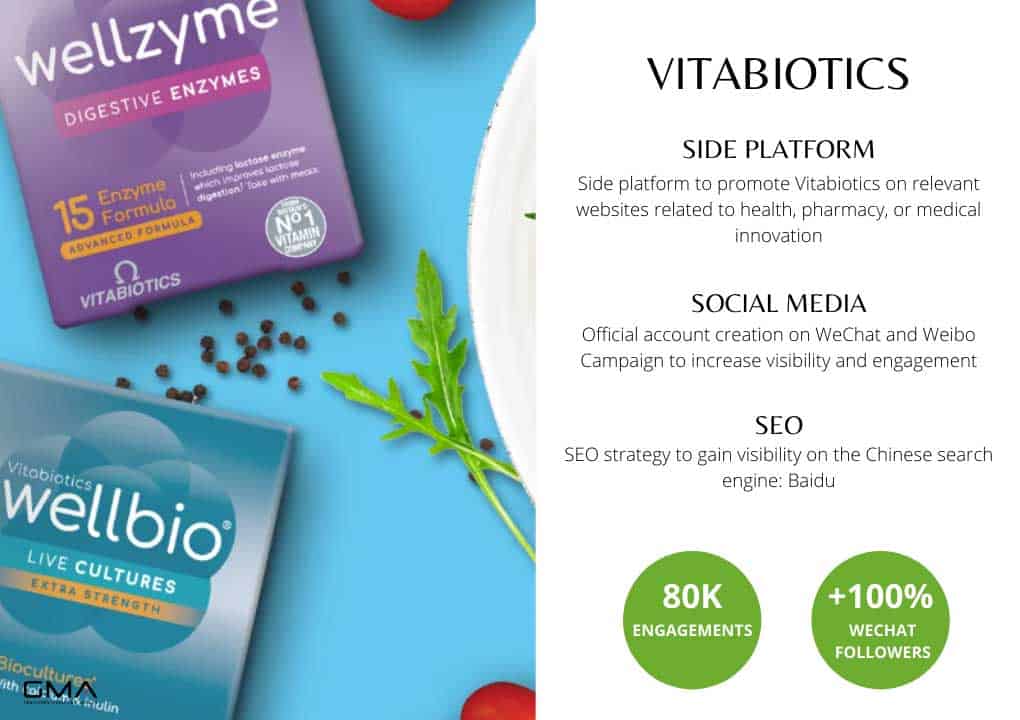
Branding in China is everything, it is the only way to be successful in this huge market, therefore, what are the steps to follow to create strong branding in China?
Open an account on Chinese social networks! This is the first step that you have to do to promote your products in the Chines market. Why? Because Chinese use only Mainland channels and they spend a lot of time on these platforms.
The Chinese are very predominantly on social networks, so it is not possible to ignore targeted communication. Consumers are always researching the products they want to buy, and most of the information is available on these channels.
WeChat, Weibo, Xiaohongshu, Douyin, and the Q&A platforms Zhihu are the best social network to promote dietary supplement products.
How to promote dietary supplements on Chinese social networks?
The brand image is essential, and the name given to the product should not be chosen lightly. The name should not go against Chinese cultural beliefs and should include sounds close to the terms “health”, “well-being”, and “form”. In addition, a good e-reputation is essential!
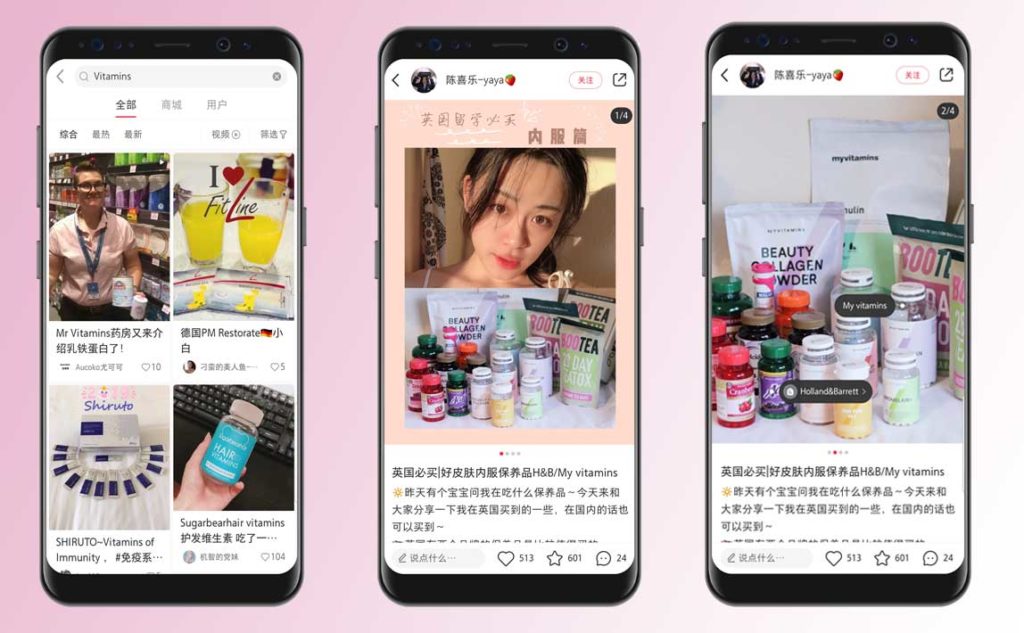
Western supplement brands using these social networks should focus their marketing strategies by highlighting some aspects:
- The Chinese want to know exactly what they ingest, therefore being transparent in the communication about the ingredients used is highly recommended,
- When it comes to health products their benefits need to be grounded in science, particularly in China with a strong culture and appreciation of the sciences,
- The Chinese rely on the recommendations of their peers before buying a product and want to be sure of its effectiveness,
- Emphasize quality through high-quality raw materials and formulas.
- Collaborate with KOLs, Chinese people rely a lot on them, in particular in this sector
For example, By-health, the Chinese leading brand, significantly adopts a strategy of concentrating on single key products, focusing on a category through consumer education and marketing activities.
In the same way, GNC launched its new dietary supplement products highlighting the use of high-quality raw materials and formulas.
To get Chinese Customers you need a Chinese website!
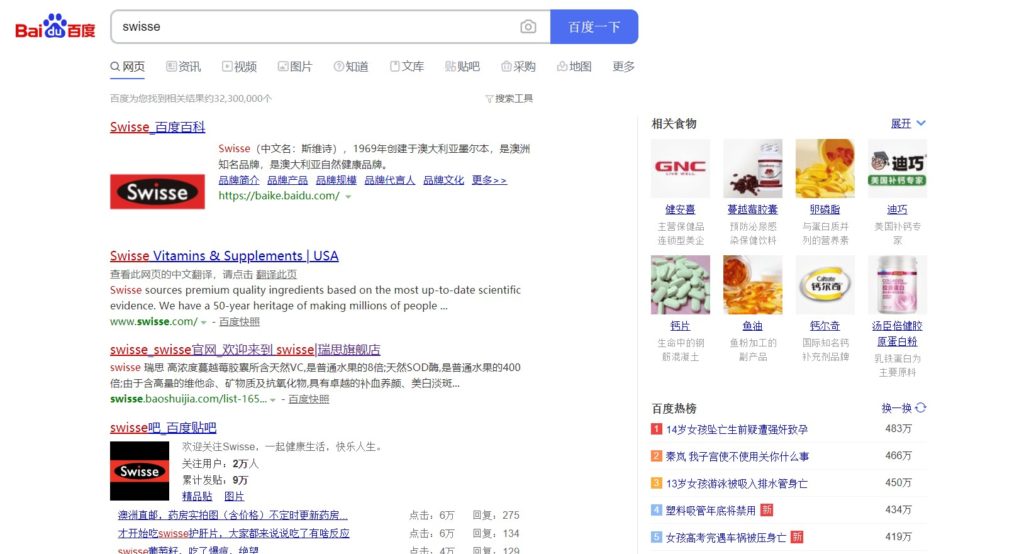
Western brands that want to enter the Chinese market should understand that Chinese consumers don’t buy products they don’t know.
Creating a Chinese website to be visible among Chinese consumers is essential for branding in China. Of course, it should be created on Baidu, the Chinese Search engine.
In addition, to be visible, your Mandarin website should be hosted in China because Baidu knows only Mandarin and gives priority to websites hosted in China, so they are extremely important for your SEO ranking.
Your content should be localized to the Chinese market, so for example, the Chinese website culture is different from our culture. You need to adapt your content and design to the local expectations: Chinese consumers are looking for a site with a lot of information, as opposed to the simple layout of western websites.
Brands can also take advantage of Baidu SEM tools to be more and more visible among Chinese consumers.
Partnering for Success – Our Agency’s Expertise in Navigating the Chinese Dietary Supplements Market
In conclusion, the Chinese dietary supplements market presents a promising avenue for foreign businesses to expand their operations and capitalize on the country’s large and growing consumer base. Aligning products with the evolving preferences and needs of Chinese consumers, particularly by addressing specific health concerns, allows companies to position themselves as trusted providers of high-quality dietary supplements.
The rapid growth of e-commerce in China further enhances market accessibility, providing foreign businesses with the opportunity to reach a wide audience through established online platforms. Leveraging technological advancements and implementing effective digital marketing strategies enable companies to showcase their products effectively, creating brand visibility and gaining a competitive advantage.
While navigating the complex regulatory landscape in China can be challenging, ensuring compliance with product safety and quality regulations is crucial for building consumer trust. With our agency’s 20 years of experience in the Chinese market, we are well-equipped to assist foreign businesses in successfully navigating these regulatory requirements.
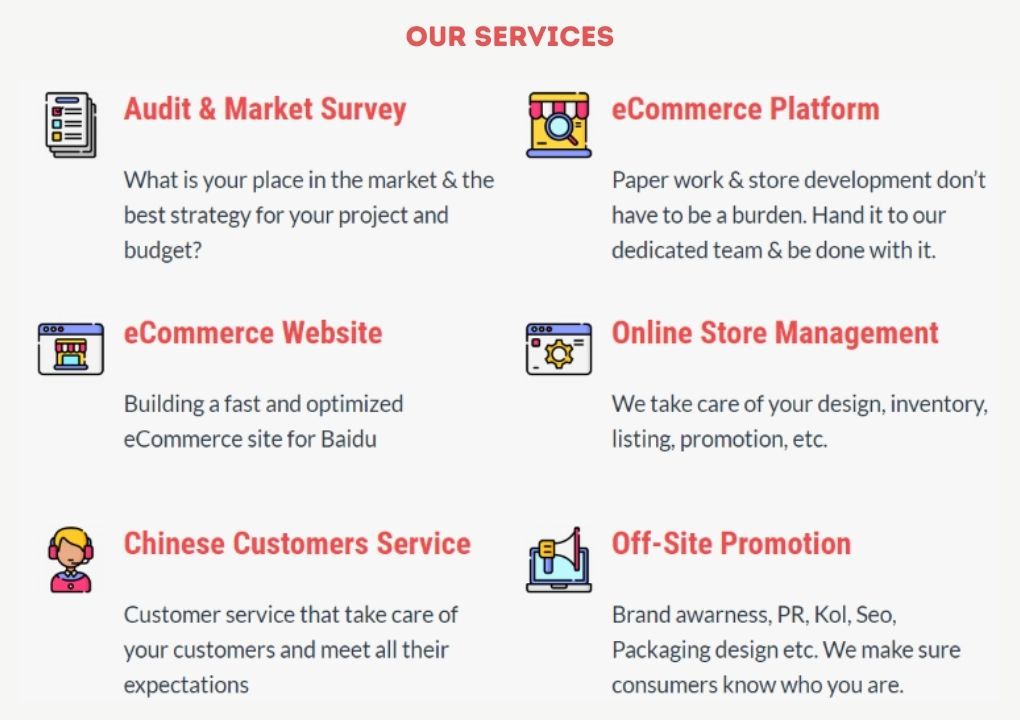
Our agency is dedicated to helping businesses seize the growth opportunities presented by the Chinese dietary supplements market. We offer expertise in market entry strategies, regulatory compliance, and product registration.
Feel free to contact us at any time to discuss how we can support your entry into the Chinese market and leverage our experience and knowledge to maximize your chances of long-term success.
1 comment
Dr. Jason DuBois
Can you send me more information about your company, supplement brands you represent and cost to start marketing and selling our dietary supplements in China.