

China’s evolution over the years is incredible not only in terms of economic growth but also in terms of living conditions. The Chinese middle-class is growing faster than ever while lower-tier cities are booming in terms of industrialization. China has become a potential market to conquer for every company that wants to increase their sales and attract a wide audience.
Beauty, cosmetics, and Hair care are promising industries in China. As demand continues to increase despite high levels of penetration, many companies continue battling it out at this core spot on their shelves. If you want to enter the Chinese hair care/ shampoo market, you might be interested in the following tips and advice we are going to give you in this article.
Hair Care products in China: A growing Industry
As the world’s second-largest cosmetics market after the United States in terms of revenue and consumption value, China is also one of the fastest-growing and most promising markets in the world in terms of hair care products. Resulting from urbanization, growing disposable income, and social media influence, the hair care industry is facing a burgeoning demand for higher quality, premium, and high-end brand products.
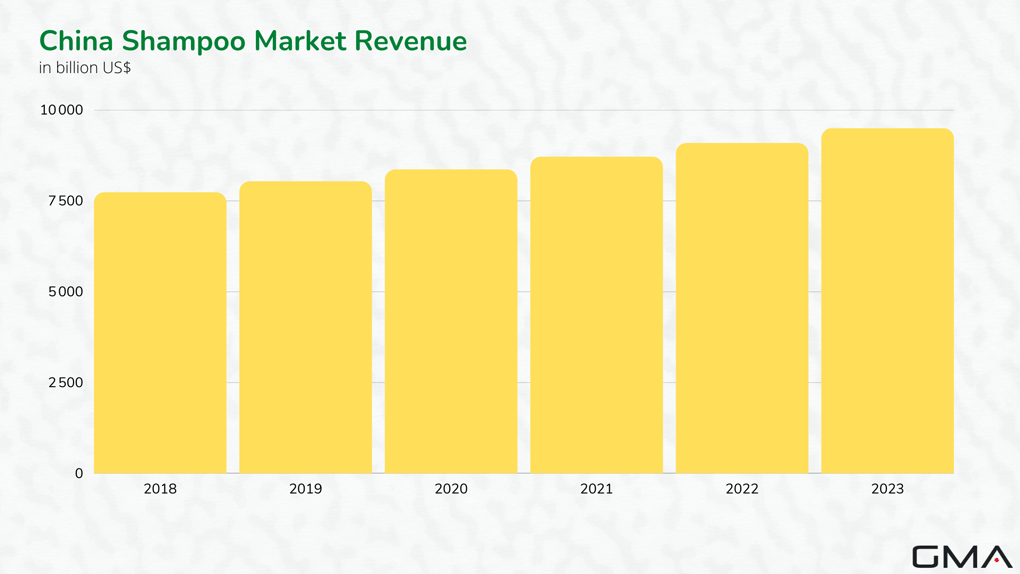
While hair care products (conditioner, hair masks, hairspray, etc.) were most of the time perceived as unnecessary by the majority of the Chinese population for a long period of time, behaviors have shifted over the year with greater concern about hair strength and scalp health. According to the research firm Mintel, the hair care market is reached 53.6 billion yuan in 2021 and is expected to reach US$8.88bn by the end of 2022. The Chinese haircare market is forecasted to be growing by 4.5% CAGR between 2022-2027
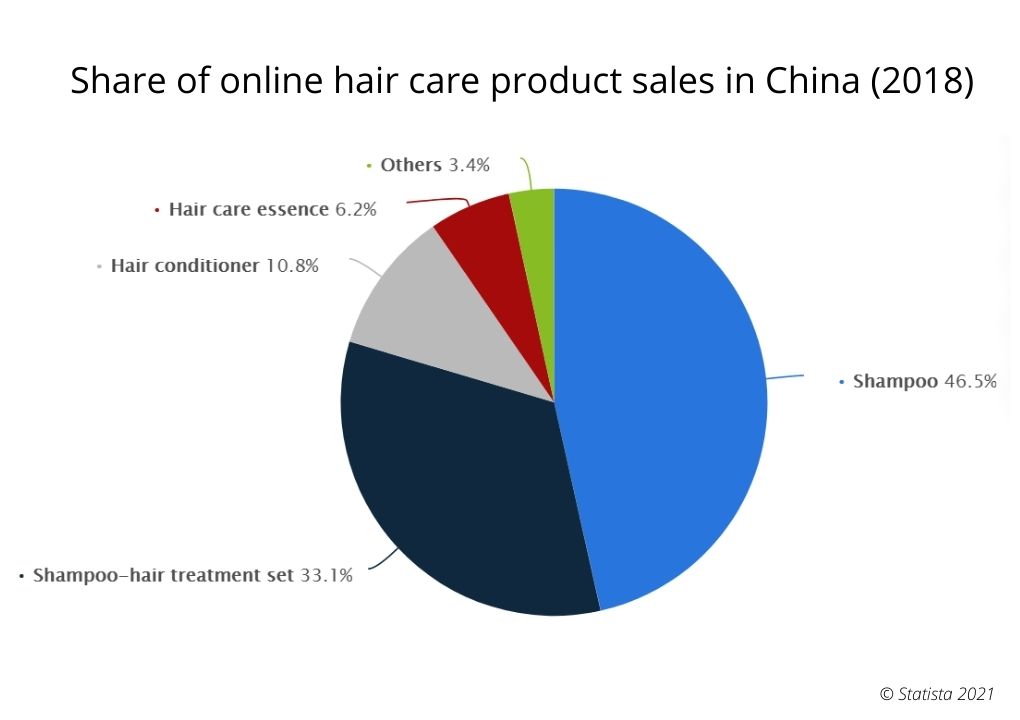
In 2018, shampoo online sales accounted for 46.5% of the total online hair care product sales in China. Shampoo was the principal category followed by hair treatment sets, which accounted for around a third of the total sales that year. In terms of revenues, online sales of hair shampoo and hair products reached more than 11.75 billion yuan in China. On another hand, the most popular hair care companies in China are Procter & Gamble, Unilever, Avon, Kao, L’Oréal and Henkel, Pantene, Rejoice, and Head & Shoulders.
There are several drivers that play an essential part in this development: growing demand for men’s hair care products, which steadily increases marketing across online platforms, and the ambition for brands to attract more customers who are willing to pay more for higher-quality products.
The Hair Care and Shampoo Industry in China
With many regional and domestic players in the market, China’s hair care industry is highly competitive but also fragmented. brand names are focused on expanding through mergers or acquisitions. The leading brands use new product development as well in order to gain an edge over other players within this very tight space for commerce!
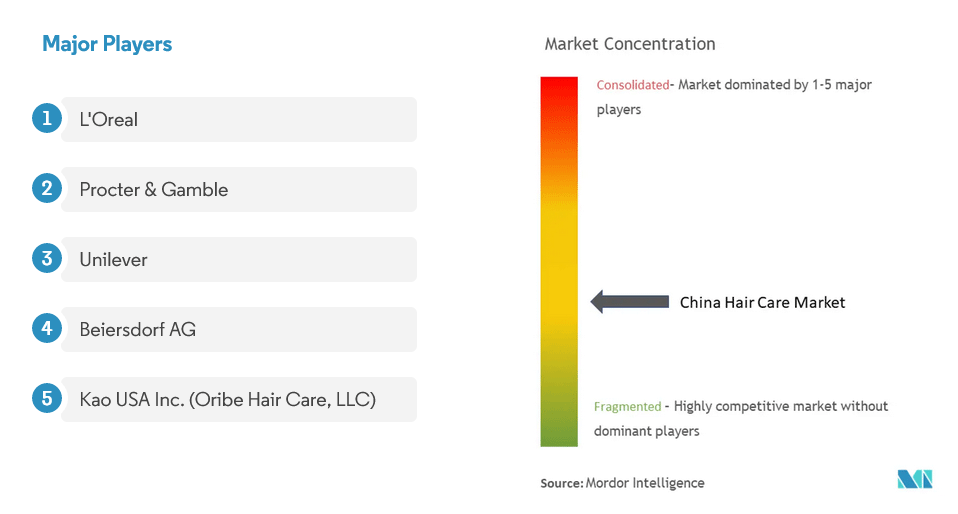
Many foreign brands have already been able to enter the Chinese market, such as the P&G group (Head & Shoulders, Rejoice, Pantene) and Unilever (Lux, Hazeline) grabbing over 75% of the Chinese shampoo market. However, international brands are not the only ones trying to break into the Chinese market.
HAIR CARE IN CHINA: SHAMPOO SEGMENT
The shampoo industry in China represents a huge opportunity for foreign brands to expand their activities in one of the most promising markets in the world.
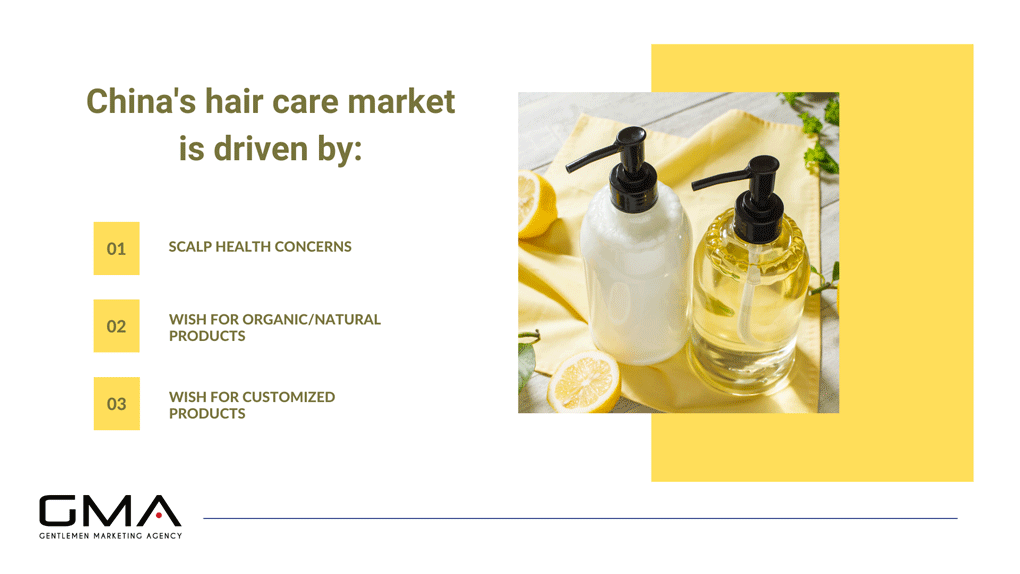
However, entering the Chinese shampoo market is not an easy task. You have to take into account that the Chinese are extremely cautious when it comes to choosing hygienic products. Indeed, according to a research published by Mintel, 81% of urban Chinese consumers say they prefer to buy all-natural hair care products, while 10% are considering the presence of natural ingredients as the key factor for purchasing products.
Moreover, while consumers’ top hair concerns are still the same as before (anti-dandruff for example) there is a growing focus on caring for hair and added benefits, such as long-lasting fragrance. So, if your shampoo has these benefits, you might be able to attract Chinese consumers.
It is also worth mentioning that the beauty and hair care industry for Men has grown significantly these past few years, as Chinese men are putting much more importance on their appearance.
Opportunities in China’s shampoo market
The Chinese population is affected by some specific hair issues, such as premature baldness and hair loss. According to the China Association of Health Promotion and Education, approximately 250 million Chinese people suffer from premature baldness, which can be a potential market to conquer if you want to sell your treatment shampoo. However, you will have to be careful when it comes to the composition of your shampoo.
How to sell your shampoo in China
As one of the fastest-growing markets in the world, China is also one of the most competitive. Thus, you have to be prepared to face more competition than anywhere else in the world. The shampoo sector is already dominated by hair care giants which benefit from global awareness and international popularity. So, you are now probably wondering what is the best way to sell your shampoo in China? In fact, the choice of the channel of distribution will mostly depend on your budget, but also according to your marketing strategies.
Mass distribution
This one may be challenging, as many international brands have already been in the Chinese market for years. You will also have to compete with Chinese brands which are already known among consumers, and probably less expensive.
However, if you really want to sell your shampoo via mass distribution/Chinese distributor, you will first need to build an online presence on the internet and on social media in order to convince people to buy your shampoo… in short, even if you don’t distribute your brand yourself, you still can’t avoid marketing costs!
Chinese E-commerce platforms
China is the most digitalized market in the world with over 900 million people connected to the Internet. They are not only connected but highly engaged online. On average, Chinese netizens spend 6 hours per day on their phone.
One of the major keys to China’s digitalization is that Chinese consumers are now looking on search engines in order to have more information about the product and the brand and then purchase online. In a word, they do everything online. So, if you want to expand your activities and sell your haircare/ shampoo in China, you must take advantage of the country well-developed e-commerce landscape
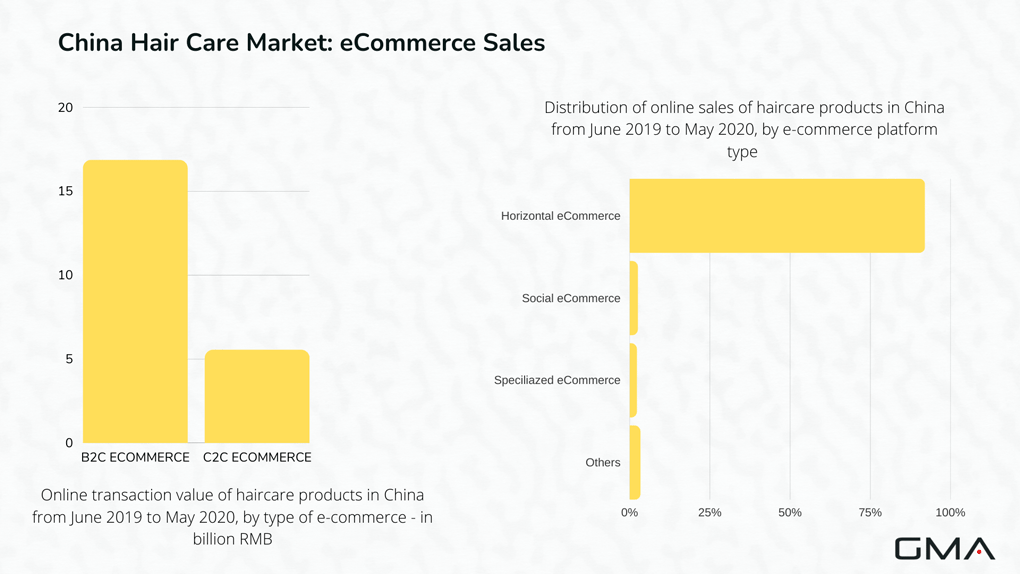
Online sales for shampoo products have been in constant growth these last few years, reaching 13.5 million yuan in 2019 and over 22 billion in 2020, accounting for
TMall: China e-commerce leader
Tmall is quite famous. Its Alibaba’s most successful platform. It has been attracting brands from all over the world for years now and has a strong, loyal, and trustful consumer base. Tmall is a to-go for cosmetics and beauty purchases as the platform offers its consumers the assurance that they are getting legit products and not copycats or shady brands.
Tmall is an open business-to-consumer (B2C) platform enabling businesses worldwide to reach China’s vast and growing consumer market. Tmall has become the place to be for cross-border eCommerce as well with its spin-off Tmall Global. Tmall Global really has been a wonderful entry door to China for many beauty brands.
However be careful, selling products on TMall requires a long procedure and a verified business account in order to be able to display your products on their website. You can contact us for more information.
Taobao
Taobao is like TMall, but the procedure to sell your products on Taobao can be considered easier and more convenient. However, unlike Tmall, you can not sell through cross-border eCommerce on Taobao. The registration fees are a lot more accessible, but commission fees can go high rather quickly as it’s something you’ll need to renegotiate every year with the platform. By increasing commission fees, Alibaba wants to push the successful brands to move to their more highly regarded platform: Tmall.
Pinduoduo: group buying
Pinduoduo is a popular e-commerce platform in China that offers users great discounts on products from a range of different brands. So, if you’re looking to sell shampoo in China, Pinduoduo is definitely a good option but your price range will be considered a key factor for your sales. One of the strengths of Pinduoduo is its social aspect through group buying and affiliate marketing.
For many brands, Pinduoduo should be used as an additional sales channel to discover and reach out to new target audiences as well as to get rid of unsold products and so on.
There are a few things to consider when selling shampoo in China on Pinduoduo.
- What is the target market? are you looking for a new market? do you want to expand to Chinese less wealthy cities?
- What is the price point of your shampoo? Is it a luxury item or something more affordable? Don’t use Pinduoduo as a primary sales channel for high-end products.
- Are flexible with your price? Can you use a wholesaler strategy? The core idea of Pinduoduo is to offer great prices through group buying.
All of these factors will play into whether or not you should start selling on Pinduoduo
Xiaohongshu: social e-commerce with a specialization in beauty and lifestyle
Social eCommerce is the intersection of social media and e-commerce. In China, it translates into the process of merging integrated e-commerce features into well-established social media platforms like WeChat for instance. One of the first platforms doing successfully so is Xiaohongshu.
Xiaohongshu started as a UGC social media app. And although it has managed to keep its core feature as its main features, Xiaohongshu has smartly shifted to monetizing its app with its own e-commerce store called RED.
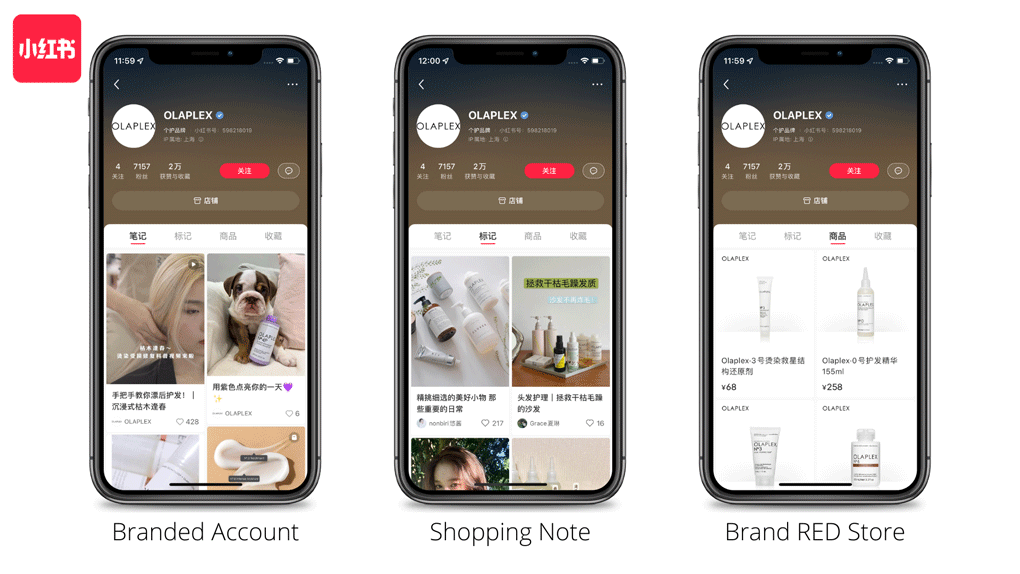
Now, RED Store will never be your main selling channel but it is an excellent one to reach out to niche target audiences as well as consumers in Chinese wealthy cities. It is a great complementary sales channel and an even better marketing & communication channel.
The little red book is also a social media that you want to invest in with an official branded account where you post branded content, but also where you collaborate with KOL and engage with your followers base to encourage them to create shopping notes where they talk positively about you. Little Red Book shopping notes are a popular way for consumers to get an honest opinion about products and also to discover new brands. Bonus: Shopping notes rank well on Baidu
On your Chinese website
Just like Xiahongshu, your website will never be your main sales channel as Chinese consumers are too used to the safety net that a big eCommerce platform offers them. However, not having a website won’t look good. Having a Chinese website will help you with credibility as a brand (aka you are legit) and visibility through Baidu SEO.
Advertising your shampoo brand in China
Chinese consumers are more likely to show their interest and opinion on social media than ever. Thus, it is important for you to pay attention to your e-reputation in order to keep and attract new consumers. You will have to be careful when it comes to the quality and price of your shampoo, but also when it comes to your consumers’ opinions and thoughts.
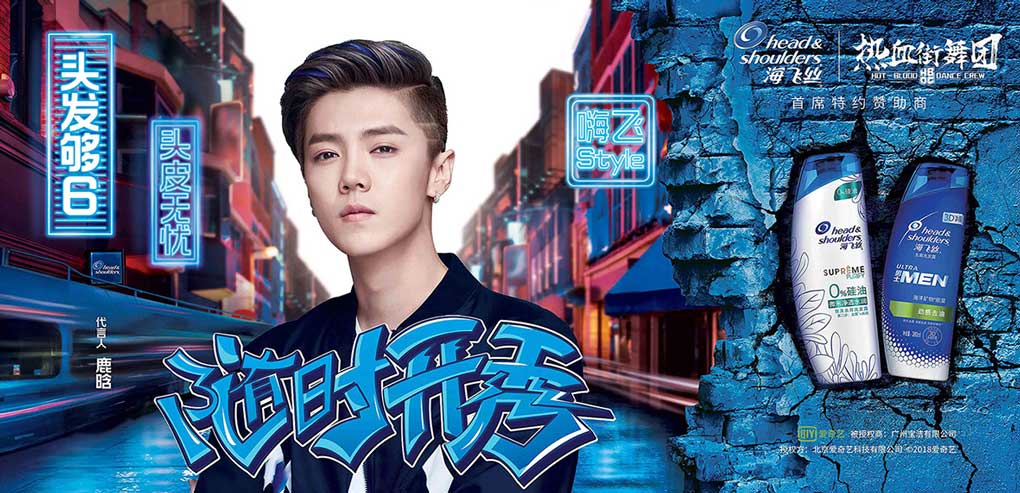
If you want to sell your shampoo in China, you have to work on your brand awareness and reputation. For example, you can see in the above ad the famous singer Luhan (鹿晗). The purpose of Head & Shoulders was to draw the younger generation’s attention, rejuvenating their image and driving sales at the same time.
In fact for Chinese consumers, marketing or advertising content quality is an important decision factor when shopping for health and hygiene products. However, advertising in China might be a little bit different than advertising in western countries. Chinese people are using social media for everything, so you will have to adapt to the Chinese market when doing advertising. We are going to give her some tips and advice to advertise your shampoo in China.
Baidu: Give Visibility & Credibility to your Shampoo Brand in China
Baidu is the most popular search engine in China, so using its platform to reach potential customers is a no-brainer. Additionally, Chinese consumers are particularly wary of online scams and fraudulent content, so they’re more likely to trust brands that have a presence on Baidu. Presence on Baidu is one of the main reasons you actually need a website in Chinese.
WeChat: nurture your Chinese audience, build loyalty
First, WeChat is the most popular social media app in China, with over 1 billion active users. This provides businesses with a large audience to market to and communicate with.
WeChat offers a range of powerful features that can be used to promote haircare brands. These features include chatbots, which can be used to answer customer queries and provide product information, and QR codes, which can be used to direct customers to product pages or promotional videos.
One of the most prominent features for the brand on WeChat is the official account that allows you to nurture your followers base and build loyalty but also gives you access to WeChat eCommerce tools, integrated CRM, and on.
Douyin: reach out to China’s Genz through engaging content
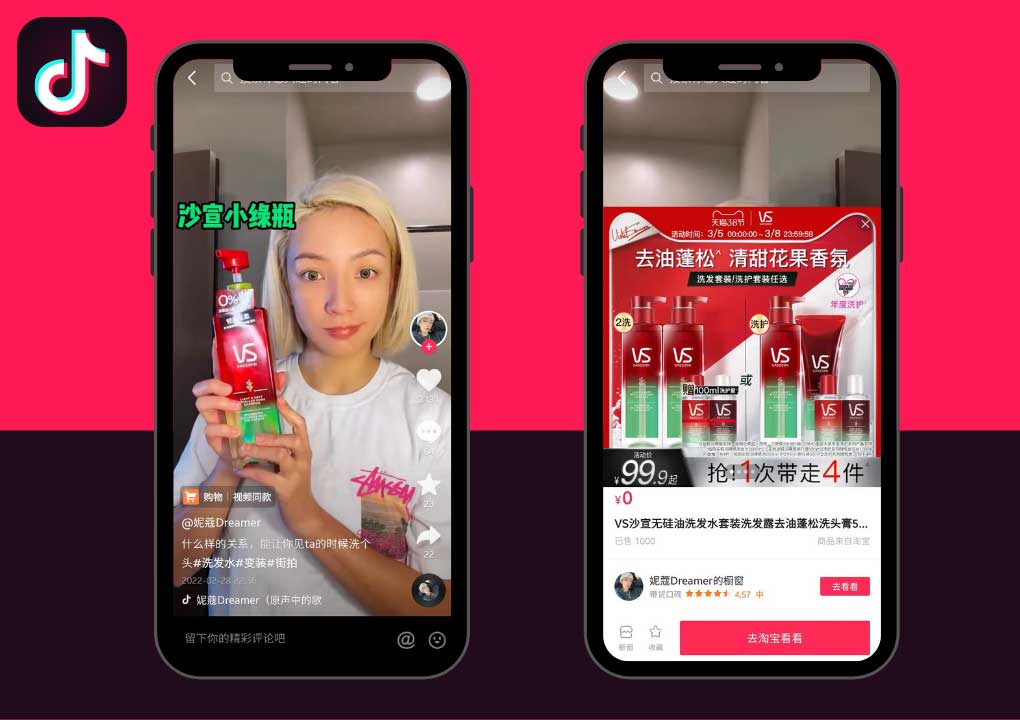
As the most popular short-platform video in China, Douyin is a wonderful social media if you want to advertise your products and attract a lot of Chinese consumers. However, publishing on Douyin does not mean that it will increase your visibility. You will have to be creative in order to stand out among your competitors.
Zhihu: Undercover marketing for your hair care brand in China
Zhihu is great for promoting a brand in China because it is one of the most popular online Q&A platforms in the country.
With over 300 million registered users, Zhihu offers brands an engaged and highly-targeted audience for marketing and product promotion. And because questions and answers are ranked according to their popularity, brands can leverage the platform to boost their visibility and reach more potential customers.
With Zhihu brand can go official through branded accounts and undercover by building a strong consumer profile and even their own Zhihu KOL and community. Zhihu content is highly appreciated by consumers looking for advice before purchasing new items such as shampoo. Because this content is appreciated and trusted, it will also rank on Baidu. Don’t be shy with Zhihu marketing and undercover marketing, it is cost-efficient!
Need help entering the Chinese Hair care and Shampoo Market?
GMA is a Digital Marketing Agency that analyzes the needs that will drive the implementation of your business model. We execute digital strategies and provide market surveys for your business in order to give you the best of the Chinese market.
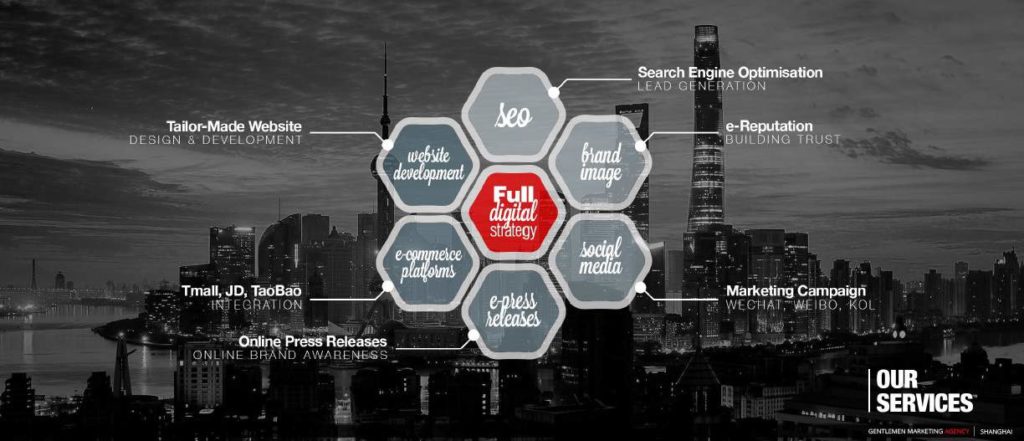
Our experience as an international marketing agency has allowed us to develop our strategies. Proud of the success of the companies we have accompanied throughout the process of exporting their products in China, we will be happy to answer any of your questions and talk about your projects.
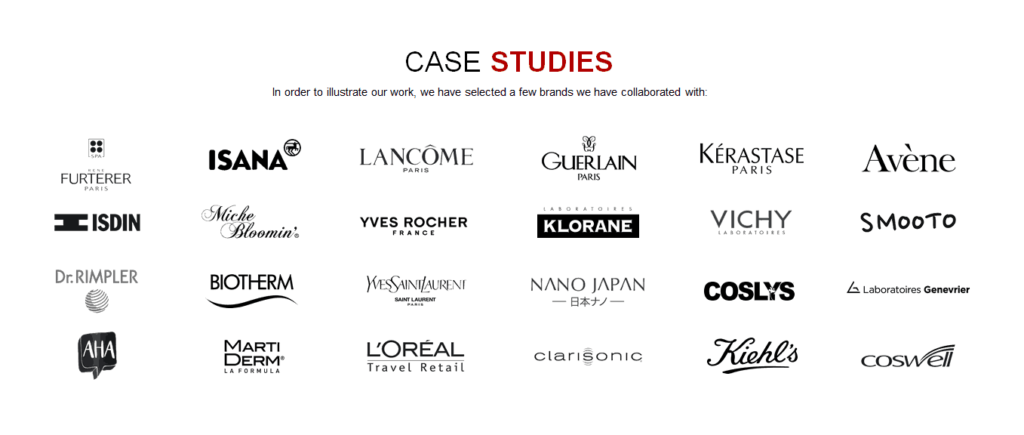
You can also find some case studies about the companies we have been working with:
1 comment
KM Lee
We are manufacturer of 21 kinds of Natural Aroma and Herb ingredients are used Shampoo in Japan.
We’d like to have a chance to enter China Shampoo market through you.
Simply let me explain about our Shampoo Features.
1. We use only Natural Herb and Aroma ingredients.
No Silicon
No Surfactants
No Preservatives
No Synthetic Perfumes
Rich Bubbles
2. All-In-One Shampoo
Hair Shampoo
Hair Treatment
Body and Facial Shampoo
3. Body skin and Scalp care
4. Prevention Depilation
Thank you for your time and we look forward to your positive reply.
Finally, if you need detail data and information about our Shampoo, we will send them to you.
For your reference, We have been selling it in Japan and Korea over 30,000pices every single year.
Also we can supply with your own brand .
Best regards
KM Lee