

China’s healthcare industry is growing at a rapid pace. According to a report published by McKinsey & Co, the country’s healthcare market is tipped to grow at an unprecedented CAGR of around 12% which will surge to $1 trillion by 2020, while in 2011 the sector was valued at $357 billion. Moreover, in 2017, China’s online healthcare market reached 32.5 billion yuan ($4.6 billion), 45.87 percent higher than that of the previous year, shown by the National Health Commission. China has seen a strong valuation in the field of consumer growth in 2016. Many multinational companies are eager to invest and start their business in order to take advantage.
Three factors reshaping China’s healthcare market
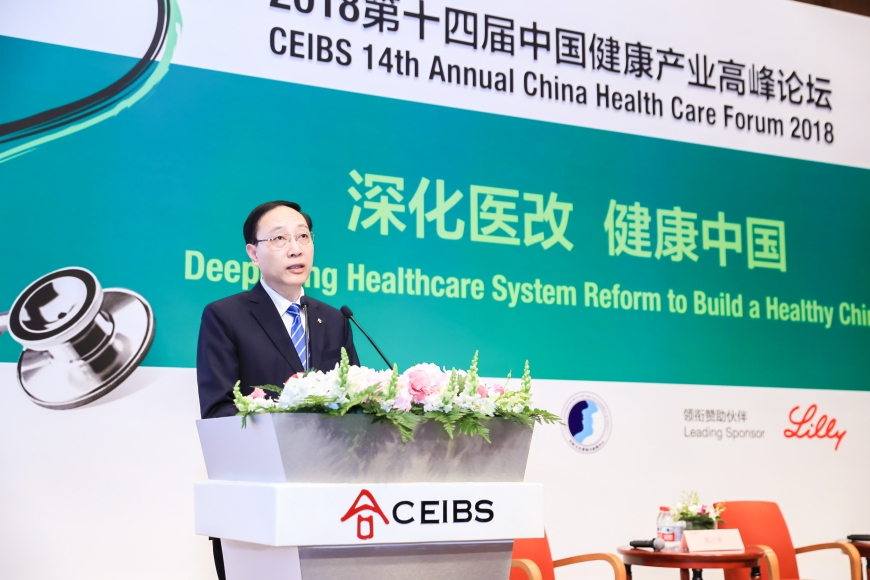
According to the content in the blueprint of healthcare reform. Three factors are boosting China’s healthcare market.
- Economic increase and aging population
- China’s reform in healthcare
- The policies injected in the government’s economic plan
Improvement in infrastructures, the broadening of the insurance coverage, and the significant and constant effort for innovation- put a positive impact for multinational companies. Other factors that can be subjected to consideration are:
- The growth of pressure and the increase in the price of the local champions.
- The secondary factors are stressful as they are going to have a negative impact. In some aspects, the bid to reconcile the low-cost health care scheme will cover rewards. Such forces come to direct opposition.
The strong development in the healthcare sectors is applauded by the favorable conditions.
- The constant changing demographic trends
- The rapid growth of urbanization
- An increase in disease or the pathogens
- The rapid expansion of the economic scenario of the market
- The rapid growth in the health economy expansion
- The growth in the income or the purchasing power parity
Government’s first contribution in 2006
The farsightedness of the government can be seen from the fact that the government has prioritized the health care sectors. Since 2006, the government has taken steps in making the healthcare sector a social priority in the financial five years plan and China has been undertaking the most significant health care reforms ever.
Just after this initiative, the expenditure on healthcare was doubled to $357 billion in 2011 from $156 billion in 2006 that is almost close to 5% of the country’s GDP. Almost every health sector of China has benefited, from pharmaceuticals to medical devices. Even Chinese traditional medicine has also benefited from it.
Pharmaceutical sector: $27 billion in 2006
Category-wise, the contribution of the pharmaceutical sector cannot be neglected. The market of the pharmaceutical sector stood at $27 billion in 2006. It ranked 9th on the global scale. Whereas, by the end of 2011, the pharmaceutical sector had the contribution of $71 billion and stepped up in the ranking table by marginal 6 spots on the global index.
In the pharmaceutical sector, the total revenue of the top 10 pharmaceutical multinationals in the year was $4 billion. The same figure rose to $10 billion in 2011. The figures, facts, and data suggest that the healthcare sector in China is a booming sector.
The market size of the medical products segment in china stood at $8 billion in 2006 
Another contributing sector is medical products. China is one of the leading producers of medical products. The market size of the medical products stood at $8 billion in 2006. This sector took a considerable jump and lead by the year 2011 to reach the $20 billion mark.
Though the revenue amount has changed considerably the ranking has improved slightly. In 2006 where it stood at 6th, by the end of 2011 it stood at 3rd.
The leading pharmaceutical companies contribute the major part of the revenues.
The momentum has shifted considerably. This momentum shift has given China the light for multinational health care companies. Years after the reform, the leading pharmaceutical companies contribute a major part of the revenues.
Healthy China 2030 – Great opportunity for foreign brands
In 2017, the country made the blueprint “Healthy China 2030”, pledging to build a healthy China in the next 15 years. By 2030, the size of the healthcare market is expected to reach $2.3 trillion.
Overall, China’s healthcare sector has big potential for 2020 and beyond. On the one hand, the government is supporting the growth of the industry by encouraging investment and innovation.
On the other hand, with the rising affluence, Chinese people pay more and more attention to their health. Imported food supplements, vitamins, wellness health products are perceived as reliable, expert, and efficient. Therefore, in 2020 and beyond, in China exists a great opportunity for foreign brands.
Brand’s e-reputation – a key point in China’s healthcare market
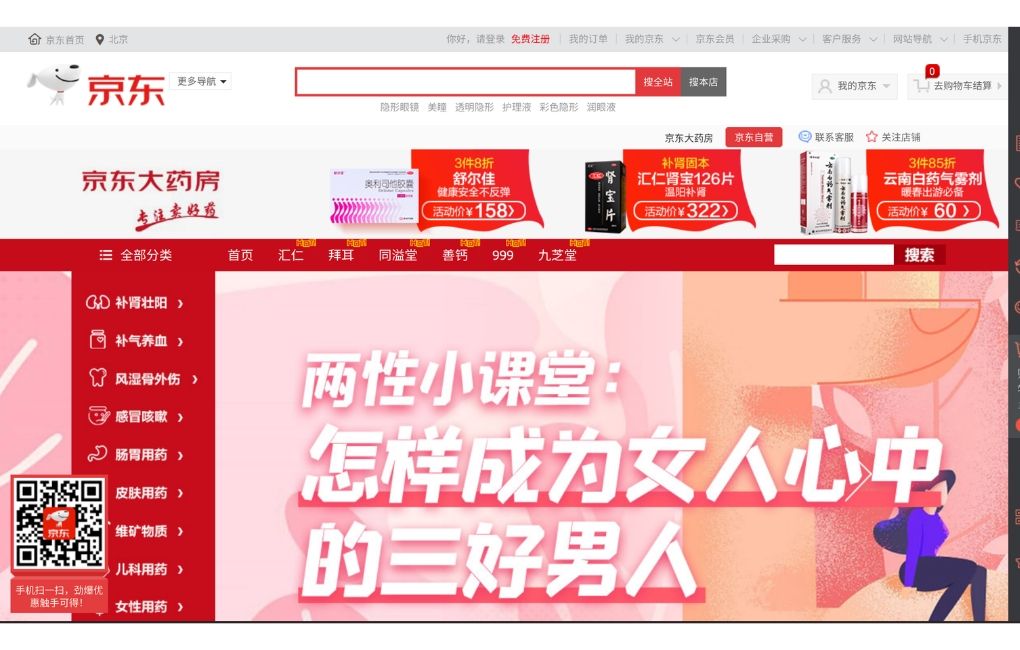
With the development of networks in China, every sector tends to take advantage of the Internet. E-patients emerge, more and more giant e-commerce platforms are eager to share the big cake. For example, AliHealth, JD Pharmacy, and many others.
Chinese customers are very suspicious about what they are going to buy, especially when it concerns health. Thus, your brand e-reputation plays an important role in convincing Chinese customers.
How to create your e-reputation?
- Your website is your brand image portal
- SEO promotes your brand e-reputation as well as brand awareness
- Chinese social networks increased intimacy with customers
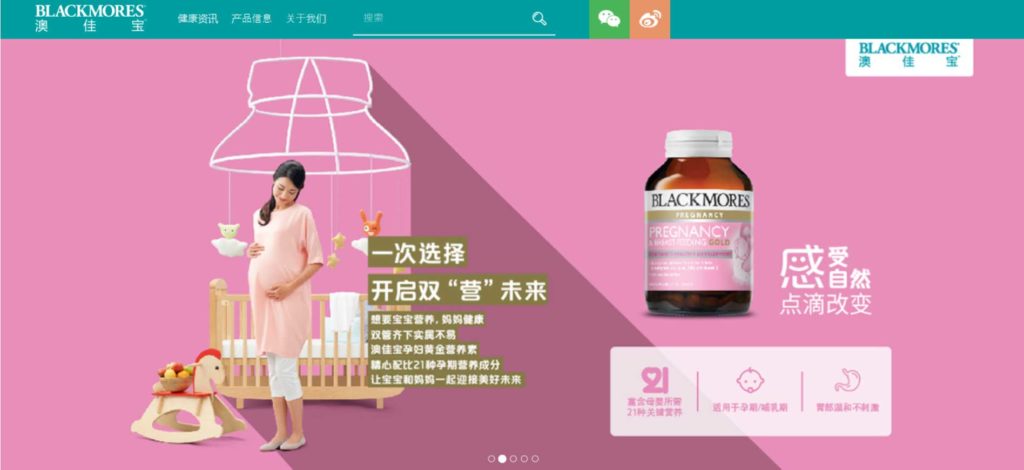
Your website should be in line with Chinese reading habits and well-designed in order to make Chinese viewers feel that you are professional and serious. The advantage of a website is that it can provide product information in detail and is an official platform to communicate directly with the global target customer base. Thereby it can continuously improve the brand image. Your website is the first contact with your prospects, therefore, it is very important to make it attractive in order to make viewers want to stay and maybe to buy your products.
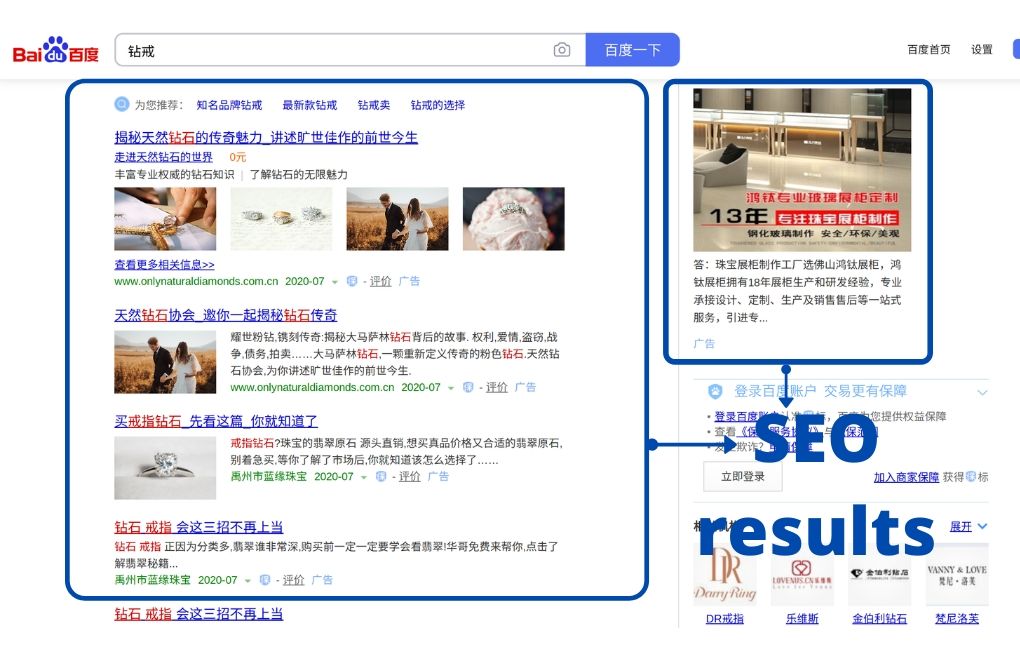
However, the truth is that a good SEO strategy takes time, patience, and money. Moreover, it’s impossible to successfully optimize your homepage for hundreds of keywords. So you need a good marketing strategy made by a professional marketing agency.
A professional SEO company can provide you with efficient website promotion planning. Baidu follows its rules and its criteria, you need a proper SEO plan suitable for the Chinese search engine.
Social networks boost your brand awareness
WeChat, Weibo, Xiaohongshu (Little Red Book) are the three biggest social media platforms in China. They are playing a very important role in Chinese modern lives and have an essential impact on fashion trends, e-commerce sales, etc. If you want to enter the Chinese healthcare market, it is obliged to have your presence on every popular social media platform in China.
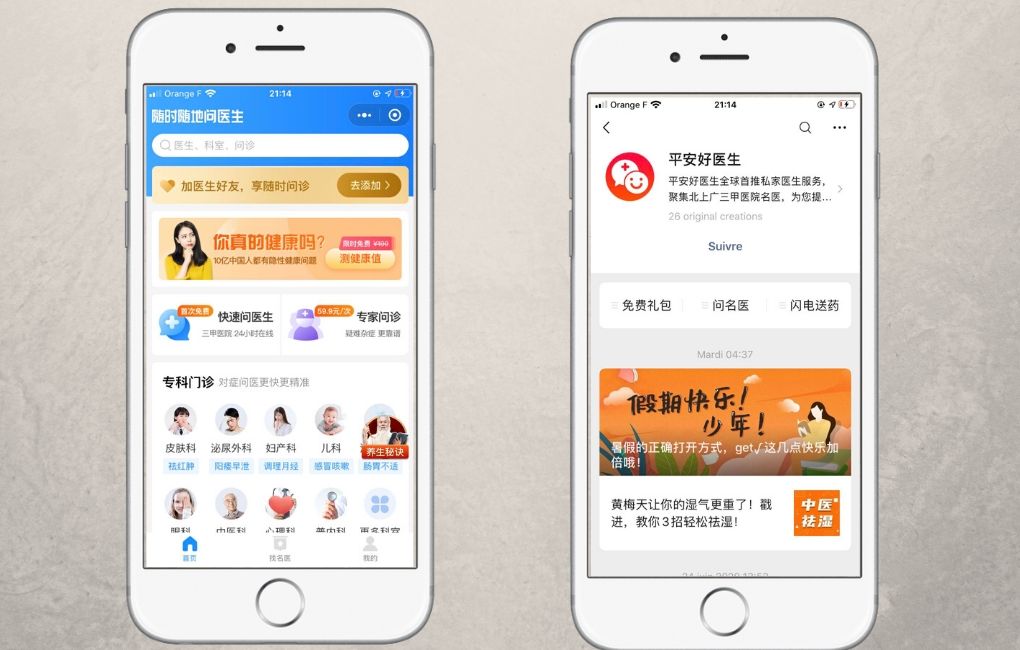
Recently, a lot of popular Chinese e-platforms have joined WeChat in order to get “win-win cooperation”. In 2020 1,17billion users are linked in China by WeChat. It is indeed a giant Chinese user base and suitable for community marketing because users on WeChat are gathered in groups with different common interests.
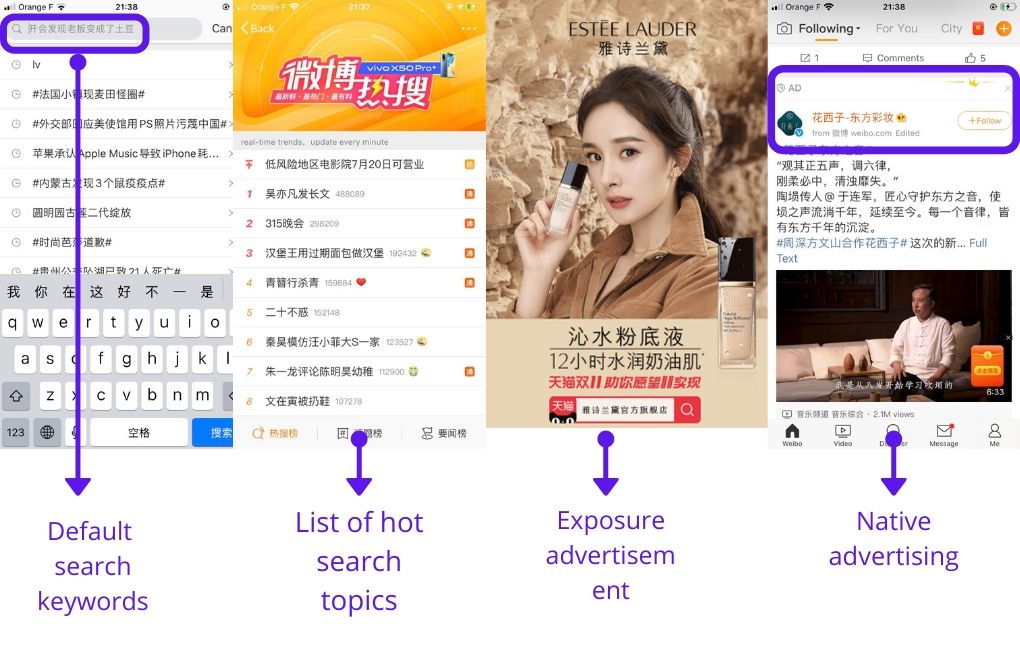
Weibo is an open social platform on which KOLs exercise their activities. Weibo is the most significant social media in China that provides also SEO. There are various ways to increase brand exposure.
- Default search keywords
- List of hot search topics
- Exposure advertisement
- Native advertising
- Full-screen display ads
To conclude, the Chinese social networks are far more complicated than you can see, if you want are preparing to enter the market, you have to get enough knowledge about all these social platforms and way beyond. An efficient marketing strategy can save your time and money, at the same time, give you successful branding.

Our agency helps you from consulting to creating a wonderful marketing strategy according to your brand concept and then adapting it to the Chinese market until your success. If you need any help, contact GMA, a digital marketing agency, specialized in the Chinese digital market. We are a passionate international team, with 70 digital marketing specialists in China.
3 comments
Thierry
A thriving ¥1 trillion market in China ? in China, Private health insurance tipped to flourish as middle class grows
More Chinese consumers willing to pay for alternatives to the ailing public health system, consulting group finds
amrlie
great analysis. It is 20 times bigger than a normal Country size market