Phase of Maturity for WeChat (2026)
In this publication, we will explain how WeChat is mature and how it becomes increasingly difficult to increase the number of users.
Phase of Maturity for WeChat
Since 2011, WeChat has grown into a super-app with over 1.38 billion monthly active users as of 2025, making it the dominant platform for the Chinese market. This figure has stabilized, confirming what analysts have observed for several years: WeChat is no longer in a growth phase. It is in full maturity.
However, with companies fighting harder to attract customers, WeChat must pay attention to the competition. There is a slowdown in the growth of users, which can create a danger for WeChat.
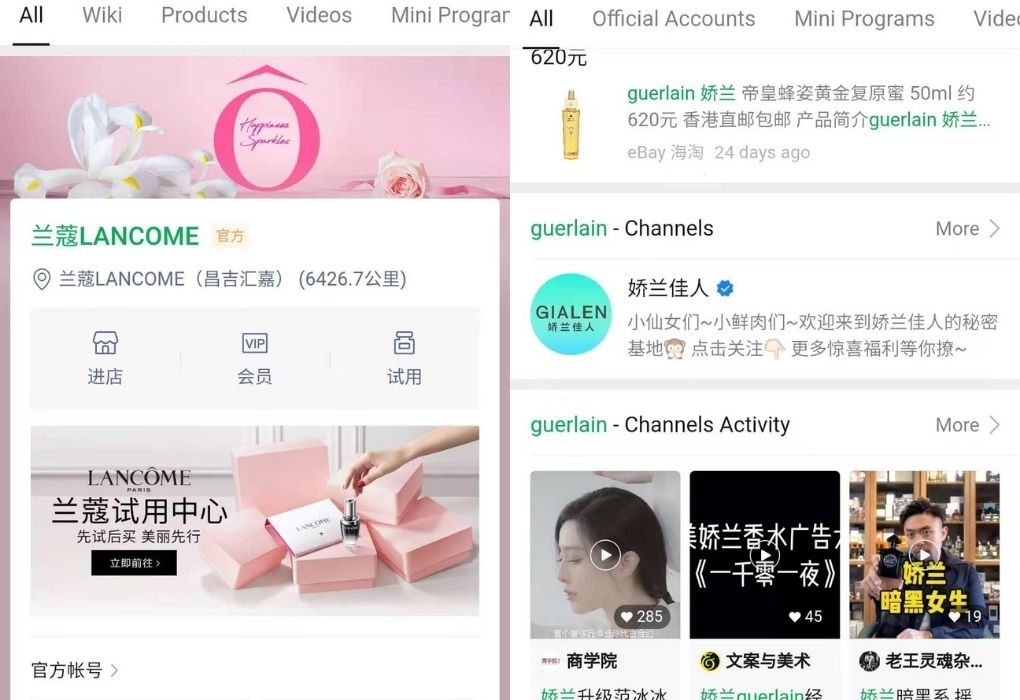
It is now much more difficult to get users to follow a WeChat public account because they are overloaded with corporate spam. The WeChat public account is like a marketing tool for start-ups taking advantage of high-quality content.
Marketing on WeChat Could Be Risky
Instead of relying exclusively on WeChat, each company uses 10 to 15 different platforms, including Douyin, Xiaohongshu, and Zhihu to acquire users. Miaopai and Douban have lost ground, while short video and UGC platforms have taken the lead. Brands running Douyin advertising alongside WeChat now cover both discovery and retention in one strategy.
Social networks are manifold and attract many companies in order to attract as many users as possible: Baidu, Tieba, Keep, Momo, and now Douyin and Xiaohongshu dominate the conversation for cosmetics brands.
WeChat is a closed network, which means that you need a lot of friends to effectively expose your business. Unlike Xiaohongshu or Douyin, which are open platforms that can get instant exposure to millions of users, WeChat requires a built audience before content gains traction.
WeChat, Always the Best Monetization Platform
Yet, even with all the challenges and obstacles, WeChat remains the best platform for the engagement and monetization of Chinese customers. The rate of purchase of an adept can reach 4%. This is very high compared to Facebook whose monthly conversion is close to 0.03%.
When you use a website link, it is unlikely that people will return to your site. However, WeChat is easier to retain customers because it takes time for people to no longer follow an account.
WeChat Mini Programs have become a major revenue driver. In 2025, Mini Program transactions exceeded 3 trillion RMB annually, and cosmetics brands use them to run flash sales, loyalty programs, and direct repurchase flows. Brands like Clarins and Yon-Ka use Mini Programs to connect offline retail with digital CRM, turning a single scan into a long-term customer relationship. This is central to any serious cosmetics marketing strategy in China.
Xiaohongshu and UGC: What WeChat Cannot Do Alone
For cosmetics brands, WeChat alone is not enough in 2026. Xiaohongshu (RedNote) now has over 300 million monthly active users, with beauty content driving some of the highest engagement rates on any platform in China. User-generated content on Xiaohongshu influences purchase decisions before the consumer ever opens WeChat. Brands that run seeding campaigns on Xiaohongshu and then convert through WeChat Mini Programs see significantly shorter sales cycles. We used this exact two-platform strategy for Novexpert, combining authentic UGC reviews on Xiaohongshu marketing with a direct purchase flow on WeChat.
Cosmetics Brands in China: 2025-2026 Context
China’s beauty market reached approximately 560 billion RMB in 2025. Growth is concentrated in skincare, premium segments, and domestic brands, but international brands with strong digital presence continue to compete. The key shift: Chinese consumers now research on Xiaohongshu, watch on Douyin, and buy through WeChat Mini Programs or Tmall. Brands that map this full journey and activate WeChat at the right moment in the funnel see conversion rates well above market average.
FAQ: What Brands Ask About WeChat Marketing
Q: Is WeChat still worth investing in for a foreign cosmetics brand entering China?
Yes. WeChat is where repeat purchases and customer loyalty happen. It is not the best platform for discovery, but it is essential for retention, CRM, and direct sales through Mini Programs. A foreign brand entering China needs WeChat as its conversion and loyalty layer.
Q: How many followers does a brand need on WeChat before it becomes effective?
There is no fixed threshold, but brands typically see meaningful engagement above 5,000 to 10,000 followers. The quality of followers matters more than volume. A list of 8,000 targeted buyers converts better than 50,000 passive subscribers acquired through giveaways.
Q: Should a cosmetics brand run WeChat and Xiaohongshu at the same time?
Yes, and they serve different roles. Xiaohongshu builds brand awareness and social proof through UGC. WeChat closes the sale and manages the relationship after purchase. Running both in parallel is the standard approach for mid-to-premium cosmetics brands in China today.
We Are a WeChat Agency
We can help you on WeChat to get more visibility or get more engagement. Our team manages WeChat strategy for cosmetics brands at every stage, from account setup and content scale to Mini Program development and CRM.
Looking for help? Our WeChat agency for beauty brands can support your brand’s entry into China.