I’ve worked with beauty brands entering China for 15 years. The market has shifted more in the past 18 months than in the five years before. China’s cosmetics retail market is projected to reach 1.48 trillion yuan in 2026. Live commerce across platforms is forecast to clear RMB 8 trillion this year. Online channels now account for 65% of all beauty transactions. These are the conditions in which your KOL strategy must operate.
The question every brand asks me is: which KOLs should we work with? My answer in 2026 is more specific than it used to be. The mega-KOL model still works for launch spikes. But brands that depend on one big name for their entire China strategy leave significant revenue on the table. At Cosmetics China Agency, we’ve built KOL marketing programs that combine mega-KOLs for launches, vertical KOLs for credibility, and KOCs for community trust. That combination drives sustained results.
Here are the five KOLs that matter most for beauty and cosmetics brands in China today, plus the 2026 strategy updates that change how you should deploy them.
Top 5 KOLs in China for Beauty and Cosmetics Brands
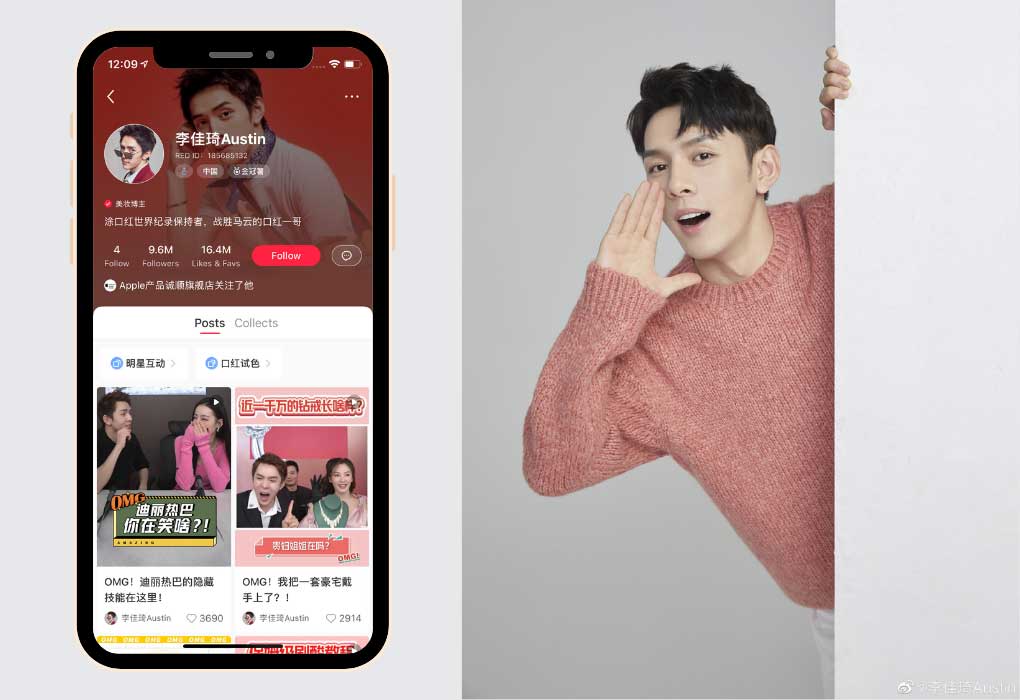
1. Austin Li (李佳琢) – “Lip King”
- Core Platform: Douyin (80M+ followers)
- Secret Weapon: Luxury makeup explosive launches
- 2026 Impact: 15,000 lipsticks sold in 5 minutes; drives a significant share of Douyin beauty GMV
- Ideal For: Premium brand debut campaigns
Austin Li remains the reference point for beauty live commerce in China. At Cosmetics China Agency, we’ve seen brands use a single Li Jiaqi feature to move product that had sat in warehouse for months. His selling ability is real. The 2026 reality is that his fees have increased and brands must negotiate terms carefully. Use Li Jiaqi as a launch catalyst to spike GMV and generate UGC, then capture that traffic into your own branded channel. Brands that pay the fee and do nothing with the follow-up waste most of the opportunity.
2. Wang Xiaogou (王小狗) – “Sensitive Skin Guardian”
- Core Platform: Xiaohongshu (4M+ followers)
- Secret Weapon: Dermatologist-grade ingredient breakdowns
- 2026 Impact: 45%+ conversion rate for derma brands; consistent monthly sales volume
- Ideal For: Clinical skincare brands
For clinical skincare, Wang Xiaogou is the gold standard on Xiaohongshu. Chinese consumers buying derma brands want proof, not promises. Her ingredient-led content format converts because it answers exactly the questions consumers ask before purchasing. I’ve seen brands in the sensitive skin category triple their XHS traffic after one collaboration with a creator in her category. The key is that she does not oversell. Chinese consumers on XHS trust creators who say no to products that do not work.
3. Benny Dong (董子初) – “Gen-Z Formula Guru”
- Core Platform: Bilibili (8M+ followers)
- Secret Weapon: Lab-test reviews combined with anime crossovers
- 2026 Impact: 10M+ average video views; consistent sold-out collaborations for tech-driven brands
- Ideal For: Tech-driven skincare innovators
Bilibili is where the educated Gen-Z consumer goes to verify claims before buying. Benny Dong makes formulation science entertaining. If your brand has an ingredient story, Bilibili is where that story earns credibility before spreading to Douyin and Xiaohongshu. I’ve watched Shiseido collabs sell out through this exact sequencing. Build the proof on Bilibili first, then activate the wider audience.
4. Viya (薦娅) – “Mass Market Empress”
- Core Platform: Taobao Live / Douyin (25M+ followers)
- Secret Weapon: Tier 3-4 city penetration
- 2026 Impact: Strong annual sales volume in mass-market beauty; consistent repeat purchase rates
- Ideal For: Affordable line expansion into lower-tier cities
Viya’s reach into China’s tier 3 and tier 4 cities separates her from the Shanghai-centric mega-KOLs. If you want to sell cosmetics in China beyond the premium first-tier consumer, you need distribution into lower-tier cities. Our data shows that most of China’s beauty volume sits outside tier 1. Brands that ignore this leave the majority of the market untouched. The repeat purchase rate in these cities is strong because local consumers have fewer alternative options and higher brand loyalty once trust is established.
5. Zhong Chuxi (钒楚暦) – “Luxury Skincare Muse”
- Core Platform: Douyin / Xiaohongshu (12M+ followers)
- Secret Weapon: High-end ritual storytelling
- 2026 Impact: Strong ROI for luxury skincare brands; millions of live stream viewers per session
- Ideal For: Premium anti-aging lines
For luxury positioning, celebrity KOLs signal status to buyers. Chinese luxury beauty consumers pay attention to who the brand associates with. It is that direct. Pairing a celebrity-tier KOL like Zhong Chuxi with consistent Douyin advertising creates a funnel that moves from aspiration to purchase inside one platform. La Mer has demonstrated what this approach can generate in ROI terms when executed with the right targeting parameters.
2026 Strategies That Work for Beauty Brands in China
1. Multi-Platform Coordination
Douyin (Traffic) + Xiaohongshu (Trust) + Bilibili (Depth)
PROYA’s “Double Anti-Essence” campaign showed how to sequence this correctly: Bilibili tech demos first, then Xiaohongshu KOC reviews, then a Douyin mega-launch to hit 100M+ yuan GMV. The sequencing matters as much as the channel selection. Most brands get the order wrong and activate Douyin before they have credibility on the other platforms.
2. The KOL-KOC Matrix
[Top] 1-2 Mega-KOLs: GMV Spike
[Mid] 50+ Vertical KOLs: Credibility
[Base] 1000+ KOCs: UGC Flood
This structure works. In 2026, the base layer has become more important than before. Micro-KOCs with 5,000 to 50,000 followers on Xiaohongshu convert at higher rates than mega-KOLs for repeat purchases. The industry benchmark for well-structured KOL programs in beauty is $6.50 return per $1 invested. You only reach that number when the full matrix is active, not just the top tier.
3. Content Format by Platform
| Platform | What Works in 2026 |
|---|---|
| Douyin | 15-second pain point hook, then live stream discount close |
| Bilibili | Lab reports, ingredient science, unboxing with technical commentary |
| Xiaohongshu | “28-Day Journey” diaries, ingredient face-offs, before/after documentation |
4. Growth Segments Worth Targeting Now
- Men’s grooming: Douyin #MaleBeauty views up 180% year-on-year
- Silver economy: Consumers aged 50+ spend three times the industry average on skincare
Three Shifts in 2026 That Change How You Should Work with KOLs
Merchant-Led Livestreams Are Replacing Pure KOL Dependence
I’ve watched this shift accelerate over the past 12 months. Brands are building internal livestream operations on Douyin and Taobao Live. The reasons are practical: control over margins, access to first-party customer data, and long-term channel ownership. Platform algorithms in 2026 favor brands that broadcast consistently from their own accounts over brands that only appear in third-party KOL streams.
This does not make mega-KOLs irrelevant. The smart strategy is to use a mega-KOL collaboration for a GMV spike and UGC flood, then redirect that traffic into your brand’s own live channel. At Cosmetics China Agency, we’ve worked with brands that launched with a major KOL feature, then built a self-operated Douyin account generating steady monthly revenue without paying mega-KOL fees on every campaign. The economics work when you plan for it from the start, not as an afterthought.
AI Search Is Changing How Consumers Discover Beauty Products
Doubao, ByteDance’s AI assistant, now connects user beauty queries directly to Douyin shopping links. A consumer asks “which serum works for dry skin in winter” and Doubao returns product recommendations, KOL review clips, and a purchase link inside one interface. Kimi and Qwen operate similarly across their respective user bases. This is a new discovery layer sitting above traditional search and social.
The data is clear: brands with active short-video presence, consistent KOL mentions, and specific product positioning rank better in these AI results. I recommend testing your brand’s discoverability on Doubao and Kimi today. Search your product category as a consumer would. If your brand does not appear in the first three results for your category query, you have a gap to close. Most international beauty brands have not addressed this yet, which means there is still time to move ahead of competitors.
C-Beauty Brands Are Setting the Standard You Must Beat
Florasis, Proya, Winona, and Maogeping have moved into the premium tier. They win on three things: ingredient storytelling rooted in traditional Chinese medicine, agile supply chains that respond to trends within weeks, and native fluency on both Xiaohongshu and Douyin. International brands compete directly with these players now. This was not the case three years ago.
I’ve seen brands fail because they applied a Western marketing playbook without adapting it to this environment. The Chinese consumer in beauty is informed, skeptical, and researches purchases across multiple platforms before committing. Your KOL strategy must account for that full research journey, not just the purchase moment.
How to Select the Right KOL for Your Cosmetics Brand
When we evaluate KOLs for cosmetics clients at Cosmetics China Agency, three questions drive the selection. First: does this KOL’s audience match your buyer profile by age, city tier, and skin concern? Follower count means nothing if the audience composition is wrong. Second: what is the engagement-to-follower ratio? On Xiaohongshu, anything above 3% is strong. Third: has this KOL featured competing brands in the past 90 days? Category proximity affects audience perception and credibility.
Brands that get this selection process right from the start avoid expensive mismatches. For more detail on how to build a full KOL vetting process, see our KOL marketing China guide. For platform-specific execution, our guides on Xiaohongshu marketing and Douyin advertising cover the tactics in detail.
Our digital marketing agency for China specializes in cosmetics brands. Contact us for a free audit of your China strategy.