
Little Red Book or Xiaohongshu in Chinese, a social media platform and search engine popular in China, is growing in popularity all over the world. Xiaohongshu is known for its unique combination of social media and e-commerce features, which makes it an attractive platform, for connecting Chinese consumers and brands in the Chinese market.
As a digital marketing agency providing services to foreign companies that want to conquer the Chinese market, we have created this marketing guide to give you some tips and advice on how to take advantage of Xiaohongshu.
What is Xiaohongshu?
Founded in 2013 by Charlwin Mao and Miranda Qu, Xiaohongshu (小红书) also known as ‘The Little Red Book’ and ‘RED’, is a social media and one of the world’s largest community e-commerce multi-channel networks. Over the years, it has grown to become China’s foremost product review platform in terms of luxury, fashion, and beauty products.
In 2018 RED was listed on Forbes’ “Top 50 Most Innovative Companies in China 2018” list. As of 2023, Xiaohongshu is boasting over 300 million registered users and 85 million monthly active users.
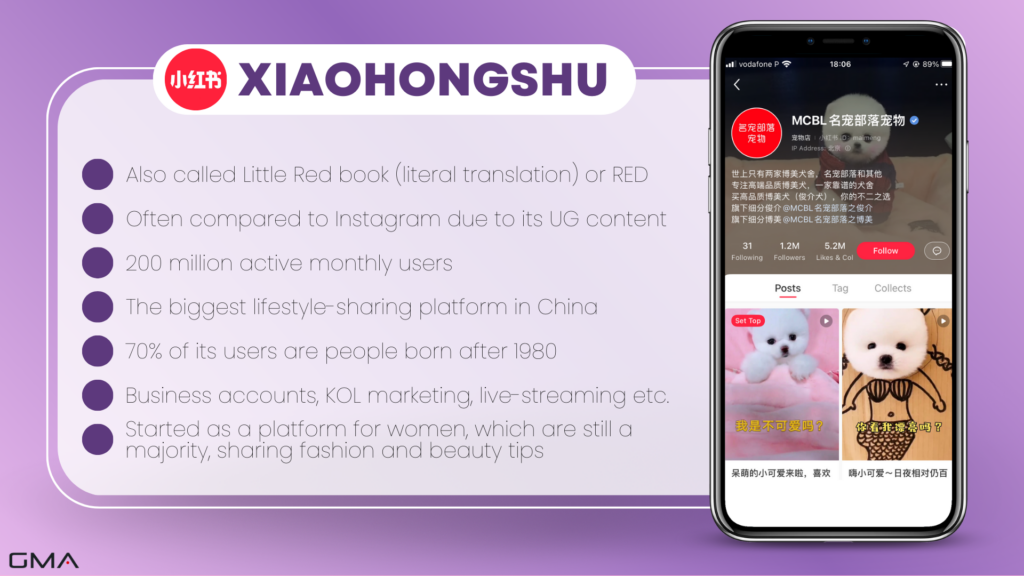
In the beginning, Little Red Book was only a platform on which users were able to review products and share their shopping experiences. However, in order to expand its activities, it has become pretty much like a combination of Pinterest and Instagram, with e-commerce features, creating its own cross-border e-commerce site ‘Fulishe’ (福利社).
On the Little Red Book app people are able to post and share user-generated content such as product reviews, travel tips, and lifestyle stories via pictures and short videos. Little Red Book / Xiaohongshu platform is also running RED Mall, a platform on which Chinese people can purchase products from foreign brands.
Who are Little Red Book users
If you want to use Little Red Book for your business, it is important to know that, unlike other e-commerce sites, RED is especially popular among young people (Generation Z), as 70% of its users were born after 1990. Moreover, 80% of the target demographic are young Chinese women that mostly rely on KOLs (Key Opinion Leaders, which are influencers as we know them from Instagram) recommendations instead of just buying products from famous international brands.
RED users live in 1st and 2nd tier cities, which means that most of the platform’s users have a higher purchasing power than other platforms’ users. They are interested in buying foreign products, especially beauty products, but they also create content themselves.
Thanks to Little Red Book, users search for live-streaming videos while clicking on the links embedded in live to buy domestic and international products that are used by the KOL.
What has made the success of Xiaohongshu among Chinese Consumers?
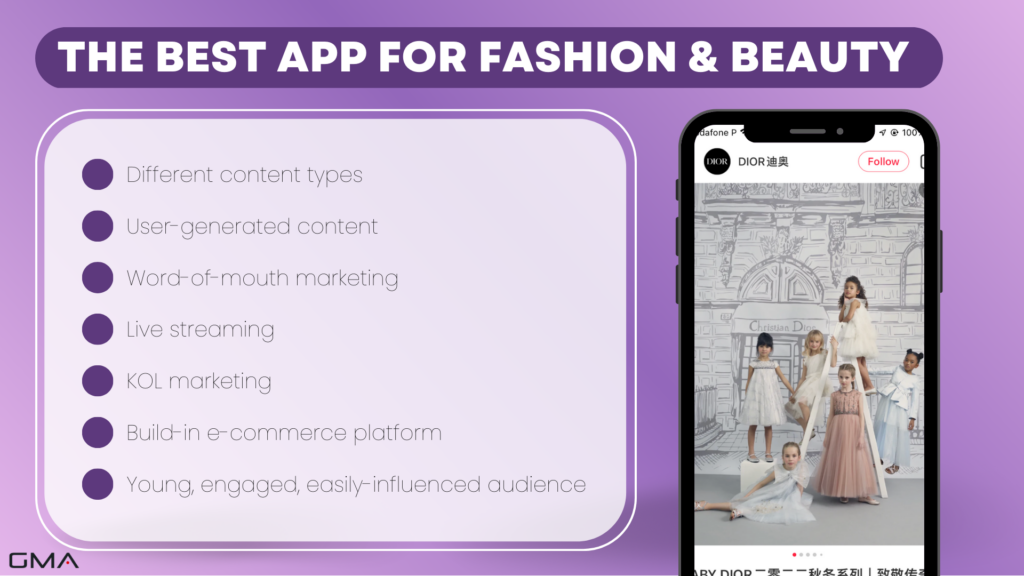
Chinese consumers are increasingly wedded to their smartphones, taking their cues from KOLs, searching content tags, and so on. The fact that Little Red Book was able to combine all the most popular tools on social media and e-commerce was the key to creating a perfect platform. By allowing consumers to share their reviews on products, it has created a large community, which is useful for international companies that are on this e-commerce platform.
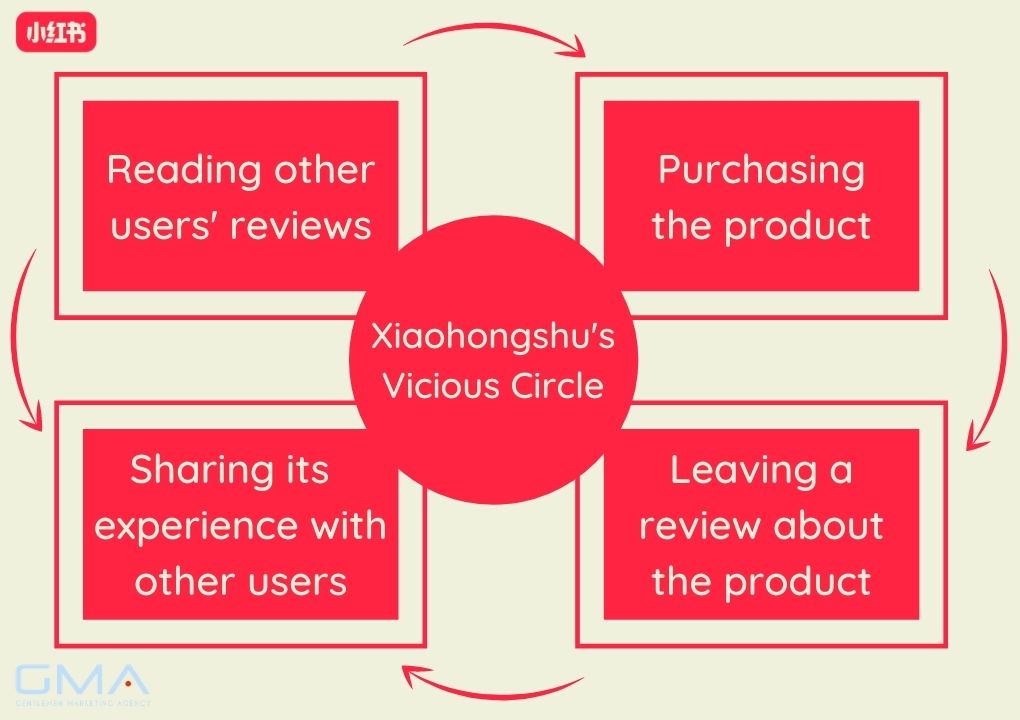
One of the most important factors of Little Red Books’ success is its vicious circle. The more consumers are going to read other users’ reviews on this social platform, the more they want to buy the product to try it, sharing their own reviews after that with other potential Chinese customers.
Take note that in order to maintain effective and qualitative reviews, Little Red Book / Xiaohongshu is using recommendation algorithms to encourage its Chinese users to interact with topics they are interested in.
Why should you use the Little Red Book app for your marketing in China?
Little Red Book has become the best platform for Key Opinion Leaders’ campaigns. This explains why a lot of KOLs and influencers have flourished on the platform, and we see them everywhere on the app.
It is also one of the best platforms for any foreign company to run an innovative brand account and successful marketing campaigns, either through the brand’s official account or with the help of KOLs and user-generated content.
Little Red Book has positioned itself as the go-to review website, with a strong focus on quality content. It’s a great platform where users engage in content of any kind, so it’s fairly easy to effectively promote any brand and gain a massive following.
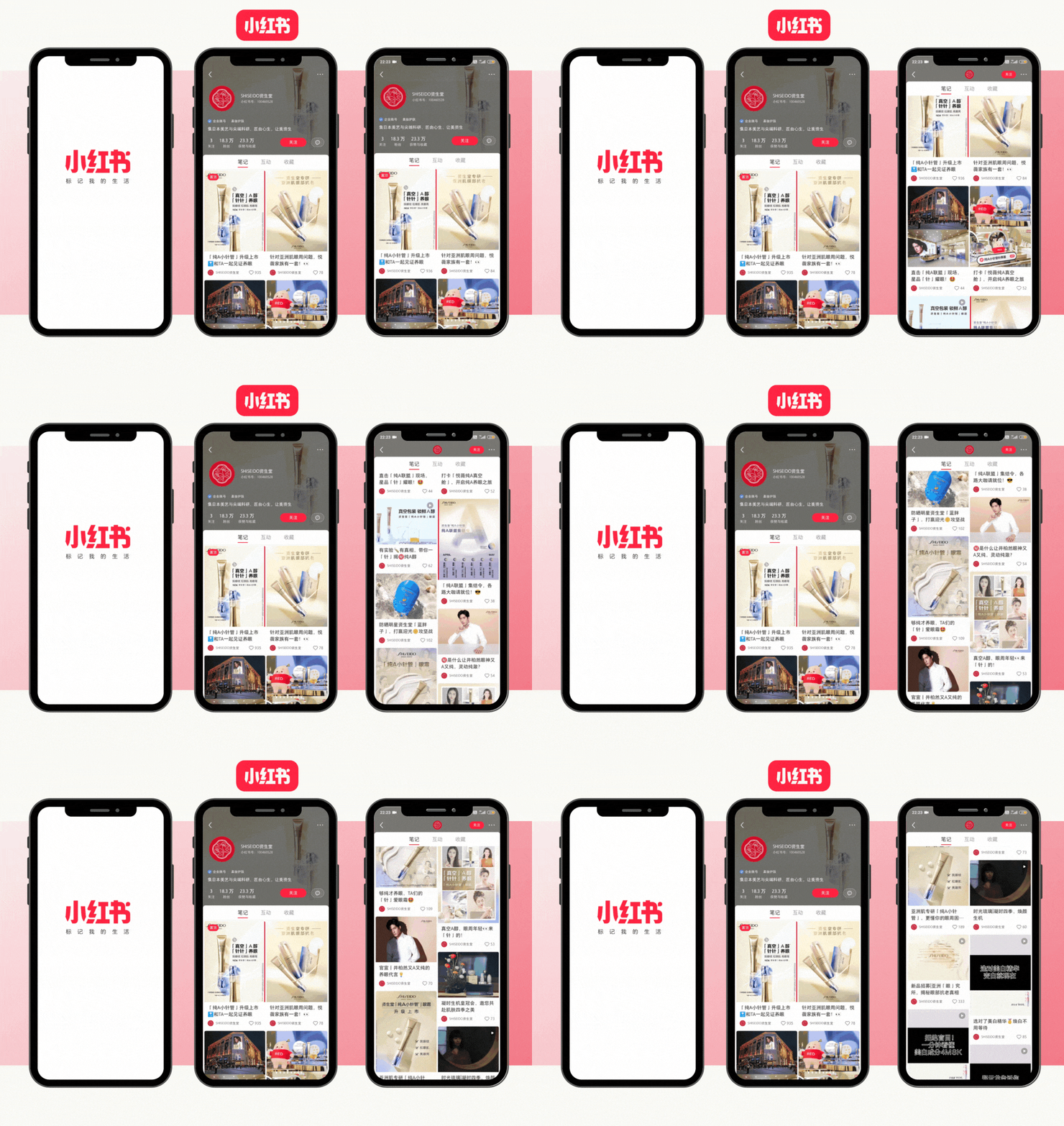
Many brands and cross-border retailers think that they should only sell authentic products on other apps such as Tmall, JD.com, and Taobao. But, the reality is that the competition is getting tougher than ever and it can be challenging to stand out amongst competitors from the Western world with an unknown brand account.
Word-of-mouth marketing on Little Red Book
As one of the most popular Chinese social media platforms, Xiaohongshu is a wonderful tool when it comes to word-of-mouth marketing. Word-of-mouth is indeed the best way to convince Chinese shoppers to buy your products or to download an app, as they need to see some recommendations and good opinions before the purchase.
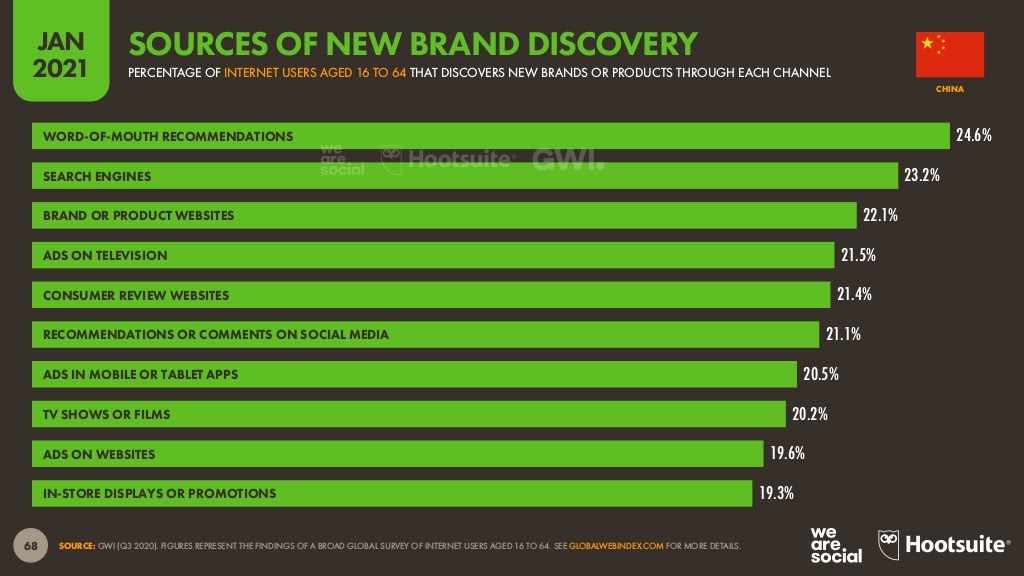
Even after major updates over the years, Little Red Book still kept its primary function: a committed social network providing detailed and objective advice about their purchases (called ‘notes’ or ‘biji’ 笔记). These reviews may also include pictures and videos, which are highly appreciated in terms of user experience.
As the majority of the Chinese population relies on reviews and search engine quotes, Little Red Books’ strong focus still lies in keeping its dominant position in the Chinese market.
The advantage of Little Red Book in terms of ROI

If you are still hesitant about using Little Red Book for your marketing strategy, you have to consider the ROI (Return On Investment) you’ll have thanks to this platform. As a matter of fact, the budget you will have to invest in Little Red Book is expected to be 20% lower than Weibo. Most importantly, the return is expected to be 40% higher than what you would gain using Weibo.
Little Red Book: A Powerful Tool for your E-reputation
As one of the most popular platforms for product reviews, Little Red Book is a powerful tool for your e-reputation. If Xiaohongshu users leave a review after purchasing your products or watching a live streaming session, it will generate much more visibility than just advertising your brand.
Your consumers will drive your sales revenue and that’s why you have to understand their needs in order for them to recommend your brand to other users.
Xiaohongshu is fertile ground for Key Opinion Leaders
One of the best ways to promote your brand and products is to hire KOLs (Key Opinion Leaders) and KOC (Key Opinion Consumers) that have a huge community online and are even more popular than celebrities in terms of communication and marketing.
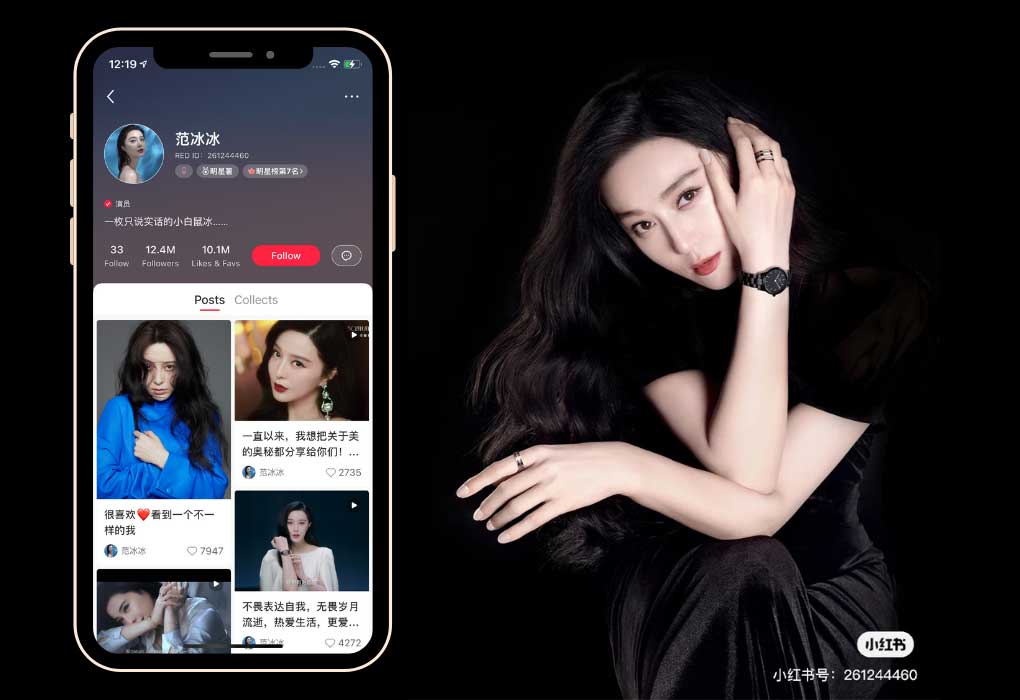
KOLs are really the basis of Little Red Book’s success, to the point where Little Red Book decided to launch its platform “品牌合作人” on which companies are able to find their KOL for collaboration. Since 2019, only KOLs with more than 10,000 can apply for this program.
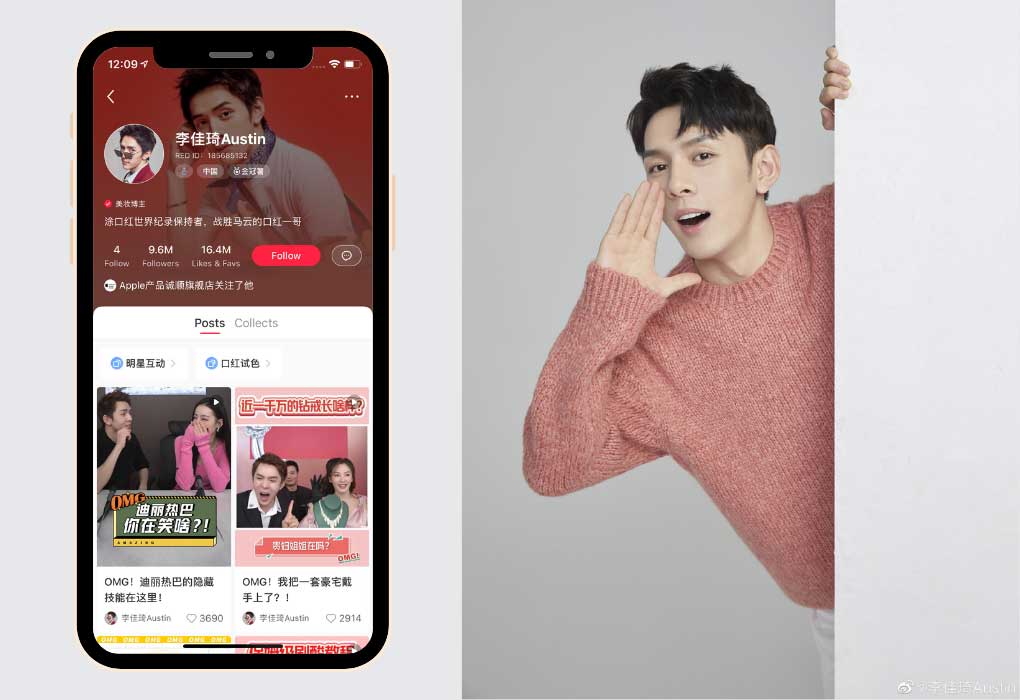
At Gentlemen Marketing Agency, we have a KOL-dedicated team that knows exactly the expectations and shopping experiences of Little Red Book users. We have collaborated with many KOLs over the years, and we are able to hire the best Key Opinion Leader to promote your brand.
According to your needs and guidelines, we can create a unique and efficient SEO strategy and campaigns such as live streaming, short videos, banners, reviews, etc. Moreover, thanks to our international team, we know exactly when to run marketing campaigns in terms of special events and holidays, like the 11.11 shopping festival and so on.
How can beauty & lifestyle brands take advantage of Xiaohongshu?
Little Red Book is an app full of opportunities for brands wanting to expand their activities in China as well as raise their brand awareness. However, Little Red Book is a very particular platform compared to other western social media. Thus, you have to understand how the app works and how to take advantage of it.
The importance of having a verified account
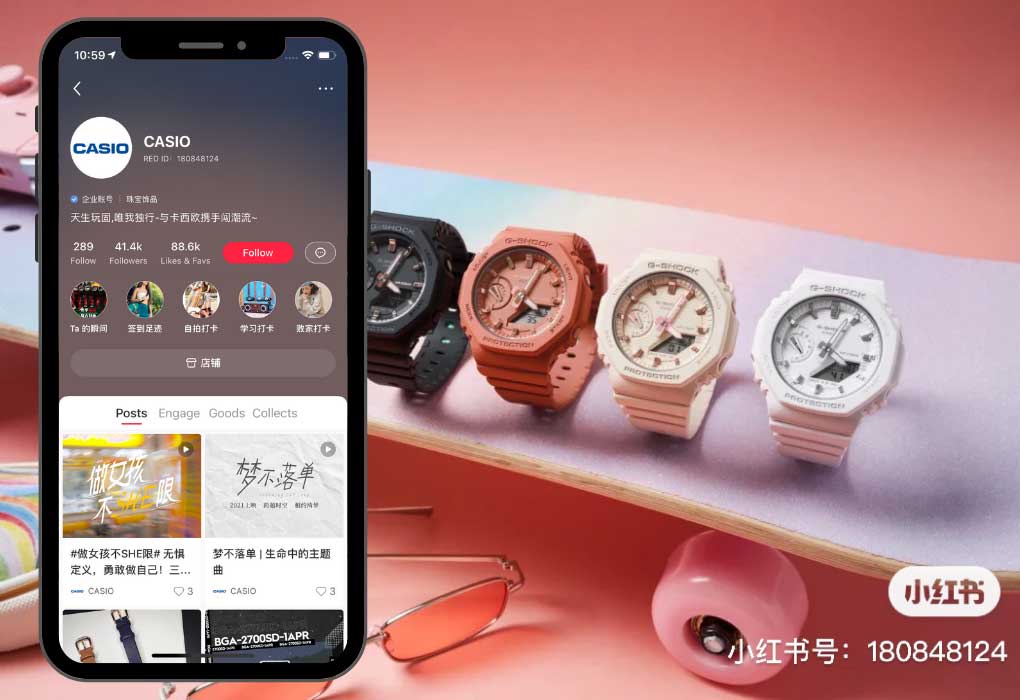
Going through business registration is very easy in comparison to other platforms and having a verified account on Little Red Book is mandatory if you want to sell your products on the platform. Chinese people are quite cautious when it comes to brands that they have never heard of. Thus, if you have an official account, they will be more confident.
Little Red Book is like other platforms such as Tmall, JD.com, Taobao, and WeChat, you will need to gain Chinese people’s trust. However, the particularity of Little Red Book is that individual vendors are not able to open their own stores.
Paid advertising on Little Red Book
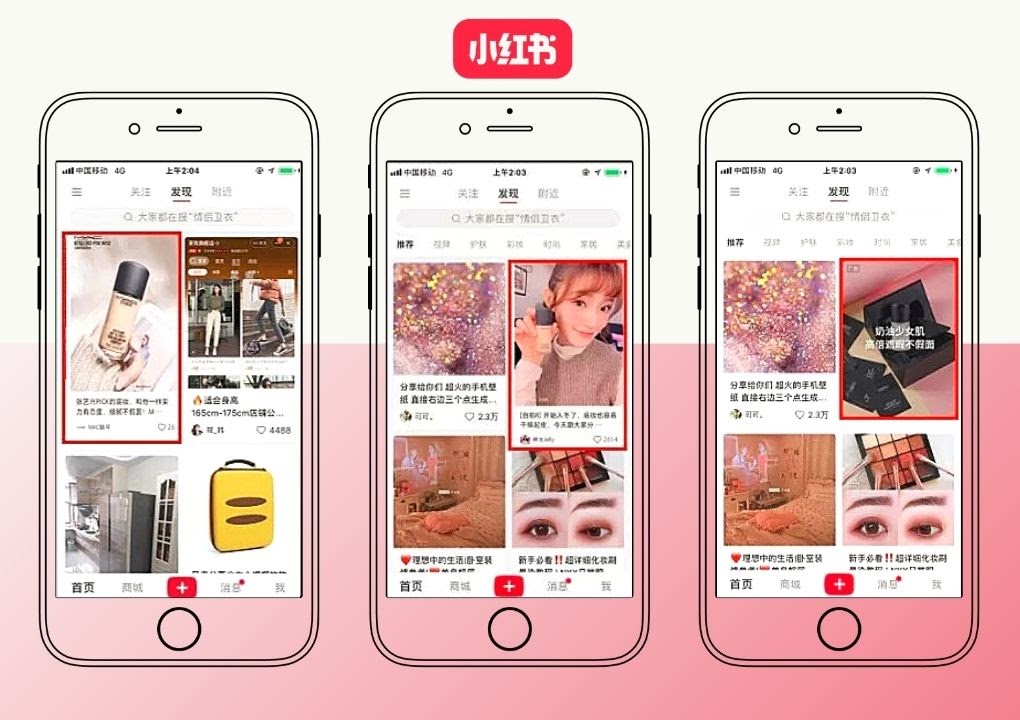
Before starting to plan your advertising strategies, you have to know that, unlike other e-commerce platforms, Little Red Book does not provide display ad services. The app mostly relies on its community and social interactions between users and KOLs. So, if you want to advertise your brand, it will be better to hire a KOL who will directly promote your brand by promoting your products and live streaming.
As a matter of fact, Xiaohongshu’s main asset is to reflect reality based on consumers’ clear and objective reviews. Thus, the rules are the same as on other apps, it is forbidden to use words such as ‘best’, ‘first’, ‘top’ etc. in order to avoid misleading.
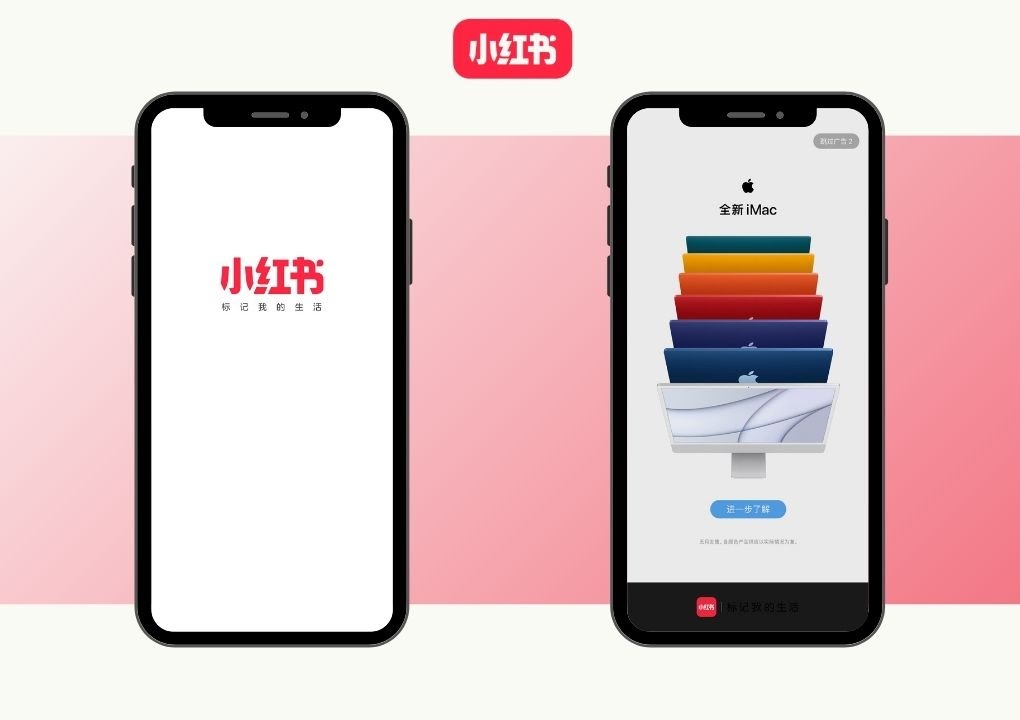
However, qualified brands are allowed to create their own digital stores, for which the application charges technical fees and a commission of up to 5% per transaction. And, for the biggest brands, it is possible to advertise their products, for example when users open the app, they will see a pop-up ad.
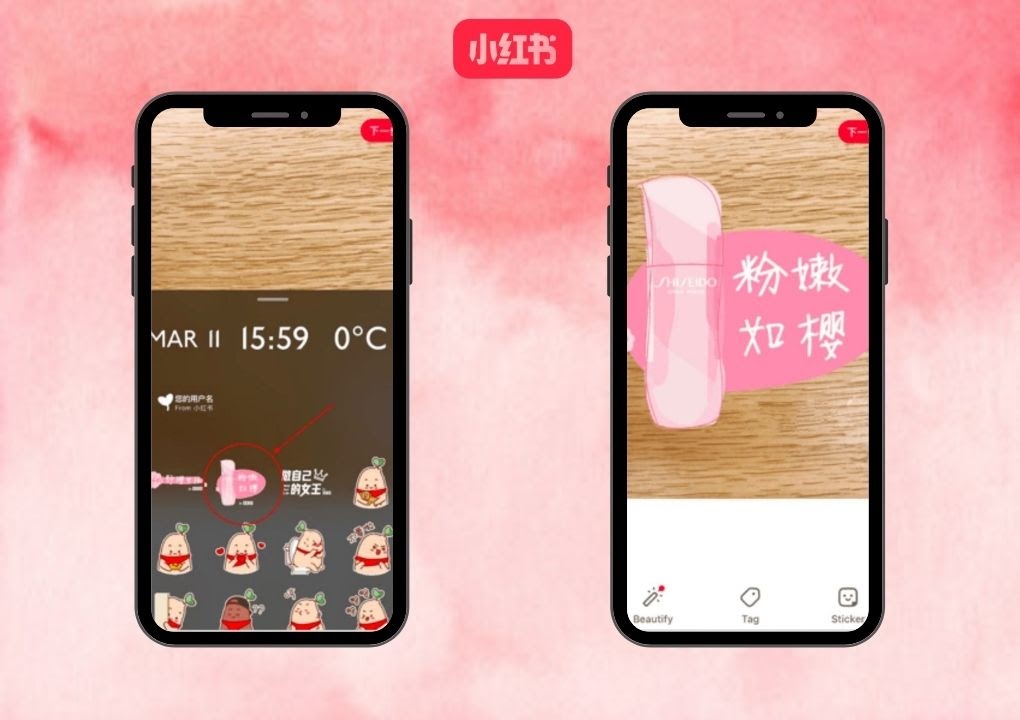
It is also possible to integrate ads that will appear in the news on the ‘Discovery’ and ‘Follow’ pages, or use the hot topic page to display your ad. You can also advertise by creating customizable stickers for special events. Users will then be able to put stickers on their stories.
The more you’ll innovate, the more you will be able to stand out on Little Red Book / Xiaohongshu.
RED Stores
While most Chinese social media apps offer some kind of integration in terms of the e-commerce section, some of them have also built their own stores, such as Xiaohongshu. In 2014, following its growing success and popularity, Xiaohongshu completed the launch of its own cross-border platform: ‘RED Store’. Thanks to that new functionality, the Chinese were able to purchase overseas products from overseas brands directly through the app.
If you want to sell your products on Xiaohongshu, you will have the choice between opening your own online store or selling your products directly through the platform. However, you will have more benefits by opening your own store in terms of branding, marketing, logistics network, communication, and control of your activities.
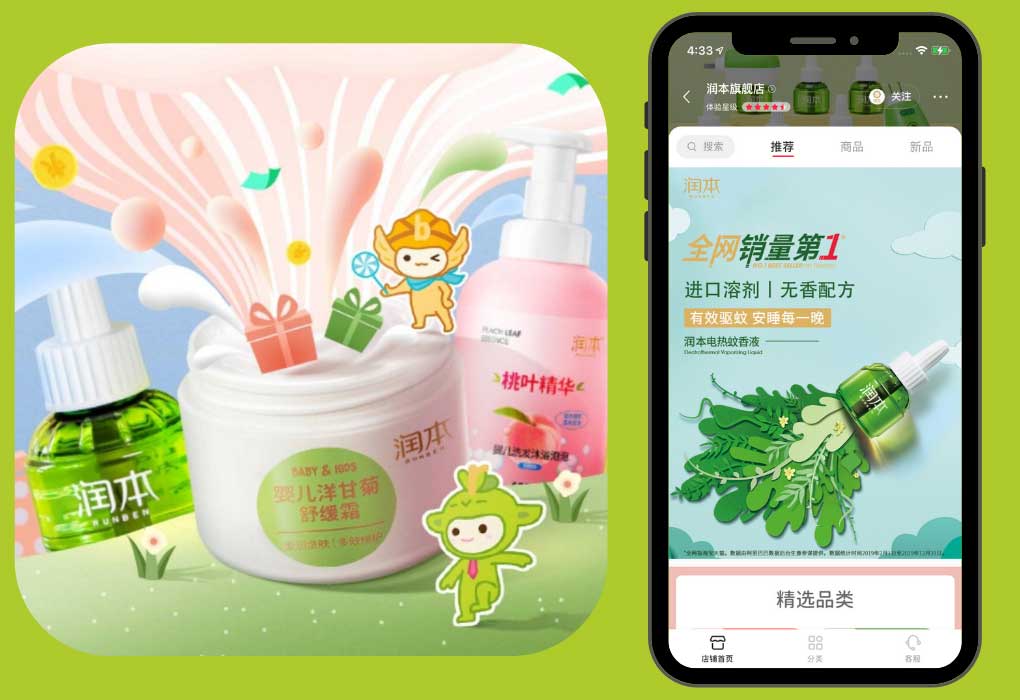
By opening your RED store, you will be able to promote your products as well as sell them directly to consumers who will just have to click on the product and pay online. It is also a great way to do your promotional campaign by creating impactful and creative ads.
How does it work?
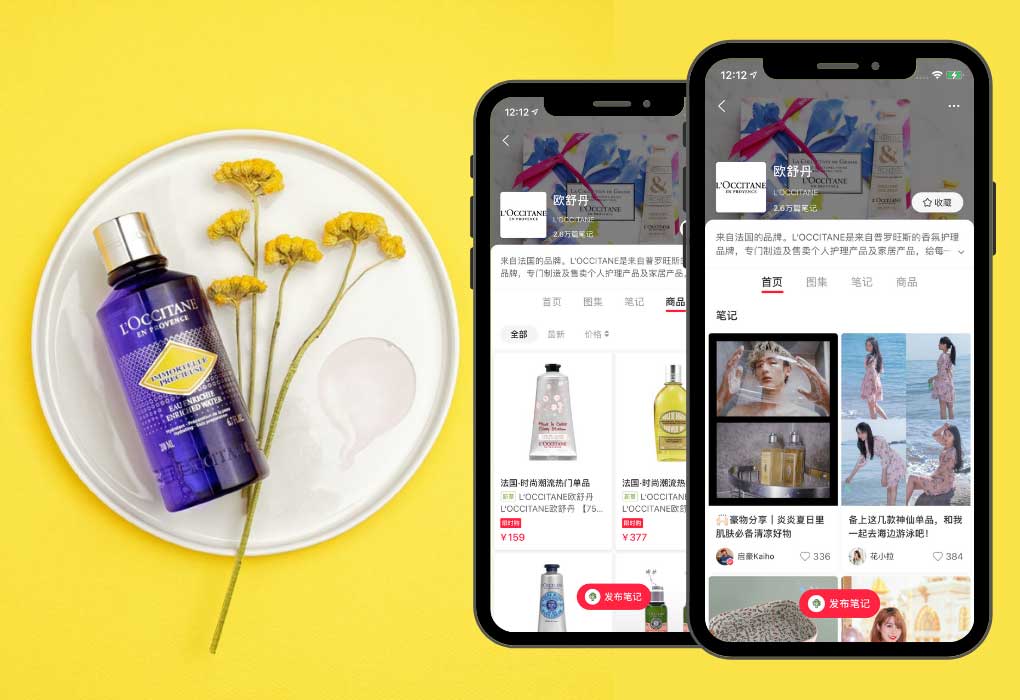
After creating your official RED store, you’ll be able to display your products like on any other platform. When clicking on your store, users will see your history of products as well as reviews about your products (including pictures and videos).
As an e-commerce website, be sure to write a clear description of your products (in simplified Mandarin Chinese). Then, users will just have to click on the product they want to buy to be redirected to the purchasing page. Then they will receive the products a few hours or days later thanks to REDelivery, Xiaohongshu’s own delivery system.
‘Fulishe’ E-commerce
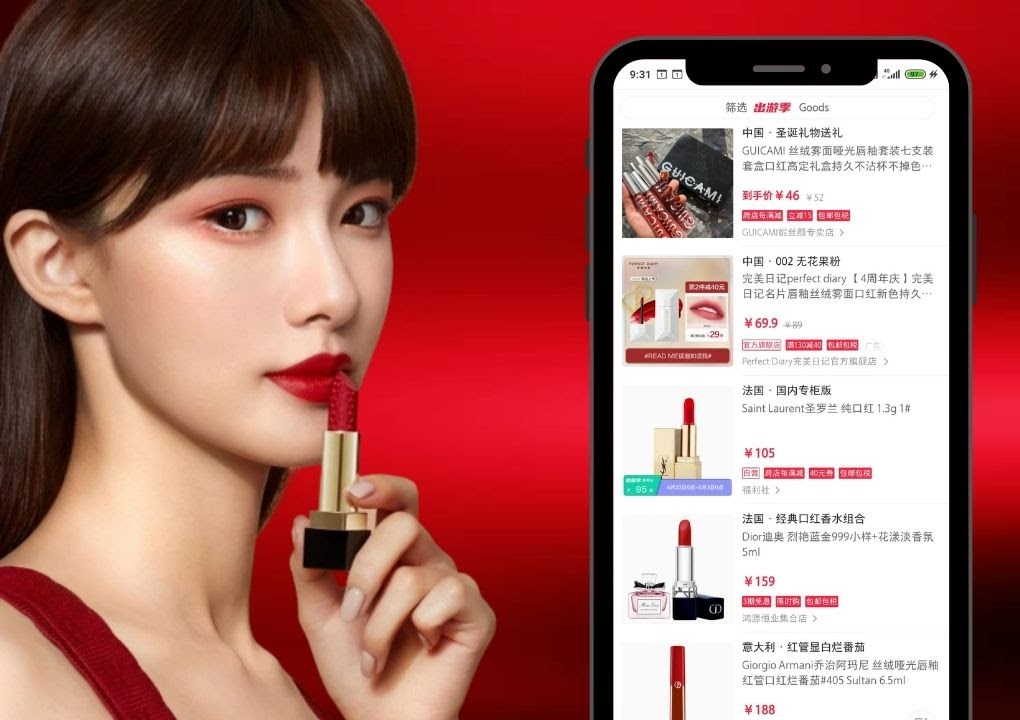
Fulishe (福利社) is Xiaohongshu’s self-operated e-commerce platform which integrates merchandising, warehousing, and customer service functions to provide users with a seamless e-commerce experience.
Xiaohongxin: The new product rating system
Launched in May 2019 after some controversies about fake accounts, Xiaohongxin is a new rating system based on users’ opinions about the quality of content. Those users act like moderators and are called ‘Xiaohongshu Publishers’ (小红书出品人) and are responsible for maintaining transparency when it comes to the products’ reviews. Those ‘moderators’ are selected according to some requirements (for example they will need to prove that they have purchased the product).
Is Xiaohongshu suitable for your brand?
As one of the most popular and appreciated apps for young Chinese women, it is highly recommended for small and medium-sized brands to register on Xiaohongshu. Instead of diving directly into e-commerce giants platforms such as Tmall and JD.com, Little Red Book seems to be the perfect compromise between developing your brand’s awareness as well as reaching thousands of potential consumers among other brands.
By using Xiaohongshu, you’ll be able to benefit from a wonderful network of KOLs and celebrities at a lower cost than other social media.
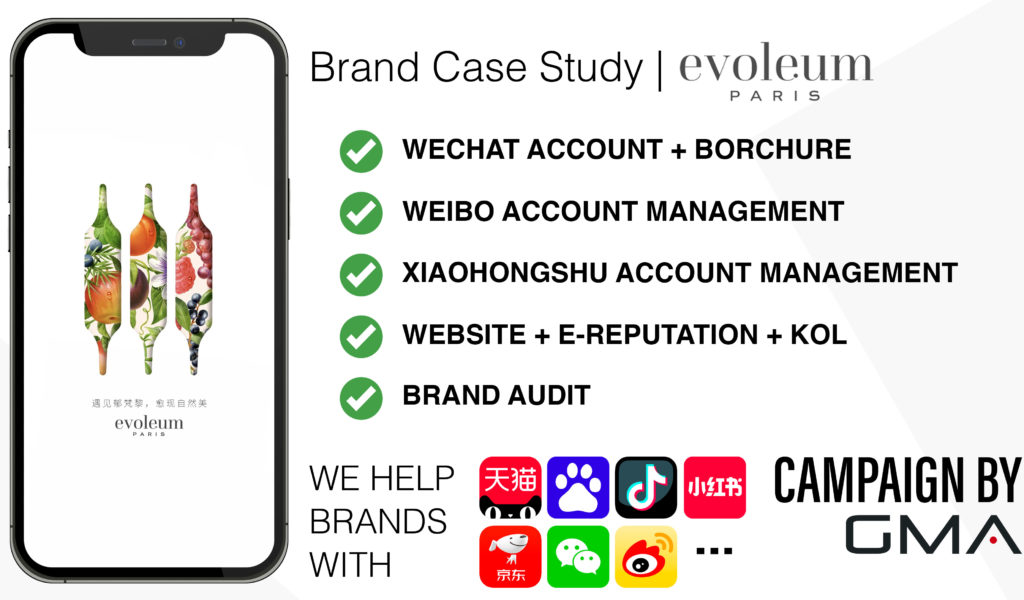
Contact us to get started on Little Red Book
We know how difficult it can be for a foreign brand to enter the Chinese market: new rules, different tastes, a different audience… and tough competition! As an international Digital Marketing Agency, our experts know exactly all the trends in Chinese social media, both in terms of communication and marketing.

According to your guidelines and objective, we are able to create relevant content in order to attract Chinese consumers’ attention, so you can become a buzz. Each expert on our team will be able to provide you with different services, so as to handle and keep properly your brand identity.
Our Little Red Book services
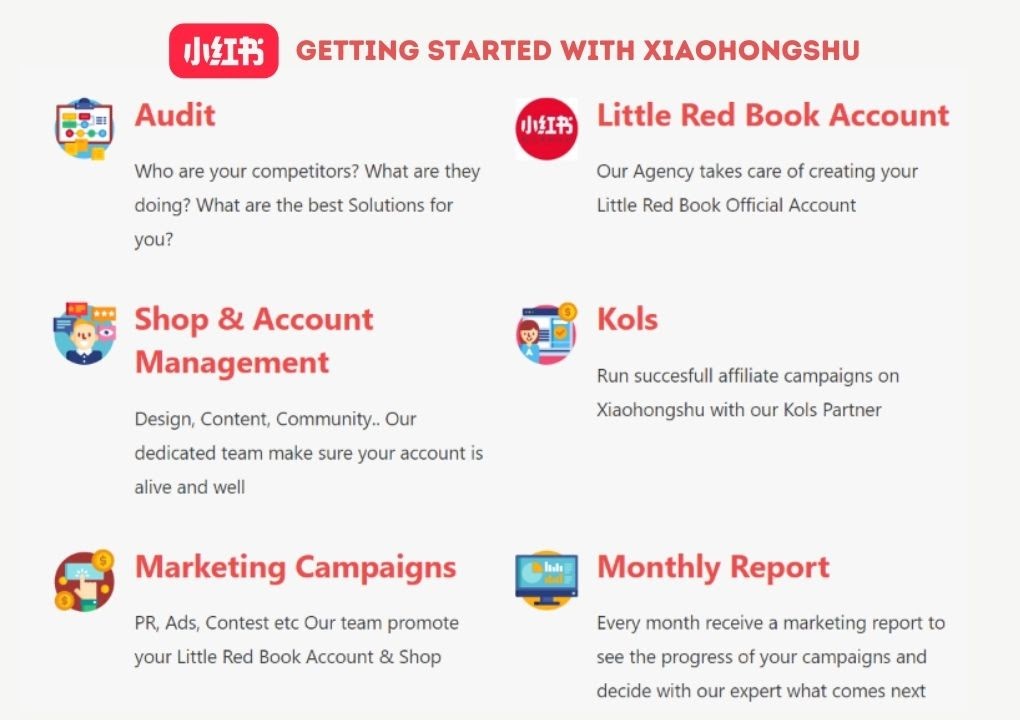
Don’t hesitate to leave us a comment or contact us. We offer a free discovery consultation with one of our experts, that will learn about your brand and present the best solutions for your China entry.
1 comment
vlad.stoychev@smartvat.co.uk
Hi,
We are a tax free shopping company in the UK looking to promote our app on Xiaohongshu.
Please advise your services/fees.
thanks