

Alibaba’s Tmall is the go-to destination for brands looking to sell online in China. But what are the costs of entry, and how do you go about opening a store? In this blog post, we’ll take you through everything you need to know to get started on Tmall. Keep reading to find out more!
Why should your brand enter Tmall?
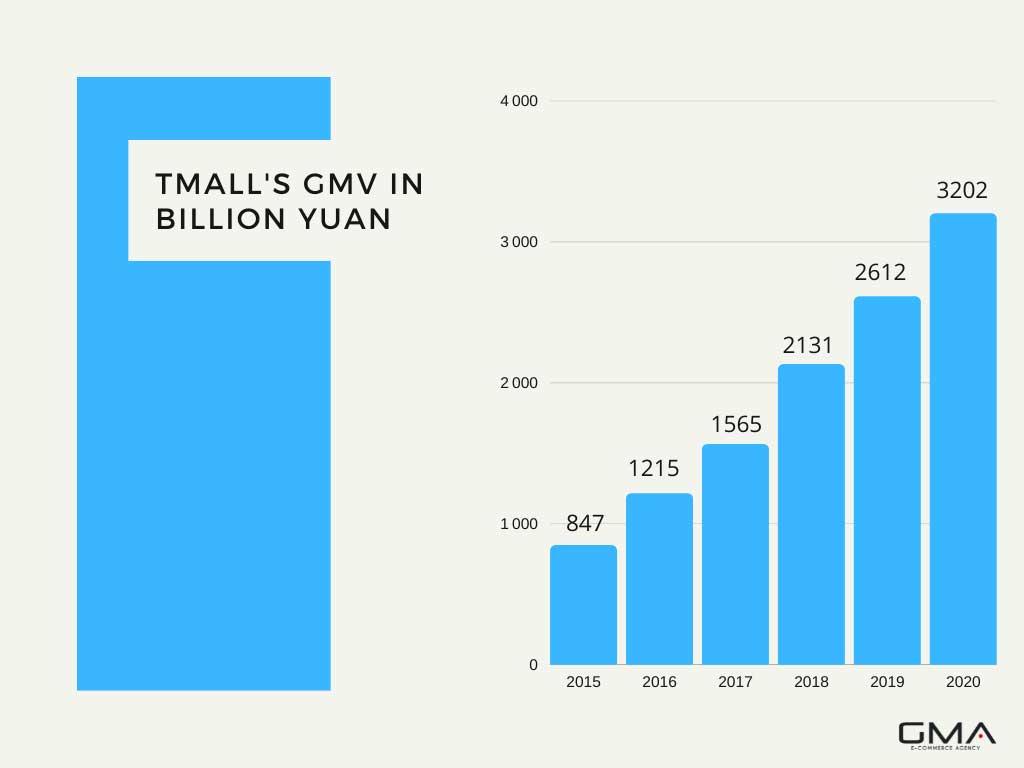
Tmall managed to capture the majority of china’s online e-commerce market share over the years. It became the most trusted e-commerce site in China and the best online gateway for international and local retailers. Tmall was responsible for approximately 50.8% of all transactions made on B2C platforms as of 2021 Q1. This is far more than JD.com, which has 15.9% of the transaction share, and Pinduoduo (which has about 13%).
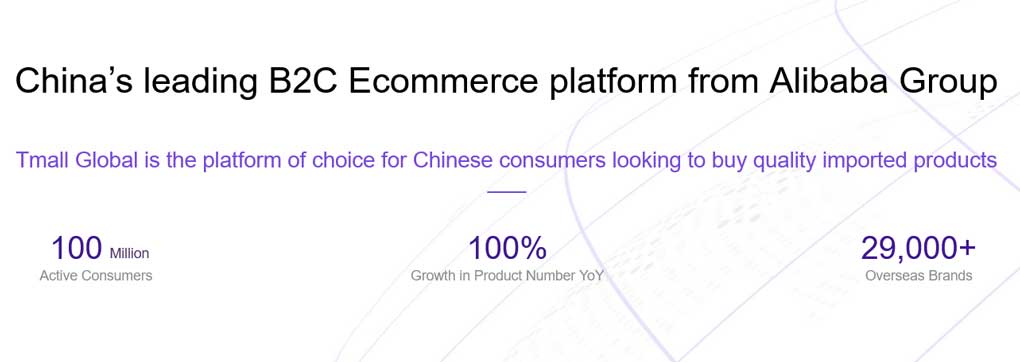
This is why so many international brands have joinedTmall and TmallGlobal. Tmall is a brand that you may have heard of in the last few years. Tmall is well-known for its multi-million dollar sales records, such as the 11.11 which can generate 74.10 trillion dollars in 24 hours.
What are the fees and processes to enter Tmall?
Tmall is an expensive eCommerce platform to sell on! here is a breakdown of its costs
Enter Tmall Fees:
Tmall’s fees can be quite expensive if you wish to sell your products there. However, it is usually worth it if you have the right strategy.
- A Tmall Flagship Store costs between 50,000 RMB to 100,000 RMB
- Marketplace: 100,000 RMB to 150,000 RMB
- Technical services will cost you between 30,000 and 60,000 RMB each year.
- Tmall sales commission can be 0.5% to 10% of sales, but it is usually between 2% and 5.5%.
- Last but not least, Alipay is a Chinese subsidiary of Alibaba. This means that Alipay will account for 1% of your total sales.
Contact us and one of our native experts can assist you.
Fees of registering store on Tmall Global
Tmall global requires that you deposit US$8,000-US$25,000, depending on your store format. Tmall also charges an annual service charge, which is dependent on the product category and can range from US$5,000 to US$10,000.
Marketers can opt to be exempt from these fees or only pay half of the fee if they meet Tmall’s sales targets. Tmall also keeps 5% as a commission.
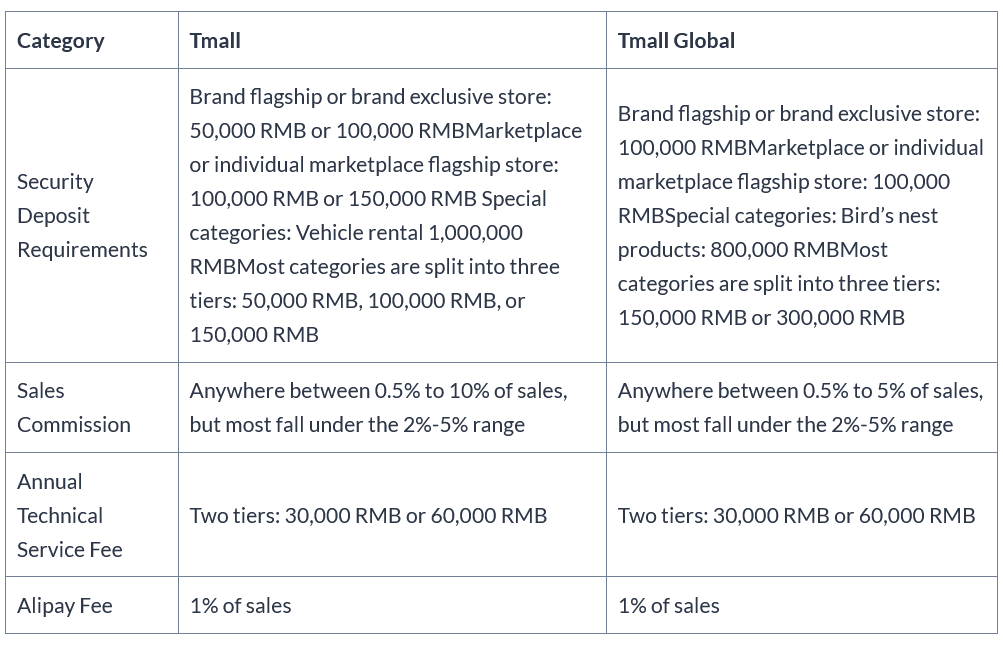
List of common requirements for Tmall.com as well as Tmall Global
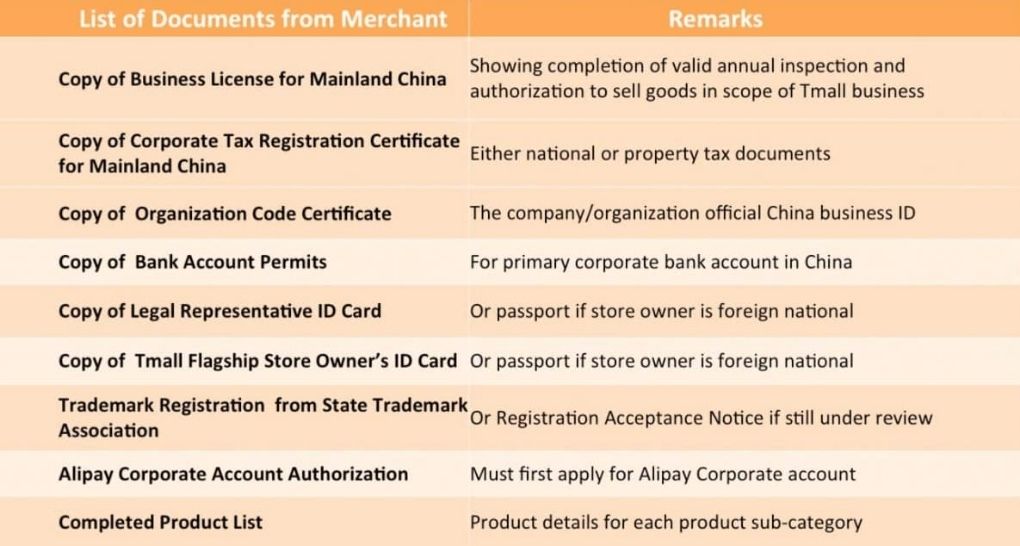
Tmall requires that merchants have official Chinese documents and products are registered with local authorities in order to register their company. Tmall’s foreign brands are mostly international and F500 brands with an existing entity in Chin. We can help you register your Chinese company and obtain a license for your products.
- Send product information and wait to be verified. This takes up to 10 working day.
- Register for an Alipay account abroad. It takes approximately seven to ten days to apply offline.
- Sign the agreement, and then pay the annual fee and deposit. The agreement lasts approximately seven to ten days.
- Open the store. You will need to register an account with Tmall Global, complete a test, add products and launch the store.
Do I need a business license to register my beauty brand on Tmall
Many of our clients have asked us if they require a business license to sell on Tmall Global and Tmall Global. As we mentioned, Tmall is only for established companies in China. Therefore, you will need a business license to sell on Tmall. This is to show that you are actually in China. A business license is not required if you are selling on Tmall Global which is for foreign companies that do not reside in China.
Registering a Tmall Store, Which one is best for your brand?
Three types of stores can be opened by brands: Authorized store (Flagship store), Authorized store (Specialty store), and Specialty shop (Specialty store).
Tmall Flagship Store
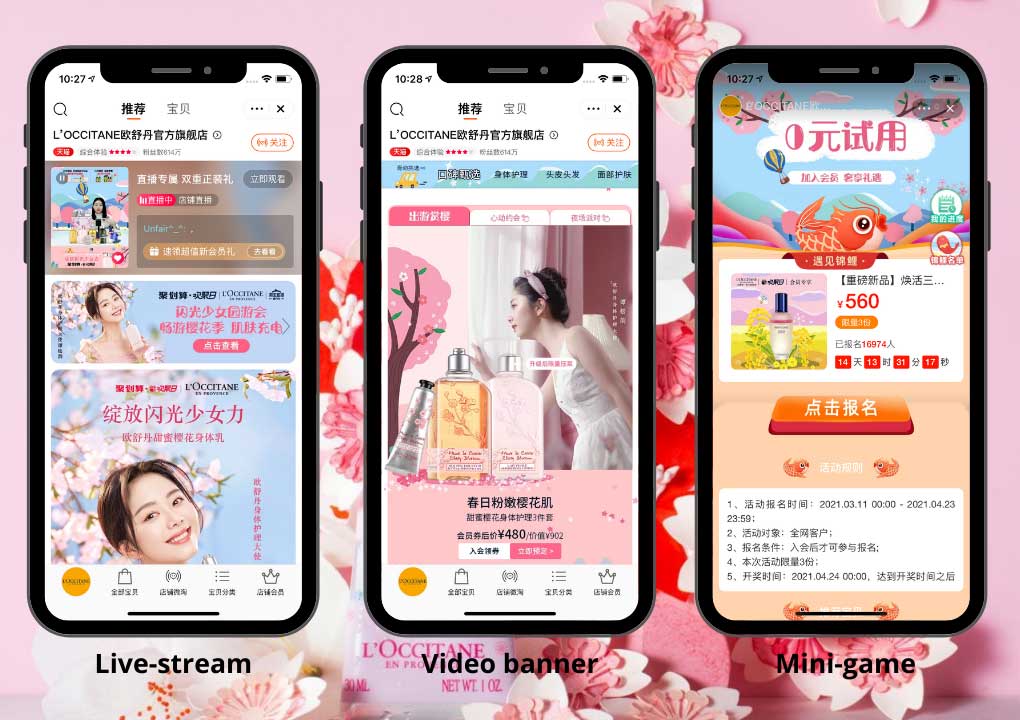
When a merchant opens his Tmall.com showcase, he is either the brand owner or has exclusive authorization from him.
Flagship stores can be opened under the following conditions:
- The merchant who opened the store opens the store and the store acts for one brand.
- The merchant who opened the store must approve the sale and act on behalf of multiple brands.
- The shop acts as a representative of a multi-brand marketplace that is owned by the merchant who opened the shop. Tmall approval is required.
Tmall Authorized Store
To open a Tmall.com shop, the merchant must have the authorization documents from their brand owner.
These are the conditions that authorized stores may open:
- You can sell brand products only if you are authorized.
- A store can sell products from multiple brands but must have special approval from Tmall.
The authorization documents (trademark owner) must not be subjected to regional restrictions. Furthermore, the validity period must not expire before December 31, 2013.
Tmall Specialty Store
A merchant may sell products from two or more brands within the same product category.
These are the circumstances where specialized stores may be opened:
- The merchant doesn’t own any of the brands sold by the store.
- The merchant owns the brand or trademark of the store. However, the store also sells products from a different brand.
- The merchant may sell products in the store.
One merchant may only apply for one specialty store in a single product category.
Enter Tmall – Frequently asked question
- What is the difference between Tmall & Tmall Global? Tmall Global does not require you to set up a Chinese bank account or company. If you were selling to Chinese consumers prior to Tmall Global, this was required. It makes it a good option for brand wanting to test the waters.
- Do I have to choose Tmall to sell goods in China? Tmall is not the only popular e-commerce site in China. There are many e-commerce sites that could be more appropriate for your company in terms not only of marketing strategies but also in terms price. Tmall is the market leader in China, so selling products there can be very expensive and prohibitive for smaller businesses. We recommend that you start your business on Tmall if you have the funds. Your journey will be rewarding if you work in your store, off-site marketing and on-site.
- What is a Tmall partner and why should you choose to work with one? Tmall’s Partner Program allows Alibaba to provide services and platforms for sellers through trusted third parties like agencies like ours. These partners can assist with logistics, marketing, IP protection technology development, content localization, etc.
Tmall is the preferred choice for large brands who want to establish an identity on the platform without having to take on the risks of consumer interaction. Although Taobao is more accessible to smaller companies than Tmall, it has more customers and therefore more growth potential. Taobao could be the right platform for your company if you believe it can best position its business on a platform that is known for its spontaneous and impulsive buying habits.
Contact-us! We offer eCommerce solutions that are tailored to China’s top online marketplace Taobao & Tmall. Tmall Certified Partner, our agency was also certified.
2 comments
Michael Theron
I want to set up a Store on Tmall Global but i am a retailer that sales products from different brands.
Do an authorized seller have to provide a license agreement for each brave products they’re Selling on Tmall global ?
MISEON PARK
Dear,
I would like to know about the overall store type, exposure and commission rate.
It would be great if you share the material.
Thanks