

WeChat – major player in the e-commerce market in China
WeChat, the Chinese application, is undeniably a major player in Chinese social networks and e-commerce, with more than a 1,17billion active users in 2020.
Users can now purchase movie tickets, reserve a table at the restaurant, or make daily payments using the WeChat Pay application. Therefore, WeChat is more than a messaging app. It has profoundly altered the way of life and consumption behavior of the Chinese.
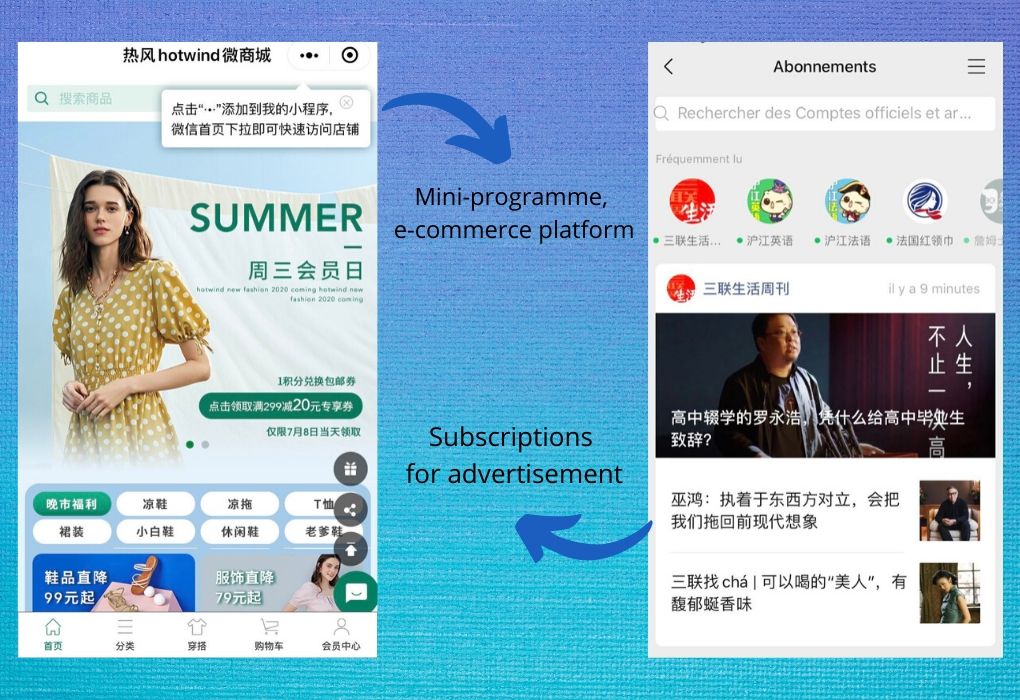
WeChat has an option that allows companies to sell their products directly on the platform with their enterprise account. Every year, this market attracts a multitude of new brands seeking to reach Chinese consumers via various networks.
It is thus crucial for foreign companies wishing to enter the Chinese market to know the basics of the powerful Chinese application, namely how to sell on WeChat.
Read as well: WeChat Guide for Foreign (Cosmetics) Companies in China
To sell on WeChat, Learn how to promote your shop
Promotional posts – mighty advertising tool
In China, it is very common for Cafés, shops, and restaurants to register their page on WeChat to post their promotional campaign frequently. The biggest challenge here is to ensure that as many potential customers receive promotional advertising, which means as many WeChat users subscribe company’s posts.
Many cafés send upcoming promotional campaigns that take place in a specific place and for a fixed period of time (1 hour for example). As a result, the idea is to attract consumers close to the promotional campaign.
To increase the number of followers, restaurants and shops ask their customers to follow them on social networks in order to be aware of all sales and promotions.

For example, on March 8, McDonald’s promoted its “A Baked Frit, A Fries Offered” operation by posting an article on its official WeChat account.
This article has been seen over 100,000 times, and many positive comments have also been written. As a result, its sales have been increased.
Advertising on WeChat for brand awareness
- Publicity on moments
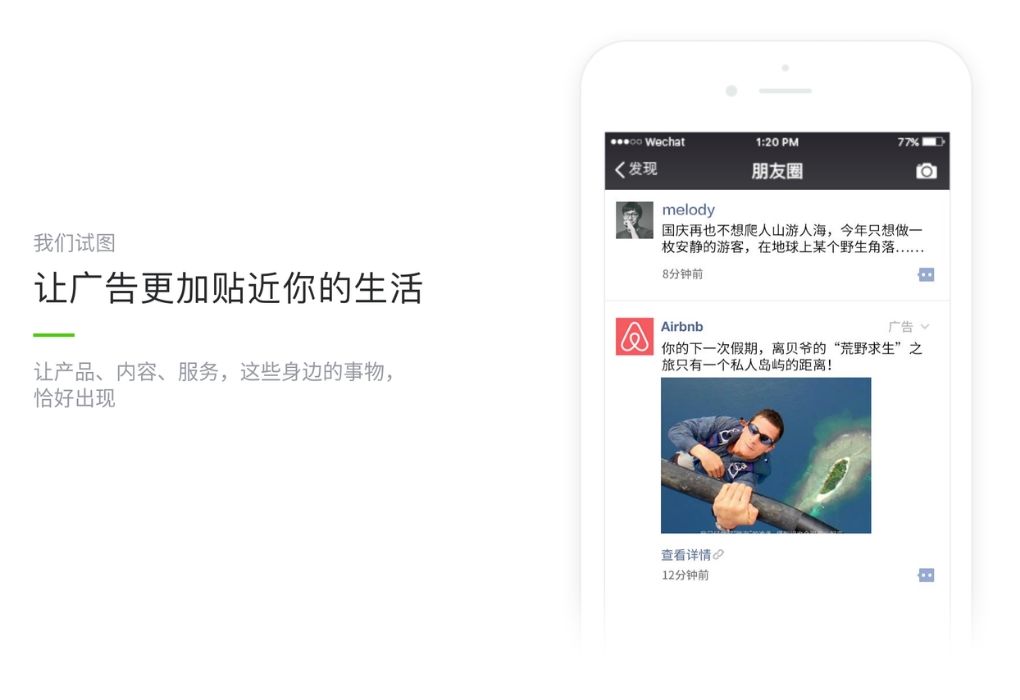
Moments are the most popular feature on WeChat. Users can update their status by sharing photos, short videos, and articles with their loved ones and friends, just like Facebook. Companies can pay for their brand to be displayed on Moments of Targeted Users.
Announcements of moments are usually presented in the form of texts, images, or videos. If readers are interested, they can click the “Read More” button, which usually redirects the reader to promotional items, an HTML5 campaign page, the official account of the brand, or its official website.
- Direct announcements
Another possibility for brands is to use direct ads, which appear as banner ads at the bottom of a WeChat article. When users finish reading an article, they see advertising.
This month, JD.com, one of China’s largest e-commerce platforms, used direct ads to promote childcare products on WeChat. When users click on the ad, they are redirected to JD.com
Wechat shop facilitating your e-commerce
Another popular way to sell on WeChat is to create an online store where users can directly view and purchase the products. When a brand creates its online store WeChat Store or on other e-commerce platforms like Wei-Store, it can then link it to its official WeChat account in the menu bar.
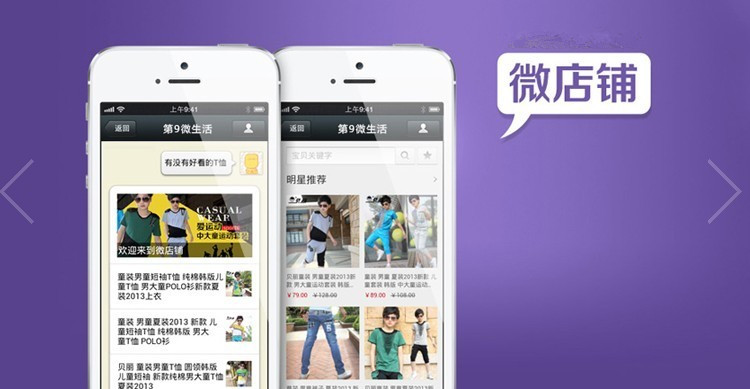
If a consumer chooses to buy a branded product, he can click on the menu bar and access the linked store. It is possible for customers to complete the entire purchase process by WeChat. The WeChat shop applet is very customer-friendly, you can use it as soon as you open it without downloading, and it is simple and clear to use. Users only need to scan or search to quickly open the application.
Compared with other e-commerce platforms, WeChat store applets have a low entry threshold. Moreover, it’s very simple and convenient for both customers and merchants. The WeChat e-shop can be transferred between group chats and friends. This makes the WeChat shop applet a great way to improve the store’s exposure rate.
Strategic partnership enhances WeChat’s functionality
Certain brands of e-commerce (JD.com), transport, hotels, and tourism are listed in the WeChat Wallet. Indeed, these service providers hold Tencent shares, the parent company of WeChat. This type of partnership with WeChat makes it possible to generate much more traffic and simplify simplified payments.
Since the end of 2016, it is now possible to be present on the Wallet WeChat without being a shareholder of Tencent. Starbucks was the first brand to benefit from this opening. By the end of 2016, customers of the US firm could pay via WeChat Wallet in over 2,400 stores in China, this was accompanied by a promotional campaign.
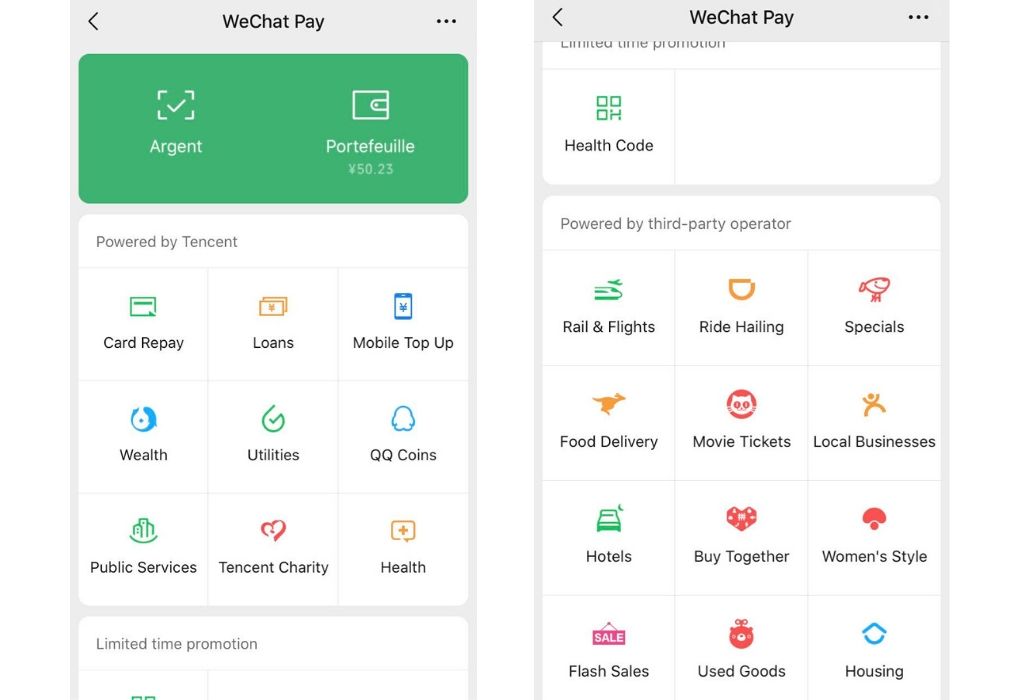
Dianping, an informative, social platform for online restaurants, is now also present on the WeChat Wallet. Mobike, a bicycle sharing system (an equivalent of Vélib ‘without a station), has also joined WeChat.
Mobike’s entry into the WeChat Wallet is linked to its mini-program page, where users can easily find nearby bikes. In addition, after scanning the QR-code on the bike, they can open it and start rolling. The company also launched a free 30-day campaign so that users can share these bikes with their WeChat friends.
China’s e-commerce – opportunity & challenge for foreign companies
The Chinese market is a fast-changing market, with customers highly connected on several e-commerce platforms, like WeChat, Weibo, Xiaohongshu, etc. Chinese people don’t buy products that they don’t know, and they spend a lot of time reading shopping experiences from former customers. Customer word-of-mouth is essential to maintaining a positive image of the brand.
However, the Western market and its marketing strategies behind are very different from those in China. Thus, for entering into the Chinese market, not only is important the products’ localization, but also it is essential to adapt your marketing strategies. Brands must have a good online presence and make frequent and quick interactions to maintain a good relationship with users.

Do you want to know more about WeChat and keep informed about Chinese social networks? If you want to know more about China’s e-commerce, contact Gentlemen Marketing agency, a digital marketing agency, specialized in the Chinese digital market, we will be very pleased to help you succeed.
WHY CHOOSE GMA?
- A team of 70 digital marketing specialists in China
- Experienced & Professional in supporting companies for their development in China
- With a deep knowledge of the Chinese lifestyle
- A passionate international team
Read also :
11 comments
Max
WeChat is easy to sell… can not be billionaire however.
Wang Xi
It is not that easy to have fast ROI on wechat, but after a while, customer are kind of loyal to your wechat App, specially when you sell food & drink Products imported
Abdel
WeChat is a great tool, the best app ever, and I guess miniprogram are the new ecommerce way to make money in China
AleX
Can you really make money on WeChat ?
What is the secret?
admin
You can, the secret 😉 find good prodct, do good community management and invest in the right way
Max
Really Good article . I guess many people ask you about to sell on Wechat, just to know if you can get ROI easily ?
nico
Sell on wechat I guess now is not so mature but it will be great why ?
Tmall is killing Taobao small business
Wechat pay is free (alipay 1%)
Commission on wechat are free
Most Chinese use Wechat everyday (not taobao)
you can build APP on wechat , commercial App
Now the challenge of Wechat is to let people buy on wechat shop and stop buying on taobao.
Eric
and Vicky it is not that simple ! 😉
Eric
Really Great article. I guess many brands are lost on wechat..
They try , they try and fail.
Seriously.. it is totally different you have Zero Traffic. Zero exposure, and need to bring it from Somewhere … Group people hate to see spam.
Moment people hate to see commercial
So where to promote ? Ads .. and no it does not worth the money.
It is still a Big Problem to solve for Brands. I trust that your Agency Olivier will be able to solve that Headache ;
admin
Yes you are right… it is not simple. And we can help Brands yes !
Vicky
1/ open wechat store
2/ build community
3/ work hard