

In China, the C-Beauty brands are taking over the market. Have you ever heard of it before? A C-Beauty brand is the other name for a Chinese beauty brand like J-Beauty for Japanese brands and K-Beauty for Korean brands. In the past months, we introduced you to the key success factors of the Chinese brand Perfect Diary. Today, a new Chinese brand is on the rise. The millennial investor Wendy Yu noticed the rising opportunity for creating a Chinese luxury beauty brand. With YUMEE, Wendy Yu expects to compete with the international luxury beauty brands.
YUMEE, The Next Famous C-Beauty Brand
Who is Wendy Yu?
Wendy Yu is a young Chinese investor. Recently, she was awarded by the Forbes China magazine in the edition “30 under 30” leaders. In the meantime, Vogue international recognized her as the “patron of fashion“. Have you heard about her before? In a word, she is the most influential millennial investor and entrepreneur.
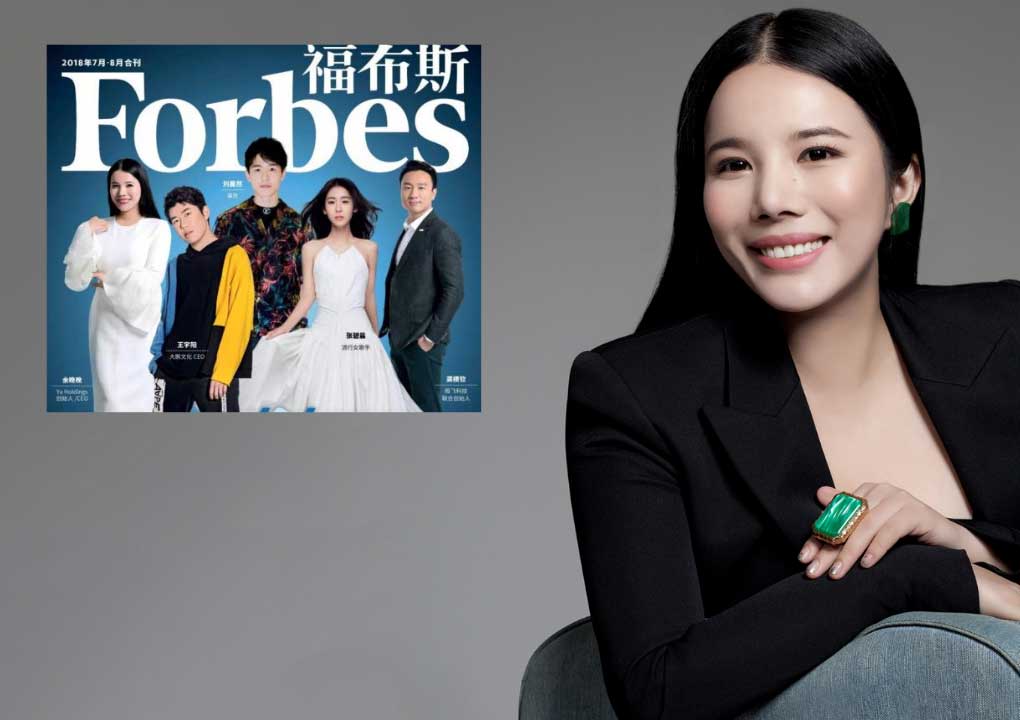
Obviously, she benefited from a good background. Her father, Mr. Jingyuan Yu, is a self-made businessman and the founder of the Mengtian Group. In China, this company is very famous as it is the largest wooden door manufacturer in Asia. Thanks to this entrepreneurship mind, Wendy Yu decided to combine business and philanthropy. In 2017, she founded Yu Holdings, a company dedicated to promote and invest in people’s creativity. The company holds Yu Fashion, Yu Capital, and Yu Culture.
The Yu Holdings succeeds in empowering creators and building bridges between the East and the West. Wendy Yu decided to switch from an investor… to a creator!
What is the Chinese Luxury Beauty Brand YUMEE?
In February 2021, Wendy Yu announced the launch of her first Chinese luxury brand: YUMEE. A quick tip, you have to pronounce the name like “You & Me”. Starting from the name, Wendy Yu wants to give an international aura to her brand with a non-Chinese name. Is she really behind the brand? Of course! Wendy Yu is the creative artistic director of YUMEE and will pursue the daily management of the brand.
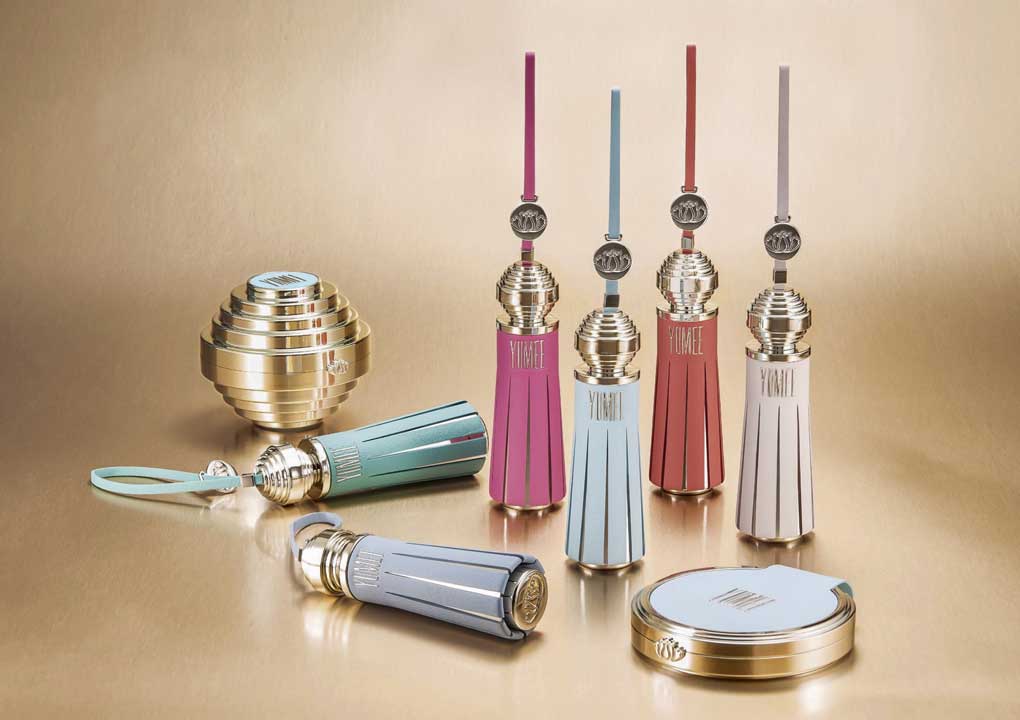
For now, the luxury beauty brand offers a makeup range of lipsticks, highlighters, and eye shadows. The brand universe is following the Chinese beauty standards with pastel colors and precious packaging. Above all, the beauty products claim to be cruelty-free. This specificity is highly appreciated by Millennials and Gen Z who are more open-minded and ecofriendly.
What about the price? The product range has prices from $50 to $80. By comparison, YUMEE is positioning next to Chanel, Dior, and Guerlain luxury makeup brands. While claiming a luxury positioning, the Chinese luxury beauty brand is still far from Clé de Peau Beauty products.
The Growing Success of Chinese Beauty or C-Beauty Brands
A Beauty Inspired by Chinese Medicine

The C-Beauty brands are going back to their root. They claim 2000 years of Chinese medicine and herbal knowledge to take care of your skin and your body. This is the main asset of Chinese beauty brands. Even more, C-Beauty meets success at a time when clean beauty and health products are among the most important concerns of Chinese consumers.
In ancient Chinese medicine, there is a direct link between health and beauty. Organic plants can help treat illness and skin flaws. Today, Chinese beauty lovers are very sensitive to skincare products that could solve the pollution and tiredness impacts on their skin. On the makeup side, they look for products that are healthy for their skin and that match their beauty standards. YUMEE has a double advantage here: being cruelty-free and perfect for Chinese beauty.
Success Among Lower Tier Cities
The C-Beauty brands have a great advantage as they know perfectly the Chinese market. International brands only target first-tier and second-tier cities like Shanghai, Beijing, or Hangzhou. For the Chinese consumers, the main problem they face is a lack of access to beauty brands if they do not live in these cities. The market is evolving fast: lower-tier city consumers have a higher purchasing power and lower product access.
In a word, international brands rely on distributors in big cities while local brands master the use of e-commerce and social media. All the C-Beauty brands know exactly how to reach and engage Chinese consumers on a larger scale. YUMEE is the best example: the brand will use Little Red Book, WeChat, and Tmall to increase its visibility and sales quickly.
A Tough Competition Between C-Beauty Brands
First, you should always remember that China is the most competitive market in the world. Brands face between 7 and 10 times more competition than in any other country. In the meantime, the cosmetics market is highly profitable. After the Covid-19 crisis, some luxury brands even made up to 50% of their sales in China. And today, the market is split between trustworthy international brands and trendy local brands.
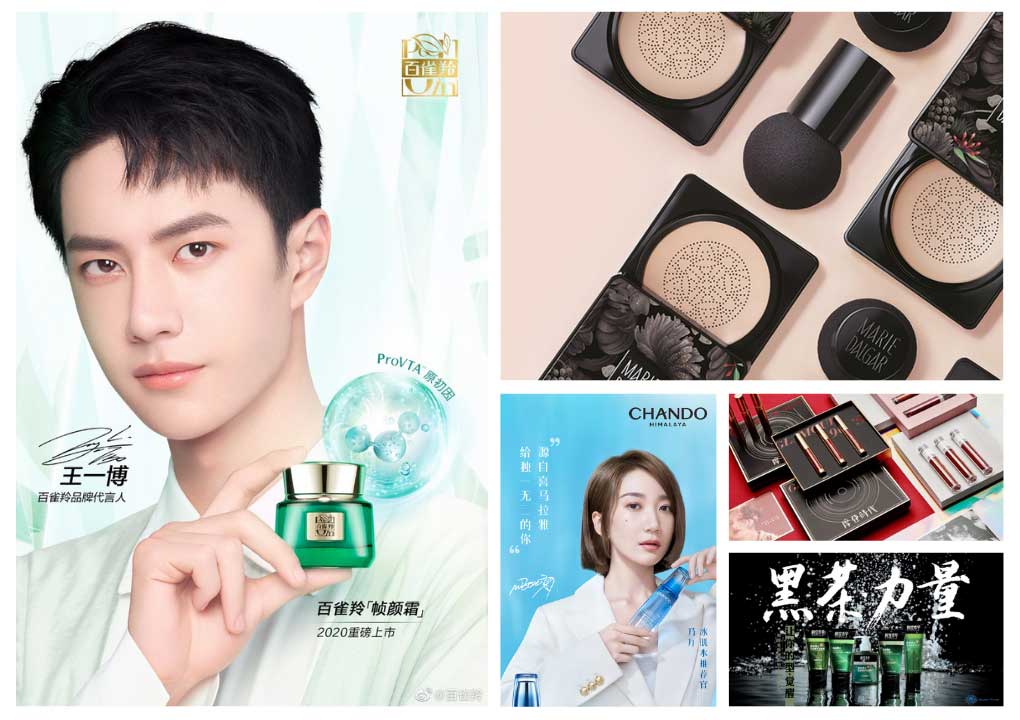
Who are the C-Beauty brands in China in 2021?
- Hedone
- Chando
- Marie Dalgar
- Pechoin
- Inoherb
- Perfect Diary
- And obviously… YUMEE
Among them, YUMEE is directly competing against Perfect Diary. For instance, Perfect Diary developed quickly and has already opened 150 stores in the country. Their next step? Triple this number by the end of 2023 to reach the majority of Chinese consumers. The local beauty brands are more accessible and even more creative as the British Museum x Perfect Diary campaign that reached 110 million reactions on Weibo.
Discover more on Perfect Diary performance in China
Understand YUMEE Strategy: A Good Knowledge of Local Lever to Create Success in China
The YUMEE strategy is very clear and follows the steps we have always insisted on: branding, e-reputation, and lead generation. The Chinese luxury beauty brand decided to start on Little Red Book, before going on WeChat and Tmall. The international rollout is planned for the end of the year 2021.
#1 Little Red Book
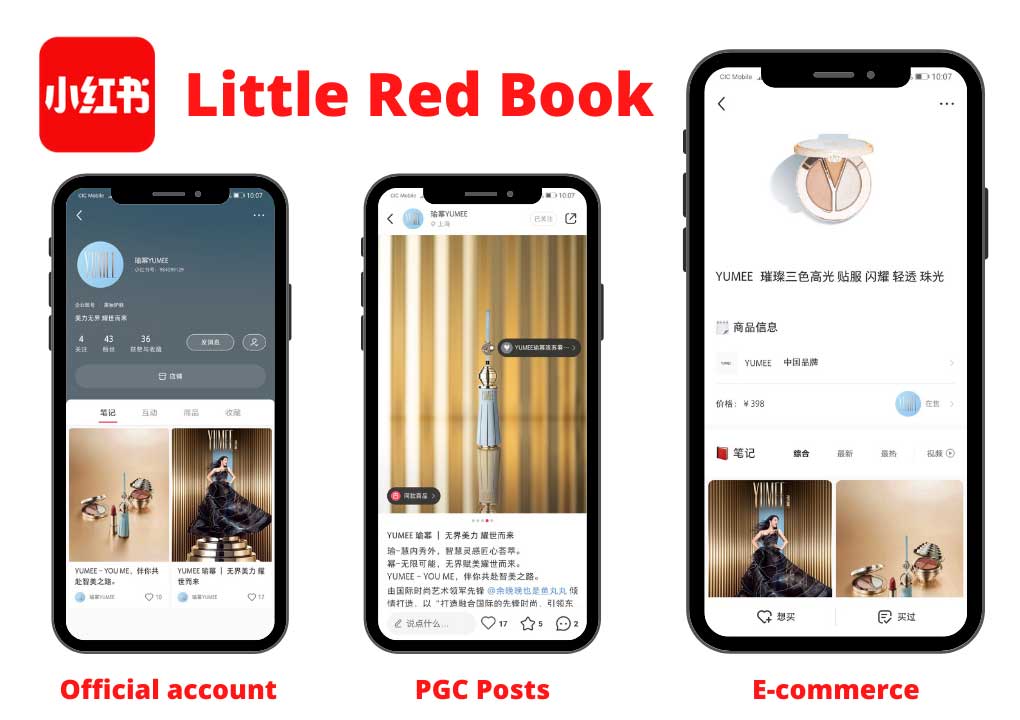
Little Red Book, also called RED, is the Chinese Instagram. Even if this social media proposes an e-commerce platform, brands favor this solution for brand visibility. Little Red Book is the best option if you want to create a “buzz”. You can post Professional Generated Content (PGC) and have partnerships with KOLs and KOCs to share product content. For instance, YUMEE sent sample seeding to go along with famous KOCs and have a better conversion rate.
If you are a cosmetics brand and you plan to enter China, you definitely need to consider Little Red Book. 80% of the users are women. In a small amount of time, you can reach a wide user community and increase your brand visibility. Indeed, the exclusive drop of YUMEE on RED shows the importance of this social media among beauty lovers and consumers.
#2 WeChat
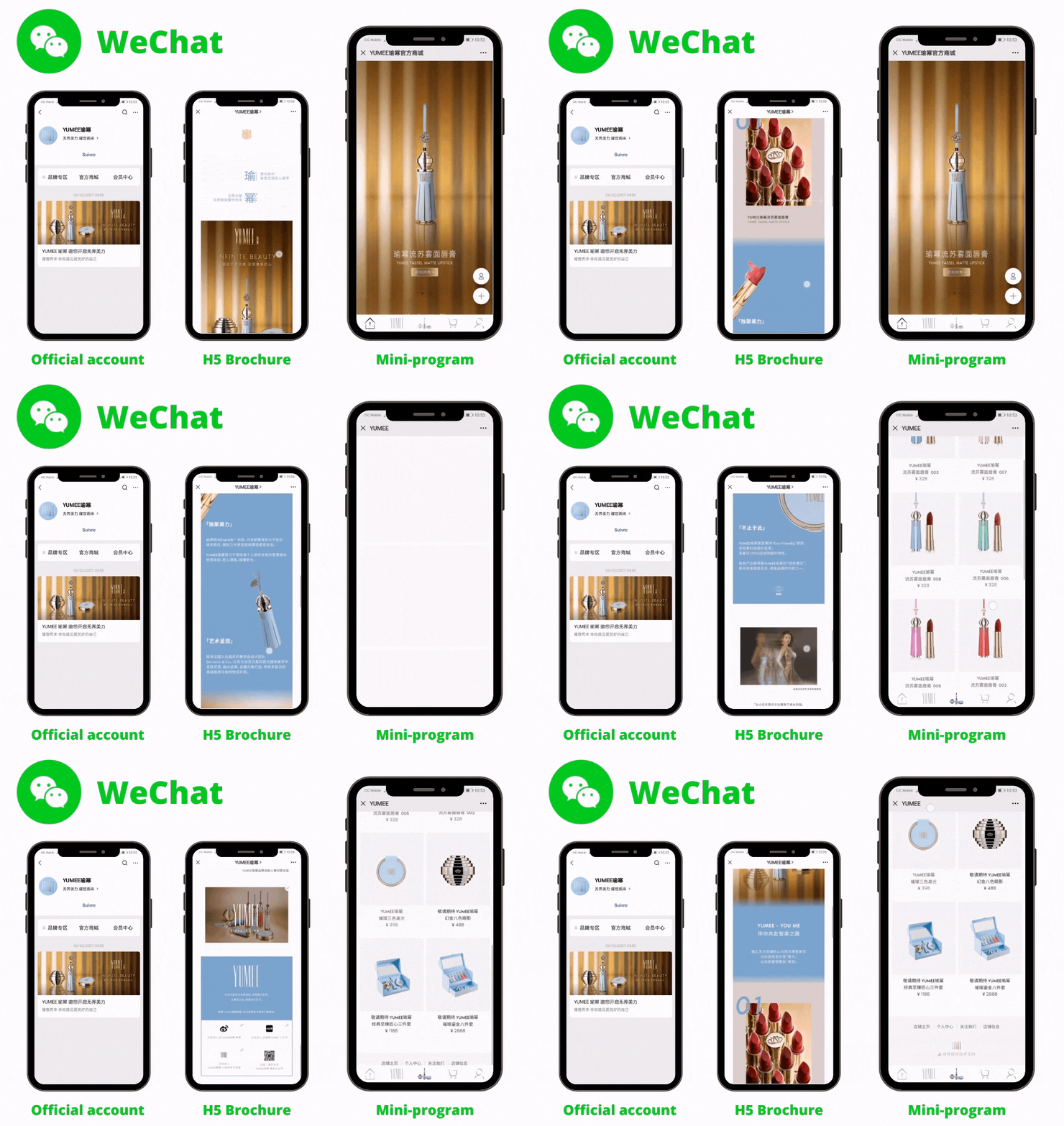
After an exclusive drop on Little Red Book, Wendy Yu planned to use WeChat. How? Obviously, by creating a WeChat official account and engage with its community. As we mentioned previously, WeChat is the best tool to target lower-tier cities. If they do not have access to your brand physically, they will, even more, tend to connect with your brand digitally. Chinese consumers will follow your brand, ask you questions, and join private groups to talk about your products.
WeChat is a great social media to engage with Chinese consumers. When they look for information on a brand, they always look on WeChat first. Your brand needs to have an official account. But which one? There are the service account and the subscription account. If you want to perform in China, you should better create an international service account to target both Chinese users and international users. This solution will allow you to create advertising, brochure, and mini-programs.
#3 Tmall
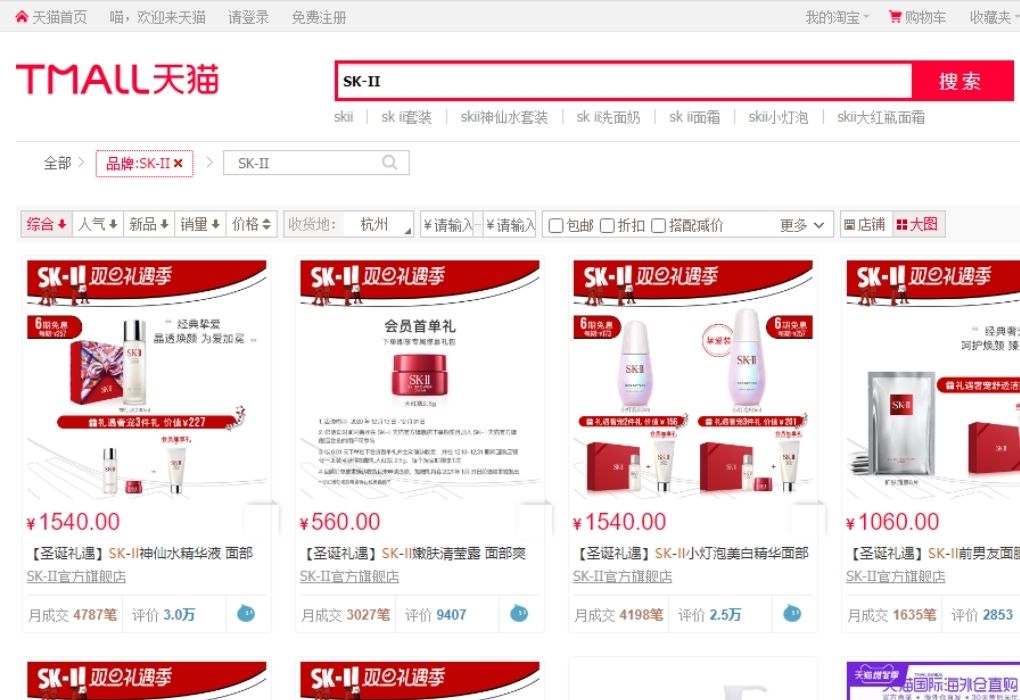
Finally, the YUMEE strategy moves from brand awareness to sales. Thanks to Little Red Book and WeChat, the new Wendy Yu’s brand has gained visibility. The brand reached strong notoriety among Chinese consumers and needs now to convert its followers into sales. How? Thanks to the most premium e-commerce platform: Tmall.
Tmall is owned by the Alibaba group. It is a famous e-commerce platform that enables brands to sell directly to consumers thanks to easy distribution and fast delivery service. It is the more convenient way to sell in any part of China. Even more, your beauty brand can benefit from the Tmall Luxury Pavilion. This solution is an “app within an app” to offer a more high-end experience to your customer. But to enter the Tmall Luxury Pavilion, you will need to build a project and present it to the group’s luxury division.
How to Conquer the Chinese Beauty Market?
The launch strategy implemented by Wendy Yu is based on lead generation and e-reputation. Before overflowing the market with her products, she decided to increase brand visibility and awareness. Such a strategy could match different budgets if you plan to enter China.
For instance, you can invest in e-reputation and lead generation services to boost your brand awareness and conversion rate. A local marketing agency is necessary if you plan such a strategy. You will need Chinese netizens to help you create your WeChat, Weibo, Xiahongshu accounts and create your own Chinese website.
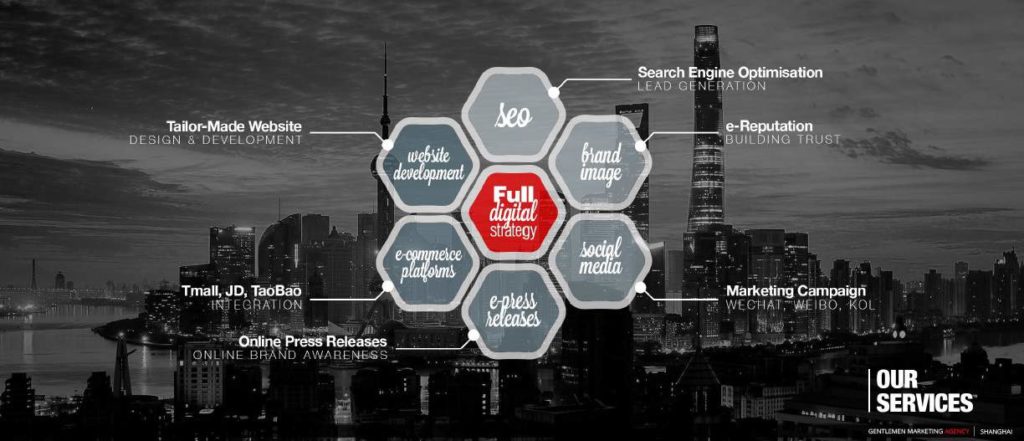
Founded by Olivier Vérot and Philip Qian, the Gentlemen Marketing Agency is composed of 70+ digital experts. Since 2012, we accompany international brands along their journey in China. We have worked on 1K+ projects from distribution to lead generation. We would be delighted to further discuss your project in China.