
Natural beauty products: a great beauty tendency at this Beauty fair in Shanghai.
Nowadays, all means are welcomed to get the perfect face, the perfect body, the perfect skin… New laboratory technologies, small electronic gadgets, ephemeral accessories are now on the market to allow you to access this ideal. Let us present you 2016’s cosmetic trends in China!
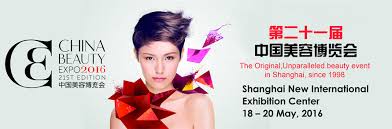
Take care of your skin
Women always have the following goal in mind: I want to look younger. The question is “How to process?” Fortunately, cosmetic brands have an answer to that question: Usual miracle drops and night/day creams are current in women’s daily routine… Nevertheless, they can now find masks against wrinkles, soaps and body products to strengthen, hydrate and lift their skin. Stretching the face to fight against wrinkles with small gadgets is also possible, and brand did not leave aside items to hide scars and dark circles!
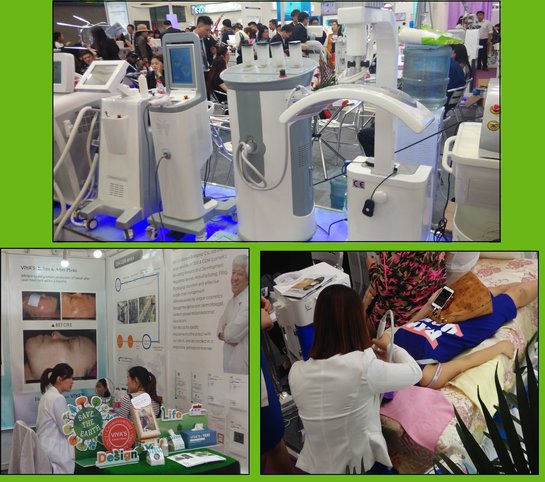
Acne: The teenager’s enemy… but adult’s skin is also concerned about this problem! Sessions of injections and product pulsation in a salon to eradicate acne are now operational! Other brands remain in daily creams and scrubs masks so-called “green” or “natural” (see green trend part).
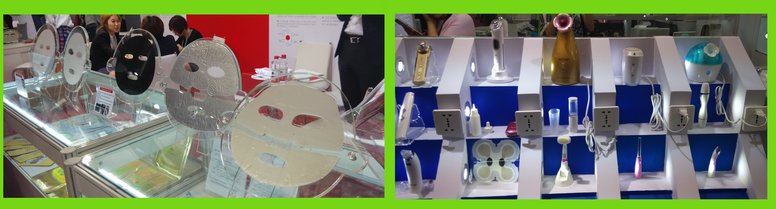
A clean and fresh skin is a skin healthy and hydrated. Brands now offer portable electric foggers; soaps with anti-microbe active ingredient… Some products even contain gold particles or have nutritious balls! Do not worry, are still on the market usual moisturizing body milks and creams. As surprising as It can be, whitening skin products didn’t attract attention that much!
Taking better care of your hair
Repair masks, strengthening and lightening or for brilliance shampoos… taking better care of hair is entering Chinese’ daily routine. However, getting rid of unwanted hair, by yourself, through hair removal laser, is now possible! You do not anymore need to go in care-salon. Men are not in rest: Some products have proprieties of boosting the hair growth, which help to replenish cranium.
Brands even offer you toothpaste with “natural” whitening active ingredients, or whitening services “respecting the enamel” (see green tendency part) Bright smile, bright teeth.
Polishing gadgets
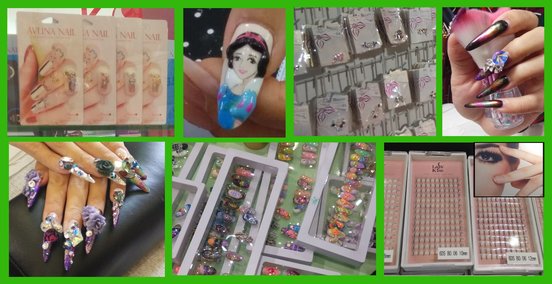
For more fantasy: From hands to skin, temporary tattoos, jewelry and 3D gel nails, metal capsule nails, makeup from common to unusual pigments, implantation one by one of the false eyelashes for more real volume… every little item is available to customize your style.
New Product Types
Care products for pregnant women and baby are also in the fad: creams for sensitive skin and children’s skin, products with active ingredients to protect “naturally and safely” your baby…
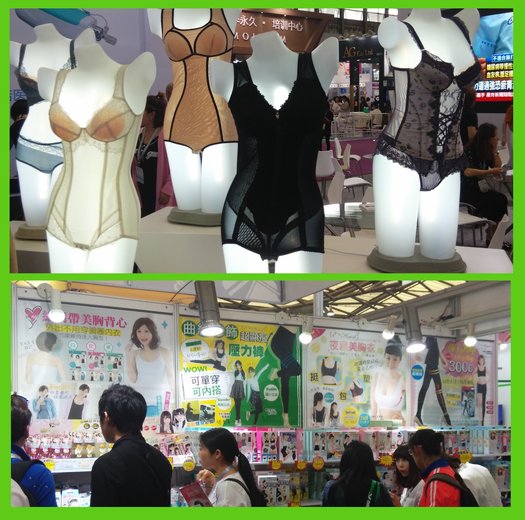
Who never hoped for getting a perfect body? Usual methods go from healthy nutrition program, massage to strengthen the skin… to slimming-lingerie. A new product that is coming after firming-leggings and other types of clothes. Japanese brands are at the origin of this idea, innovating in lingerie to wear for getting the perfect morphology, without being in a corset, and staying glamorous!
The “Green” trend
During this exhibition, “natural product” was the major wave. Many new brands have chosen to guarantee their products as truly natural, communicating with Green.
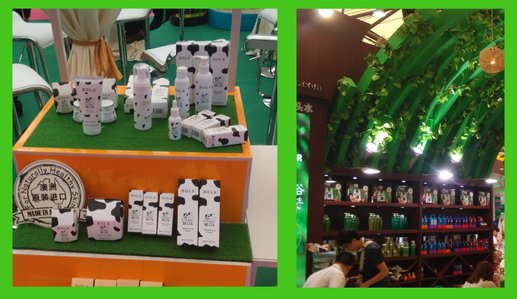
Always “greener” than each other, brands are using greenwashing and green painting to manipulate minds. The general tendency is to add items that recall nature -such as the color green, the grass or even plants- on the stand to make it look natural. Even the fair’s carpet would let you think about green products, natural without harmful ingredients added!
Check out the component of your cosmetics or skin products: in China, if the packaging has a plant or fruit, it does not always mean that it is authentically natural!
Feel free to download a report on the cosmetic market in China here.
Trendy WeChat !
All brands wanted to engage in their passersby. For this, they would use communication means to get followers on their WeChat Account. At each cross, you would have contests participation, free samples, and promotions if visitors scan the QR Code…
WeChat, the major social network in 2016 for Chinese brands, as other communication means, have become essential for a brand’s success in the cosmetic sector in China!
Some surprises!
Some brands can surprise you! You should not be surprised to go through ghost brands and copies claiming to be international… Coco Dior or even Adolph brand (made in Germany) caught our eye!
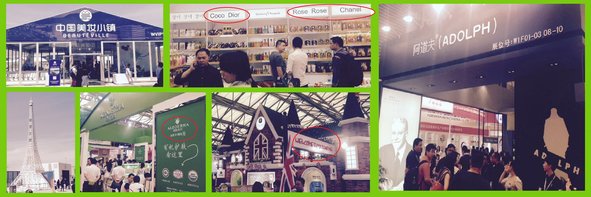
China INTERNATIONAL BEAUTY expo is not China Beauty Expo.
Beware of this copy, happening on same dates than the original’s ones! Check out the location, which is different.

We are a Cosmetics & beauty agency in China. more information about us here.