

10 digital strategies in China for 2016
What are effective digital strategies in China for 2016?
Today we will go through the Digital strategies are paying off in 2015 and are promising for 2016.
1. E-commerce: the sinews of war

In China, where online shopping is commonplace, e-commerce is a major challenge for brands.
The Chinese market is a gold mine: it has more than 1.3 billion people, more than 800 million have a mobile, the gateway to the digital world.
Indeed, the Chinese population generally favors access to the internet via mobile rather than computer. An estimated 600 million the number of Chinese netizens. 40% of them make purchases via the Internet: a windfall for Chinese brands.
Chinese people see their purchasing power increase by eye, causing an almost instantaneous effect on e-commerce that continually grow.
The Chinese e-commerce has been dominated by the ubiquitous Alibaba, Taobao or Tmall, which are major players in the field. It is an unavoidable area for a brand that seeks to improve its digital strategy.
View important information about E-commerce in China
-
Master the information search tools
Branding is esential in the Chinese digital market. The local consumer does not have immediate trust in the brand: he will first search information about it. To do this, he has various networks such as the information collected on the web, or opinions of relatives.
For information on the brand, the Chinese web-consumer is moving towards Baidu, the reference search engine in China. Therefore, he will have access to very diverse results. The Chinese Internet user is often using blogs to increase knowledge about a brand, for example. Thus, he is interested in both the brand itself, but also to consumer reviews that have been using this product.
It is therefore very important for the brand to know where the comments come, then insert the answers to their expectations.
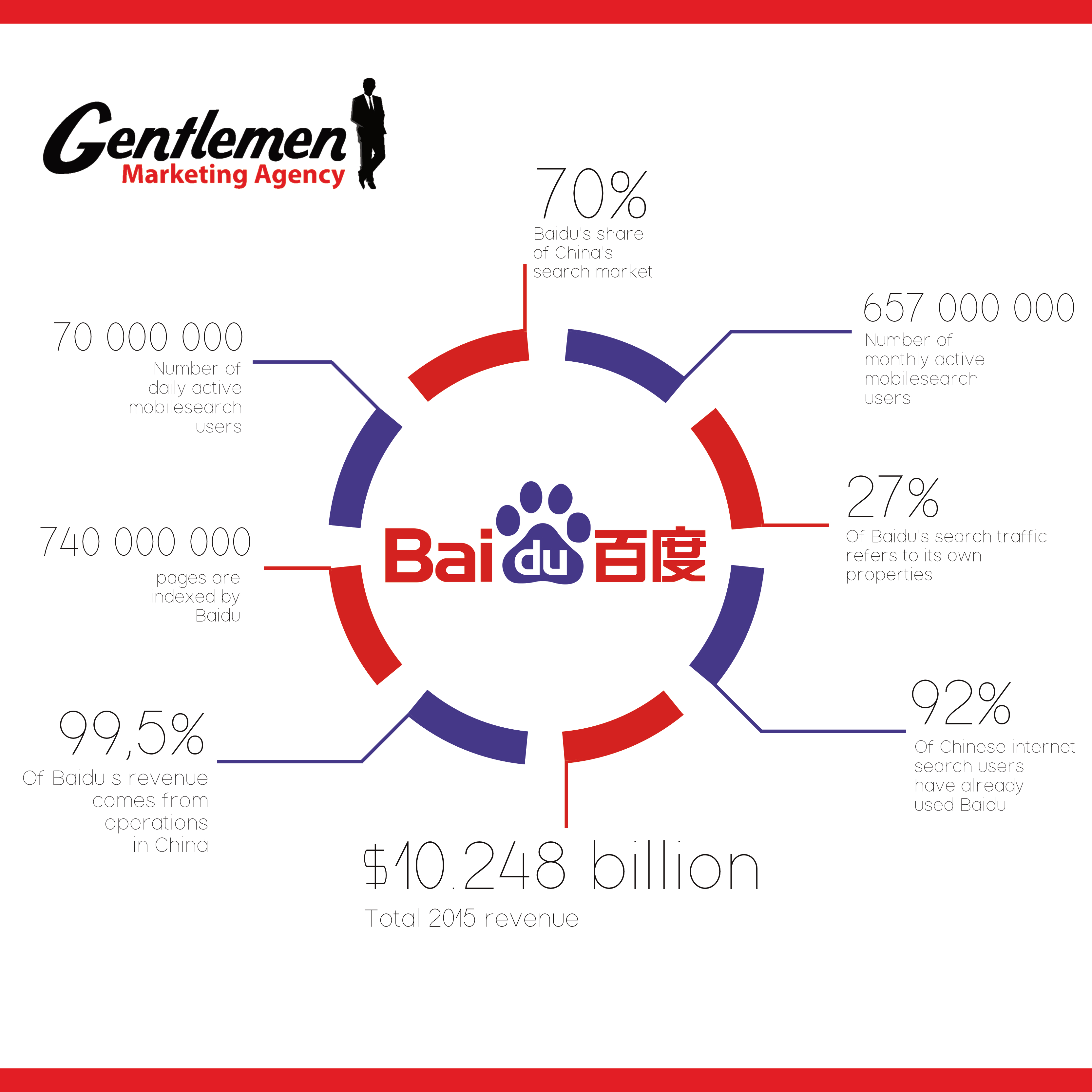
-
Reliability of Chinese brands?
Chinese Internet users devote great importance to the reliability of the brand about which they are learning. Indeed, the Chinese market is full of fakes, prompting consumers to increase its vigilance, especially as the copies made are getting better and better.Chinese consumers ensure choose a brand that they trust. The brand must absolutely play the card of authenticity to attract more customers.
4) The importance of brand visibility in China!

In order to be in constant contact with its target, the brand must be present on social networks in order to retain subscribers. Leaders in this field are WeChat and Weibo. They allow the publication of posts as text, images, videos ..
On Weibo, it is possible to change the page at will. When on WeChat, the account displays a menu with different levels, thus adapting to its use by subscribers.
5) micro-videos: lighthouse trend 2016 !
The year 2016 marked by the appearance of micro-videos. Consumers love this type of picture that last only a few seconds, but have an instant effect on their target. Brands will have to tackle it more to continue to attract consumers.
Example Papi Jiang!
6) habit of comparing offers a systematic approach in China

Chinese consumers are informed about the prices. They often make a study of prices on the web. They compare online deals to select the most advantageous of them.
Brands must therefore ensure that this aspect to develop their strategy, engage in benchmarking to keep hold of the market.
7) Be interested to communities and groups
In addition to publishing posts, the brand will develop exchanges with consumers. They are fond of this type of relationship.
The brand can also ensure share posts about elements that revolve around it and the interests of consumers, which increases the interest of these clients.
By creating a profile on social networks, the mark may initiate discussions related this one in order to maintain the name of the brand. It will then guide the discussion toward the achievements of the product but also collect customers’ reviews about the brand to better meet their expectations.
8) Adapting to mobile format becomes an OBLIGATION !
In 2016, brands will need to be relevant to the mobile format. Since the majority of Chinese consumers use their mobile phone, brands must be present. As a result, they must have a website in mobile version. This is very important if brands want to remain in contact with their clients.
9) Business to Business: Find new partners !

web in China is also used to find new suppliers and business partners : generate Leads !
China remains at the heart of world production, which causes foreign companies but also local to constantly look for new suppliers.
Alibaba.com remains the weapon to meet these suppliers. Many Chinese manufacturers are launching export displayed there. Effective messaging site increases the interaction between buyers and sellers, facilitating the information from the supplier.
Make sure the supplier is a company strictly speaking remains a delicate approach: we can not really trust the label “Goldmember,” which is only a certificate issued against cash.
It is therefore necessary to search carefully refining it at best and comparing different players available on the site. Thus, the more research is precise and neat, the more likely that the players each get their money.
10/ Product Placement !
Product placement can link the brand to an image or to a person who meets the expectations of it. Thus, the brand consumers know what type of account it aimed largely. A good product placement associated with an adequate buzz is often very beneficial to the brand, which will gather many new customers. more information here
PS : we are a Digital Marketing agency specialized on Chinese Market.
You want more information ? Check our Website and case studies.
For More information :
3 comments
tracy
thank for Sharing this article 🙂
Love it
Patrick
Product placement is too expensive and too risky in China
stephen
Great article Really 😉
I share it twitter and FB