

The cosmetic conglomerate L’Oréal Group announced the financial data for the first half of 2020, showing total sales of 13.07 billion euros, a year-on-year decrease of 11.7%. Among them, business in the Chinese market has recovered, with a year-on-year growth of 6.4% in the first quarter. In addition, e-commerce channels increased by 52.6%. In the first half of the year, the Chinese market sales increased by 17.5% in a negative market.
The French cosmetic giant has outperformed the Chinese market thanks to the strength of e-commerce, digital marketing and branding. As an important growth driver of the Group, e-commerce achieved a growth of 52.6%, accounting for nearly 20% of sales. The current epidemic crisis has accelerated the company’s digital transformation.
In China especially, the market rebounded very quickly and was back to double-digit growth in Q2, confirming consumer’s strong appetite for beauty. Beauty is leading the recovery and growing much faster than total sales. Online growth remains very strong and offline traffic is returning to normal progressively, said Jean-Paul Agon, L’Oréal Group Chairman and CEO.
Which sectors play an important role in L’Oréal’s outperformance?
The active cosmetics division in L’Oréal, including the La Roche-Posay, still achieved a growth of 13.2%. Two-thirds of the sales of this division came from pharmacies, the key channel during the epidemic.
The high-end cosmetics sector saw a 9.3% decline in performance in the first quarter, and the total value of the global luxury beauty market fell 16% during the same period, mainly due to the closure of most physical stores and airport sales outlets due to the epidemic.

During this period, people are obliged to wear masks, so lipstick sales have dropped. Overall, the most severely affected categories are cosmetics, however, skin care products and perfumes are more resistant in face of the epidemic.
Digital transformation for business is irreversible in China
There is no doubt that e-commerce is developing very well, especially in China, with the high penetration rate of mobile payment and the efficiency of the supply chain. E-commerce has long penetrated into people’s lives, and people have also developed the habit of online shopping.
From the perspective of the companies and business models that have seen a strong decrease in the epidemic, most of them are physical stores, without access to e-commerce. On the contrary, under the support of the logistics system that works still during the epidemic, e-commerce has been an important driver in either medical supplies and living supplies or online shopping.
E-commerce: the beginning of the digital business era
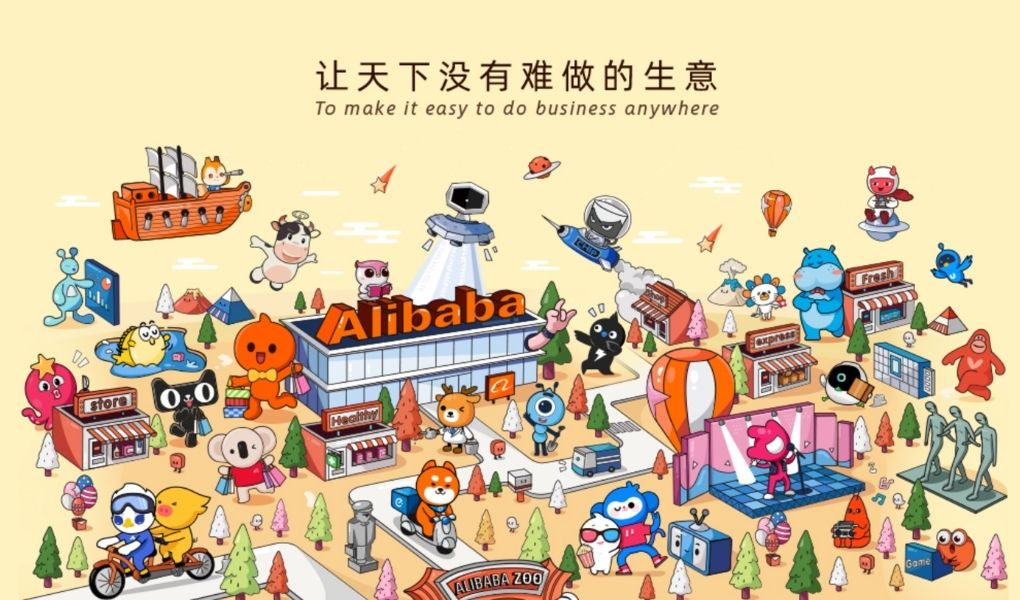
The COVID-19 has reshaped or reinforced consummation habits and people rely more and more on online shopping and e-commerce. Now, the term e-commerce is gradually being weakened. Jacky Ma, the founder of Alibaba Group, has mentioned many times:
“There will be no e-commerce in the future. The digital age will change the entire retail industry. In the future, there will be no difference between online and offline, but there the difference between digital business and non-digital business.”
Branding is everything in Chinese digital business
In recent years, the Chinese market has undergone earth-shaking changes. In the digital age, the increase in marketing channels, the improvement of marketing strategies, and the speeches on customer acquisition methods are all accelerating the process of digital transformation. With the advent of the Internet era, the Internet has become more and more trusted by users for its transparency and abundance of information and has become a bridge between users and businesses.
This is especially true in China. Chinese people are highly connected with the Internet and e-commerce via their smartphones. They rely on online reviews and social media to get products or services information, as the traditional promotion channels are no longer reliable.
There no wonder that those brands that are unknown in China fail because they are outdated from modern China and the new market rules. It is now the world of digital marketing and branding is everything in any Chinese business.
Chinese social media: the bridge between you and your targets
Chinese social networks are different from those in Western, as the giants such as Facebook, Twitter, and What’s app are all blocked in China by the Great Firewall. If you want to utilize social media to propel your brand in China, then master Chinese social media.
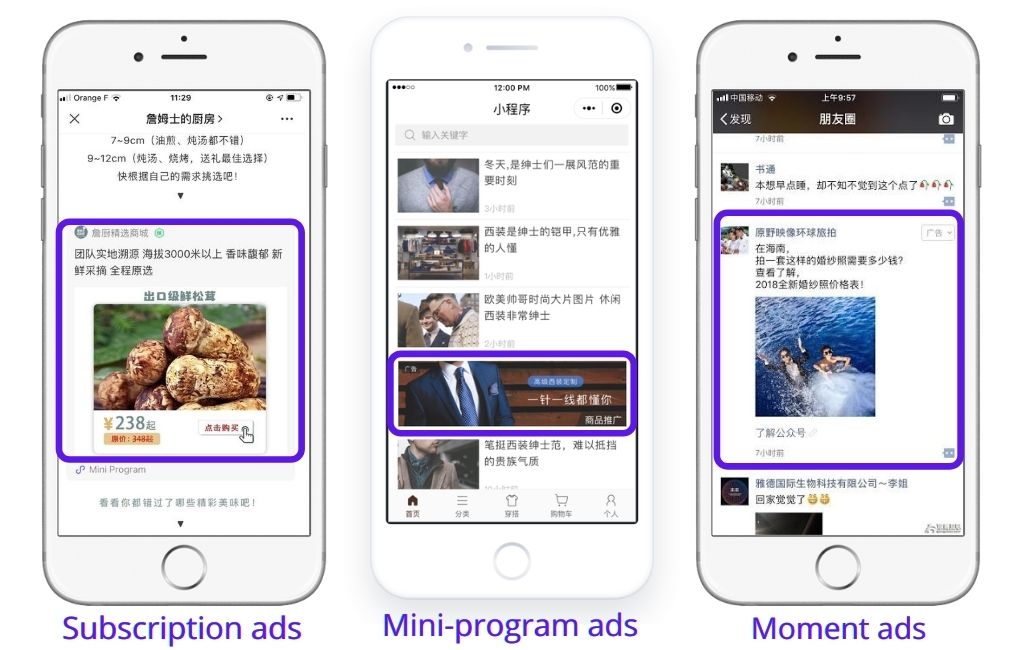
WeChat, with more than 1.2 billion, is no doubt the leading role in the market. It was created as a messaging app, but now it is much more than just that. Its functions such as mobile payment, transfer money, video talk, playing video games make it unique and powerful. The giant user base turns it also into an essential digital marketing platform in China.
Weibo is the second largest Chinese social media and it is also the No.1 open social network in China. As has been said, it is thus a good tool for mass marketing to reach as many targets. KOL marketing is very popular in China recently, and Weibo is an important platform for this, as almost every celebrity or KOL that you can name have their account on Weibo.
Besides what has been explained, there are many others: Xiaohongshu, Douyin(TikTok), Kuaishou Video, Xiguan Video, etc. Each platform has its own type of users and its different functions, for example, Xiaohongshu is a user-generated platform, ideal for fashion and cosmetic products.
Baidu SEO: a driver for your brand awareness
If you have ever done Google SEO, you should know how important it is SEO & SEM. However, Google and any other search engine overseas are blocked in China. In China, people use Baidu, Sogou, Shenma…
Baidu plays the leading role in the Chinese search engine market, accounting for around 70% of the total market share. If you are planning to use SEO strategies to give momentum to your sales, Baidu is your first choice. The theory of Baidu SEO is quite similar to the Google one, but in the practice, Baidu SEO is more complicated. Not every product can benefice from it.
Due to those tiring and boring bureaucracies in creating a Baidu account, the intricate process, and most of all, the keyword strategies. You can have recourse to a professional digital marketing agency to give you a hand.

GMA marketing agency is an expert in Chinese digital marketing since 2012. We know very well the Chinese lives, culture as well as foreign companies’ requests thanks to our passionate team from around the world and Chinese marketing specialists.
Contact us and let us guide you until you succeed.
Read more: