

Online presence in China is crucial for beauty/ cosmetics brands looking to sell, and even more than everywhere else in the world in China as it’s the country with the most internet users.
According to a recent report from Euromonitor, 15 % of all the beauty/ cosmetic sales in China are made online through e-commerce platforms which is much more than everywhere else in the world. Impressive right?
Which product category is the most popular among Chinese consumers?
The sales are very big when it comes to the personal care sector. Chinese shoppers love to buy from Tmall (which is still the giant when we talk about e-commerce), JD.com, Yihaodian and Sasa (the platform specialized in cosmetics).
95% of the personal care brands have their own eshop on Tmall with 14% of shops opening for the last 18 months.
Which brands are performing well in China?
Right now, L’Oreal, Olay, Head & Shoulder and Pantene are the brands which are the most bought by Chinese consumers online.

Why is L’oreal so performing on the e-commerce platforms? It’s actually very easy to understand. The’ve been able to understand what Chinese customers really want and introduced an incentive program on Tmall for example. They encourage Chinese to reviews their products in exchange with loyalty point. Moreover, the l’Oreal corporate website in Chinese allow the Chinese consumers to have access to their Tmall coupons, share what they buy with their friends to get more loyalty points, get free samples. They’ve also created tutorials on product pages to explain what are their products benefits and how to use them. In addition, L’Oreal is very active on the Chinese social media such as Weibo and WeChat, which for sure helps them to sell their products and to promote them.
Olay also use a special loyalty program to make people buy and buy again their products.
It also uses celebrity to promote and advertise its product. Its promotion with celebrity Lin Chiling, an actress and model was extremely popular and was seen more than 5 million time on Youku, the chinese Youtube.
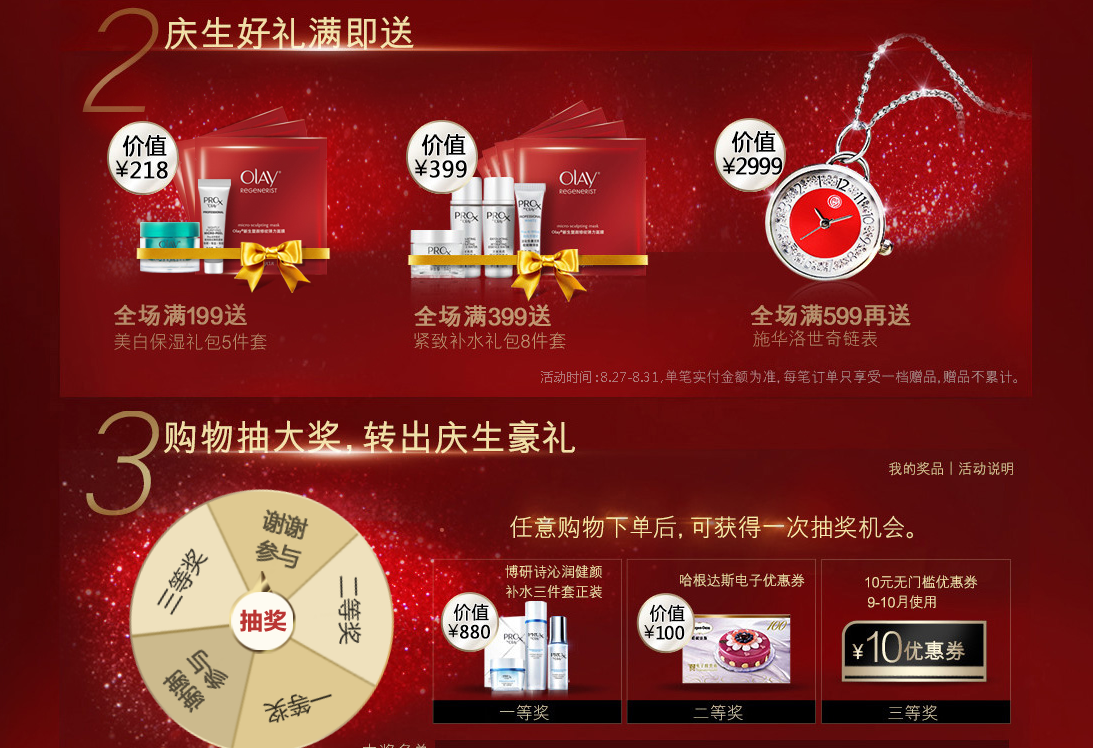
Loyalty program are very important for chinese customers. 53 % of the cosmetics/ beauty brands that are the most popular on Tmall had one. Rewards and incentive are very impactful and an important buying trigger in China. Major brands totally understand it and this strategy helped them to become successful.
How to make Chinese consumers buy online on your e-shop page?
First you need to reassure them by featuring on your page products information about product authenticity. Chinese will have more confidence and more trust on your products. They are so many fakes all over the Chinese internet that is going to be a good way to make people buy your cosmetics products.
What is also crucial is to work on omnichannel strategies. QR codes for example can be a good way to do it. A lot of Chinese use QR codes to make purchases as it can reduce the buying process path and make it more direct.
But the most important, if you want to make sell you must communicate online through social media, media and diffuse your brand values to your target. The most important will be to diffuse the right message at the right time. It will for sure help you to increase your brand awareness. To get some tips on how to do it, you can click here.
If you want to be successful online and sell via e-commerce you must have a real and clear strategy. You can contact us and we can help you to establish it.