If you’re looking for a place to sell cosmetics in China, Xiaohongshu‘s RED Store is definitely one of the best places to do so. With its massive user base and its focus on high-quality products, the Little Red Book integrated online marketplace is the perfect place to find new customers and grow your business. Plus, with all of the great features that Xiaohongshu offers, you’ll be able to connect with customers and keep them engaged with your brand like never before.
Let’s find out what makes this Chinese social media such a great online selling platform for beauty and lifestyle brands.
Xiaohongshu: Perfect Social Media Platform for The Beauty and Fashion Sectors
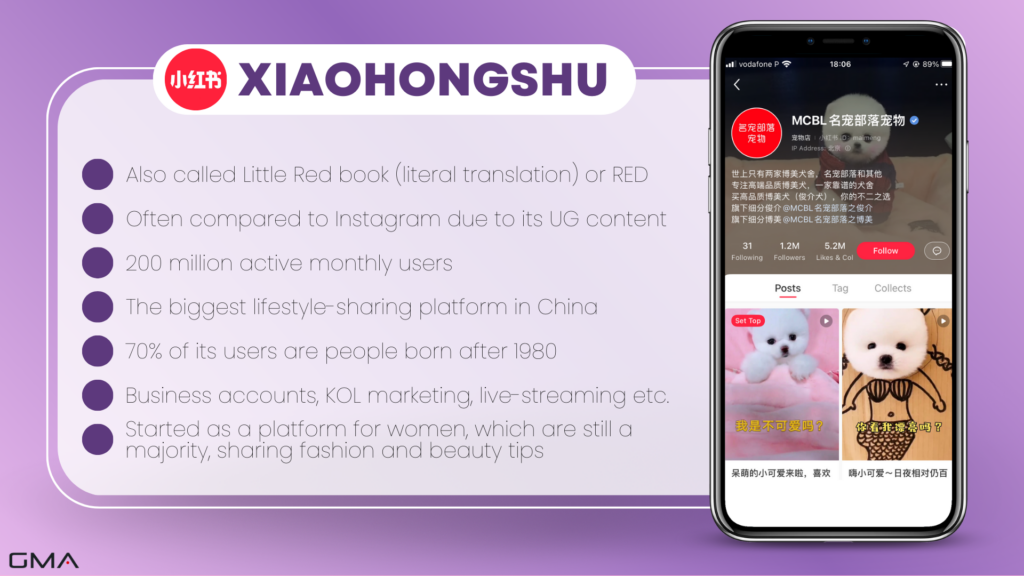
Also known as “Little Red Book”, Xiaohongshu is among the most popular Chinese social e-commerce platforms, alongside WeChat and Douyin. Its peculiarity is to integrate the sphere of social media with that of e-commerce thanks to the RED Mall section. This means that users can enjoy a social experience and at the same time purchase products without changing the App.
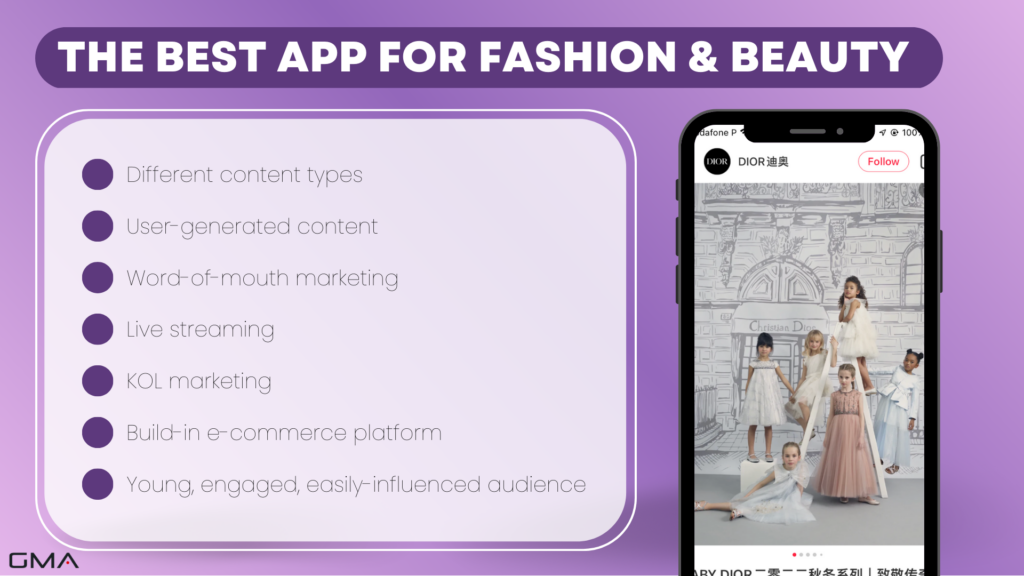
Xiaohongshu is a word-of-mouth marketing platform where consumers can discover and buy international products based on trusted user-generated content, including recommendations and reviews.
Xiaohongshu is an open application, perfect for online community-building. Anyone can interface with its contents, even without registering. The posts that appear on the homepage are shown based on user preferences, requested in advance when the app is first opened.
In addition, the algorithm proposes the contents of the people followed and those nearby. It was founded in 2013 to create a community where users (mostly women) could find recommendations about foreign fashion and cosmetics.
Currently, Xiaohongshu has over 200 million registered users with 70% of them being under 30 years old. Xiaohonshu’s most popular items include foreign luxury cosmetics. When it comes to Chinese social media apps and other e-commerce platforms, Xiaohongshu distinguishes itself thanks to very visually appealing content, mostly focused on beauty, food, fashion, and lifestyle topics, and introducing good foreign brands to Chinese women consumers.
But it’s important to mention, that thanks to the popularity of the app, more male Internet users are joining (now the ratio is 30% of men to 70% of women). So, when offering beauty products on this social e-commerce platform, don’t forget about the male audience.
Xiaohongshu users are the main consumers of luxury cosmetics
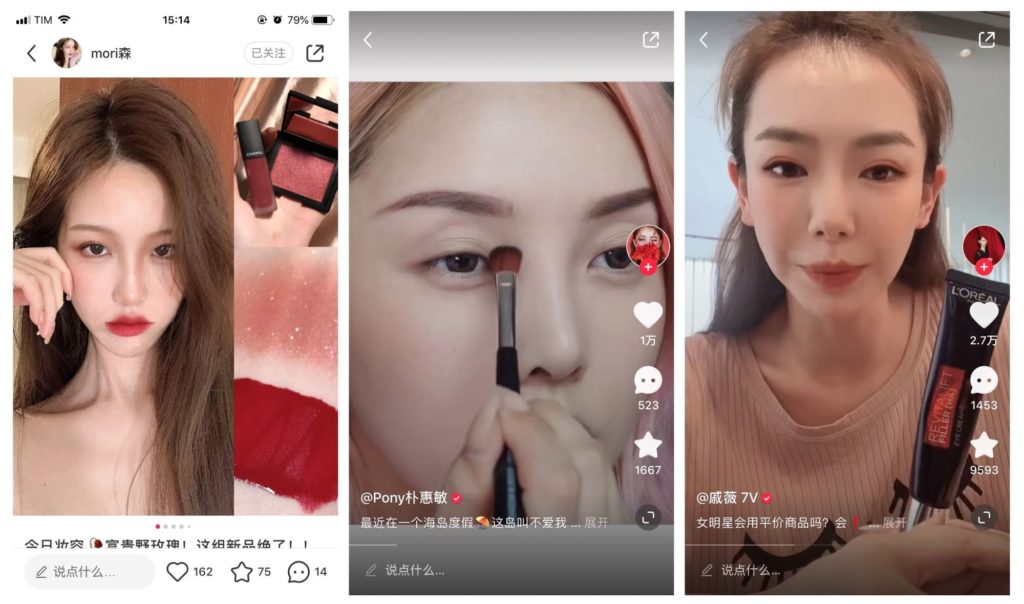
In China, the biggest consumers of luxury cosmetics are young women under 35, and guess what? The majority of Xiaohongshu users are women under 35 years old, which is unseen on any other social media platforms.
Xiaohongshu is particularly special among all social media channels not only because it combines cross-border e-commerce functions, but also because of its user portrait: 70% of users are women and 72% were born after 1990. Additionally, 50% of them come from first and second-tier cities and they have a high purchasing power, so they want to treat themselves with the best cosmetics, often from foreign brands.
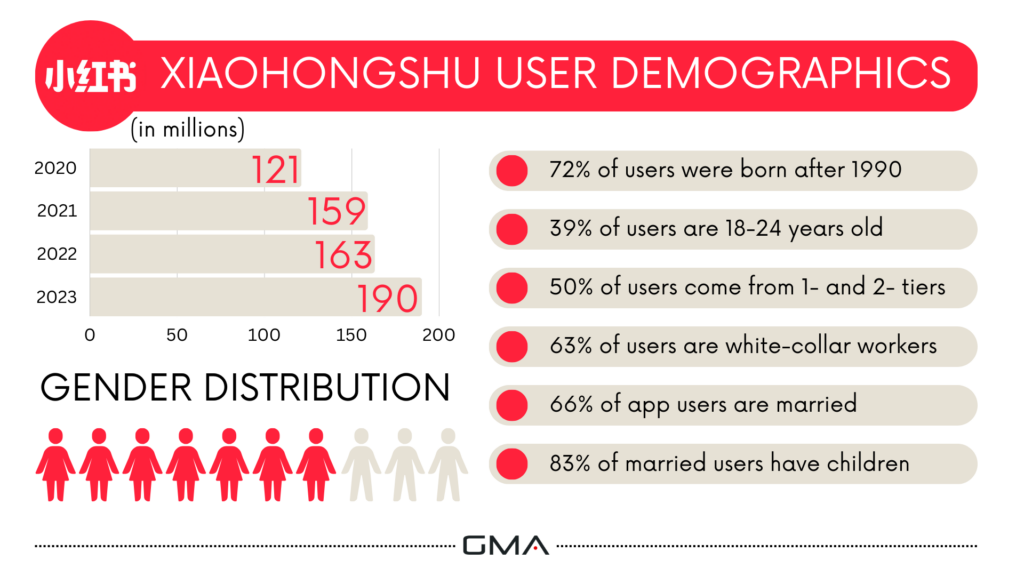
Girls are big purchasers when it comes to cosmetics and fashion. Therefore, Xiaohongshu is particularly interesting for foreign luxury cosmetics brands that want to sell cosmetics in China. Xiaohongshu’s content distribution algorithm is set up so that users can see content from accounts they don’t follow on the news feed.
A post with high engagement could become viral on Xiaohongshu. The app is a very trusted social shopping platform when it comes to luxury beauty brands, as it’s based on recommendations and reviews.
Chinese luxury cosmetics consumers rely on Xiaohongshu recommendations and reviews
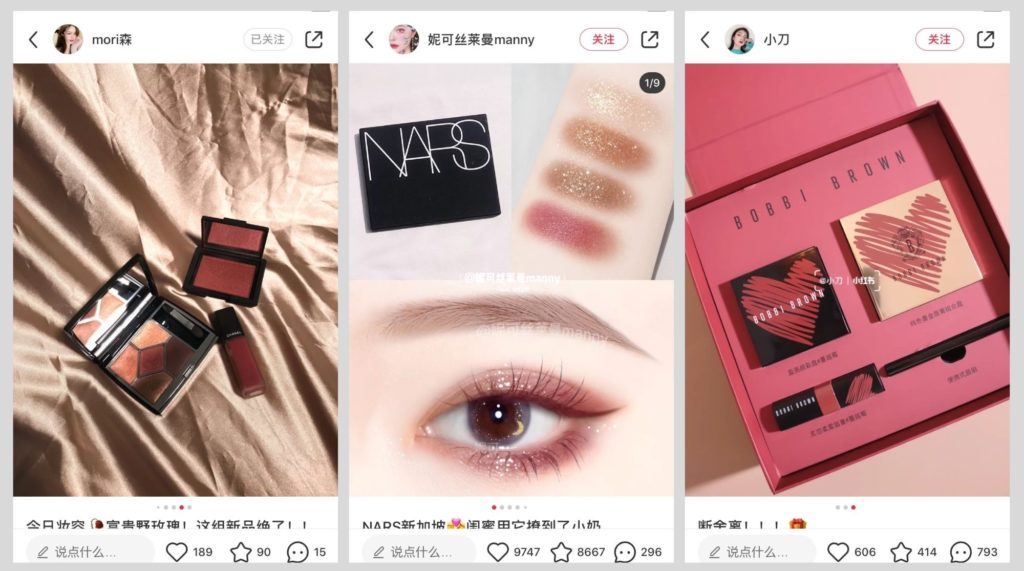
Recommendations and reviews are essential in China, especially in the cosmetics sector. Chinese consumers tend not to trust brands they don’t know, and even a famous luxury brand outside of China may not be known to Chinese consumers.
Therefore, when choosing which product to buy or not, Chinese people tend to trust a lot of recommendations and reviews on social media. In China, 54 percent of consumers seek to validate product quality through reviews, comments, and feedback prior to purchasing compared to 47 percent globally, and 27 percent will write their own review of the product or shopping experiences after purchasing compared to 20 percent globally.
As a matter of fact, Xiaohongshu has created a platform for girls to discuss fashion and beauty the way they do with their friends offline. It is a big community made by older consumers and Key Opinion Leaders (KOLs) which offers recommendations and reviews. Given the conversion rate and the power of word-of-mouth marketing in China, the platform’s social features make it very interesting for luxury cosmetics brands as recommended products get more exposure.
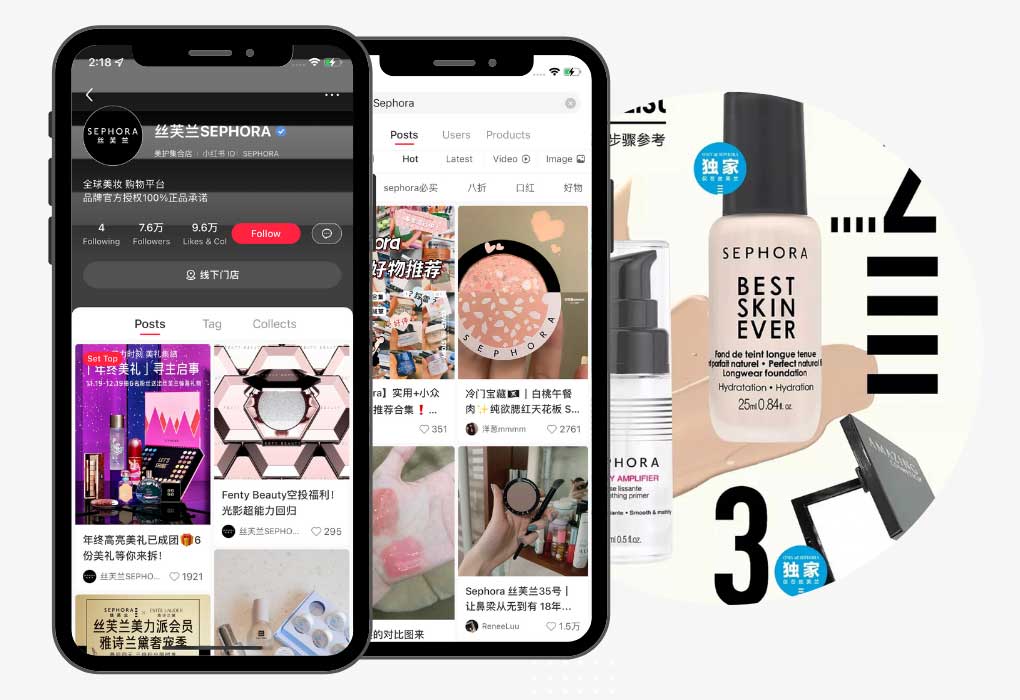
The Xiaohongshu community is a very good place to conduct social listening because the notes and comments are users’ feedback according to their first-hand experience. It’s a place where anyone can understand the real needs and wants of young Chinese women and see whether your products can succeed in China.
Unlike WeChat which prohibits incentivized sharing, Xiaohongshu celebrates promotional content. Since the Xiaohongshu model depends heavily on the content in the pool. It is important for brands to optimize and localize internal content. Brands should encourage Xiaohongshu users to share opinions and tips about products.
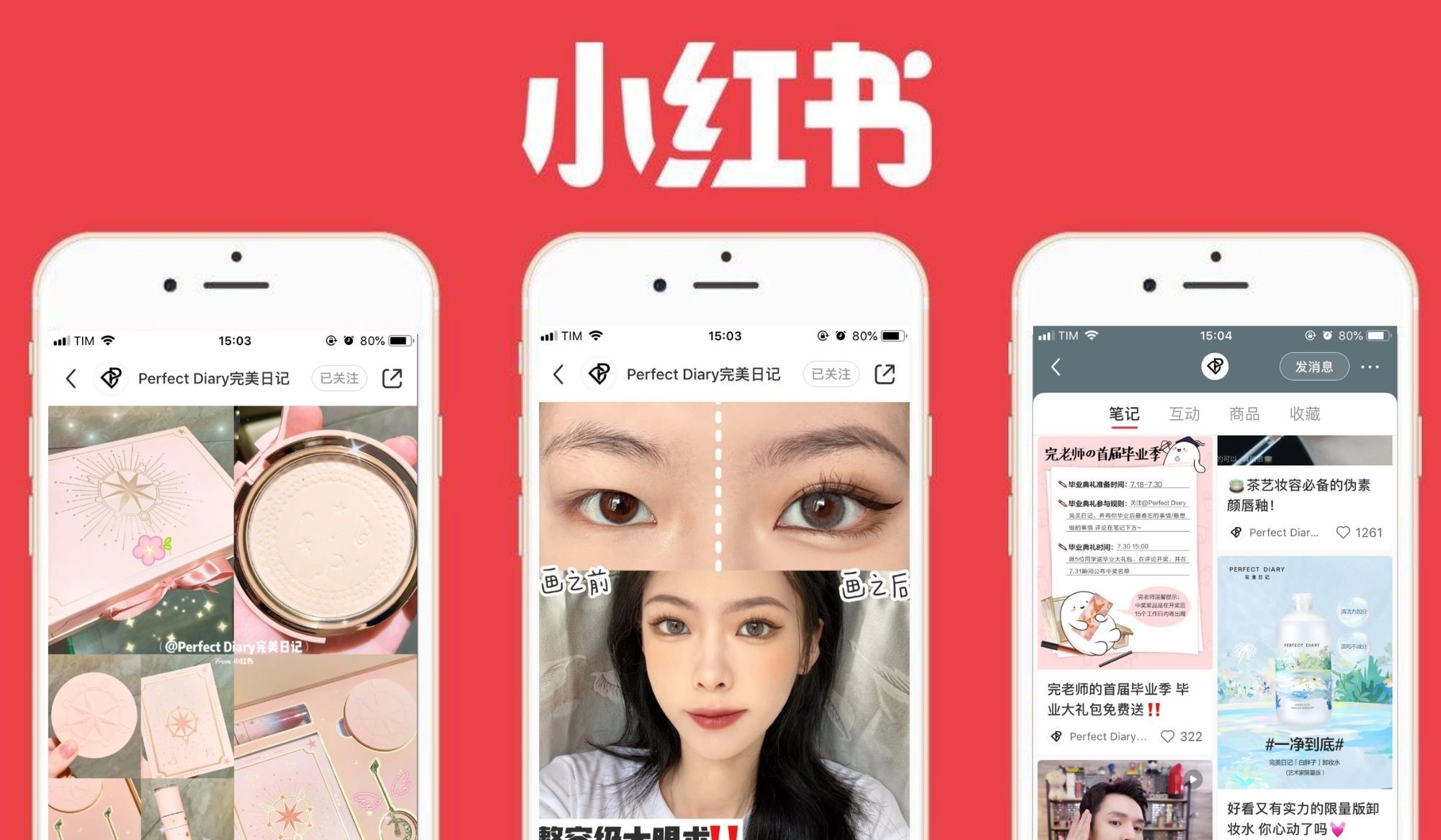
For example, in almost all the posts, Perfect Diary asks users to like, comment, bookmark, and post pictures to participate in a lucky draw. Brands should definitely leverage this freedom to engage with users!
KOLs on Xiaohongshu are the best influencers of Chinese luxury cosmetics consumers
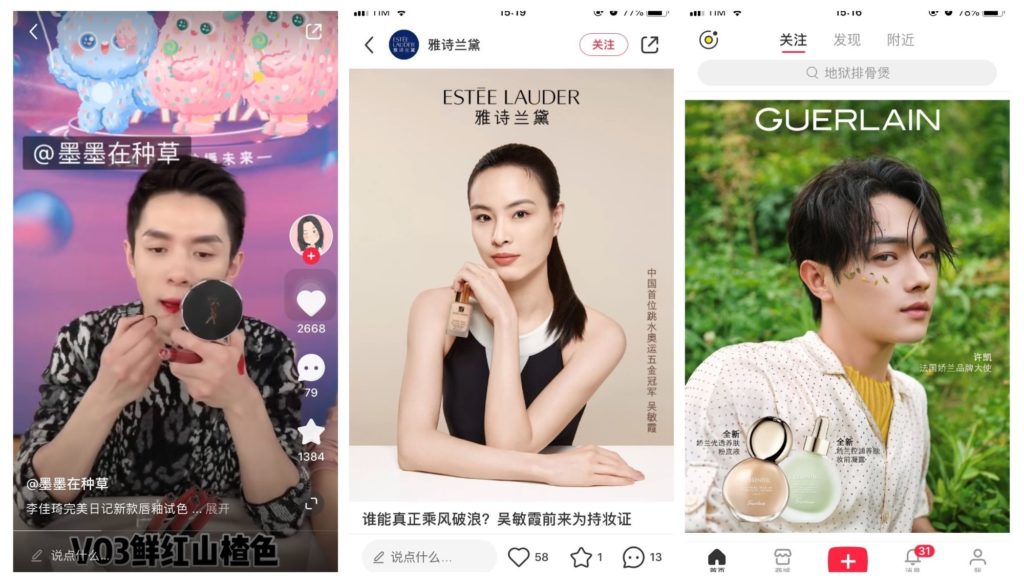
For brands, having an official account on Xiaohongshu means boosting the confidence of Chinese consumers. In fact, as previously mentioned, the latter are very sensitive to comments on products or brands.
They seek reassurance in the opinions of those who have already purchased the product or from the KOLs (Key Opinion Leaders), who play a fundamental role in guiding users in China, especially when it comes to cosmetics.
Xiaohongshu KOL campaign is more like a combination of a few top-tier KOLs and lots of smaller KOLs. For example, Perfect Diary collaborated with over 150 KOLs to launch the product Daydream in 2019.
Influencers are always the top motivation when it comes to consumption and influencers on Xiaohongshu are much more powerful than those on other social media, because every single user can become a micro-influencer as long as they’re willing to share their real and comprehensive experiences.
If an influencer with a following on Xiaohongshu likes your products, it can affect a brand’s image, reputation, and sales, because He/She understands the tastes of female users on Xiaohongshu and knows how to create a popular post with viral potential.
Therefore, luxury cosmetics brands should not underestimate the importance of influencer marketing on this platform! If you want to know more about how to choose the right KOL for your marketing campaign on Xiaohongshu, contact us!
Xiaohongshu is an UGC platform with a lot of makeup tutorials and educational content
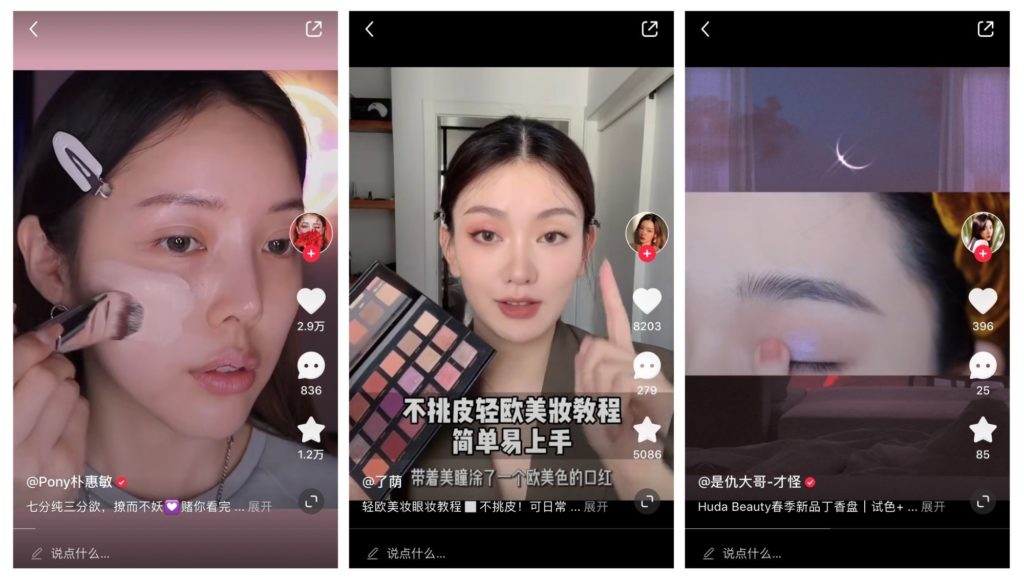
The tutorials for cosmetics through images, short videos, or live streaming are much loved by Chinese consumers and thanks to them brands can promote their products with the help of KOCs (Key Opinion Consumers) and KOLs.
Xiaohongshu offers this type of possibility, the app in fact was born as a shopping guide; posts and comments want to “educate” the user about a certain product. On Xiaohongshu, the brand does not advertise itself. This creates strong engagement between publishers, viewers, and the brand behind the recommended product.
On Xiaohongshu, the tutorials are a lot simpler. Most of the content is a picture display of how to apply the product. Obviously, however, live streaming and short videos offer more engagement with consumers, so where possible, it is advisable to promote products through videos.
Xiaohongshu live streaming is the best way to promote luxury cosmetics
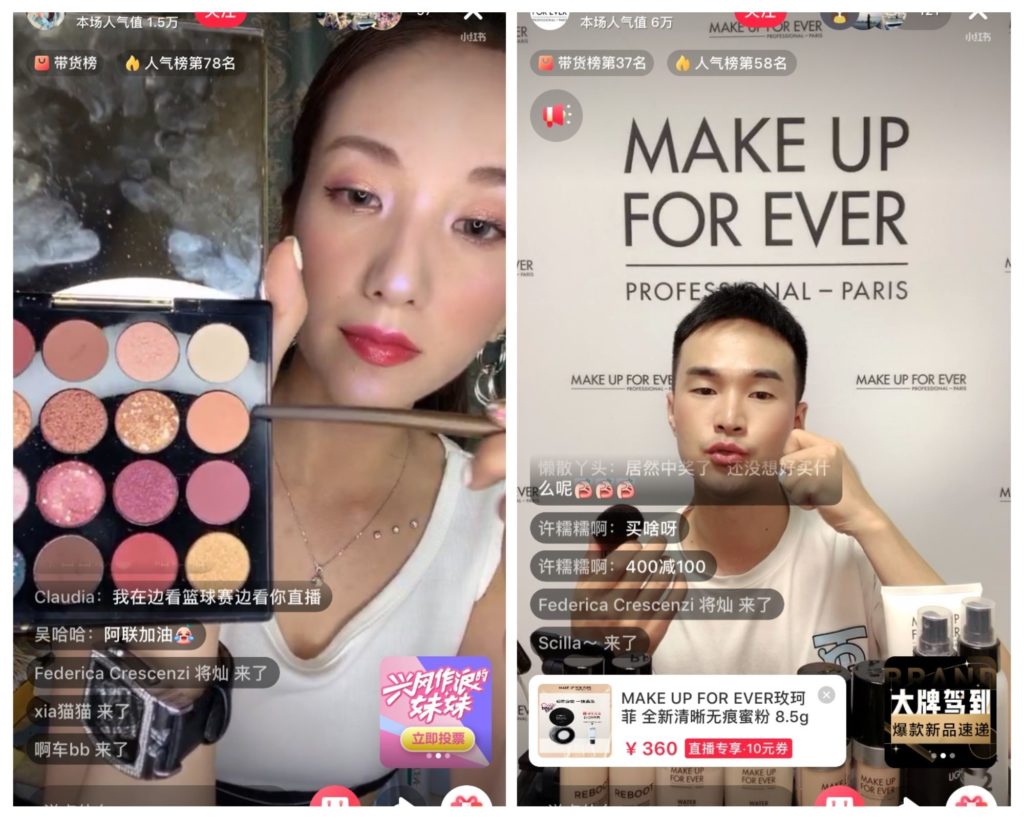
Live streaming is one of the biggest digital trends in China and is a format that is particularly popular with users. In fact, it allows to show the products in a realistic and detailed way and increases, even more, the relationship of trust between those who present them and the viewers.
In recent times, from young customers who shop via live streaming to brands that invest heavily in short video campaigns, the entire cosmetics industry in China has invested in this new marketing model.
Xiaohongshu offers the ability to live stream on the platform and now you can find fun and creative makeup tutorials all over it. Especially during the COVID-19 pandemic, a huge number of cosmetics enthusiasts had to rely on online shopping activities and live-streaming KOLs to keep them well-informed while purchasing skincare products and makeup. For luxury cosmetics brands, live streaming is a very effective way to reach China’s hundreds of millions of shoppers.
RED’s lower commission drives sales on the platform
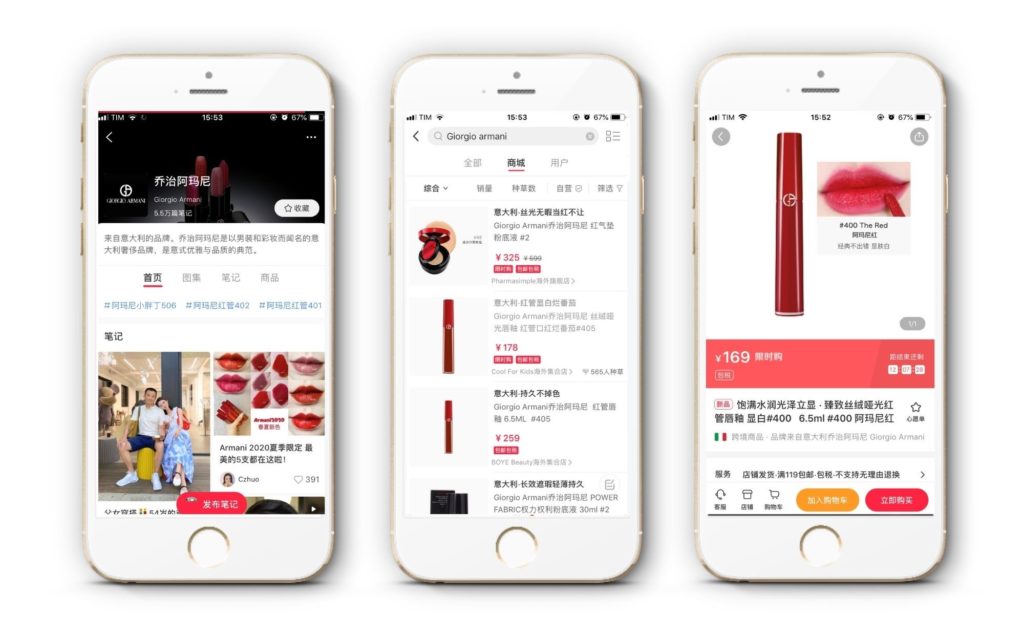
Xiaohongshu is an essential tool for its users to read and write product reviews, however, in addition to creating networks of contacts and publishing content, it is possible to directly purchase the products shown on the screen through the practical “link-to-buy”.
Despite this functionality, the platform has struggled to convince its 200 million monthly active users to buy products directly on the app. After discussing a product, they tend to move from the platform and buy the products on Tmall or on WeChat mini-programs. Therefore, with the aim of attracting merchants to promote and sell their products on the social commerce platform, Xiaohongshu reduced its platform commission on sales from 20% to 5%.
This new commission is the same as the commission charged by Tmall in the fashion and cosmetics industries, making the platform competitive for merchants. In addition, if the traffic comes from Xiaohongshu advertisements, the sales commission drops even further, down to 3%. Therefore, this trend should induce end users to gradually get used to buying directly from Xiaohongshu.
This reduction seems to bring many benefits to merchants, so why wait any longer and not take advantage of selling luxury cosmetics on Xiahongshu?
If You Want to Know More About How to Sell Cosmetics on Xiahongshu, Contact Us!
With the cosmetics industry booming in China, Xiaohongshu has emerged as a pinnacle platform for beauty brands. To truly harness its potential, you need a partner who understands its nuances and can amplify your brand’s voice. Enter Gentlemen Marketing Agency.
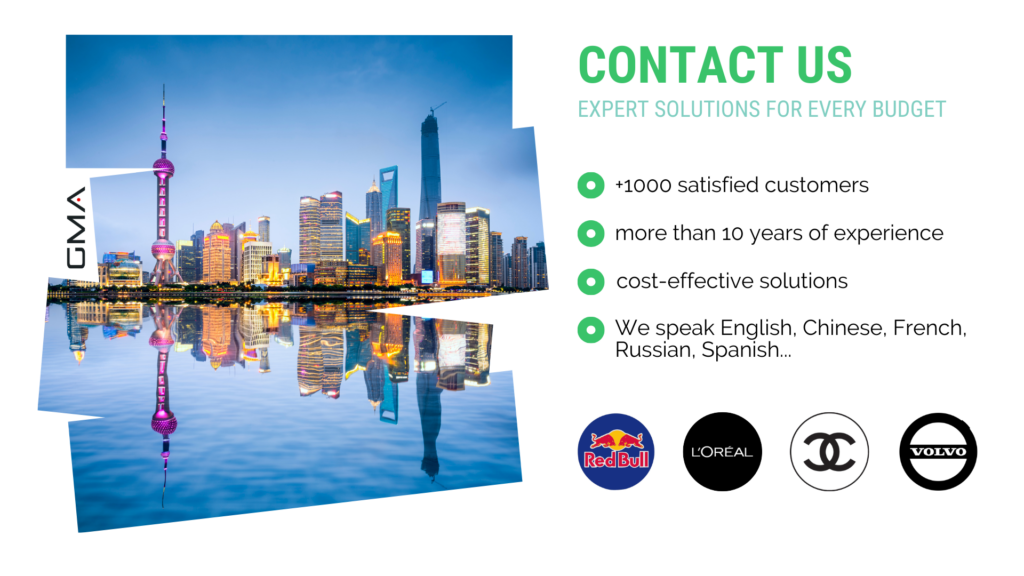
Why Partner with Gentlemen Marketing Agency for Xiaohongshu eCommerce?
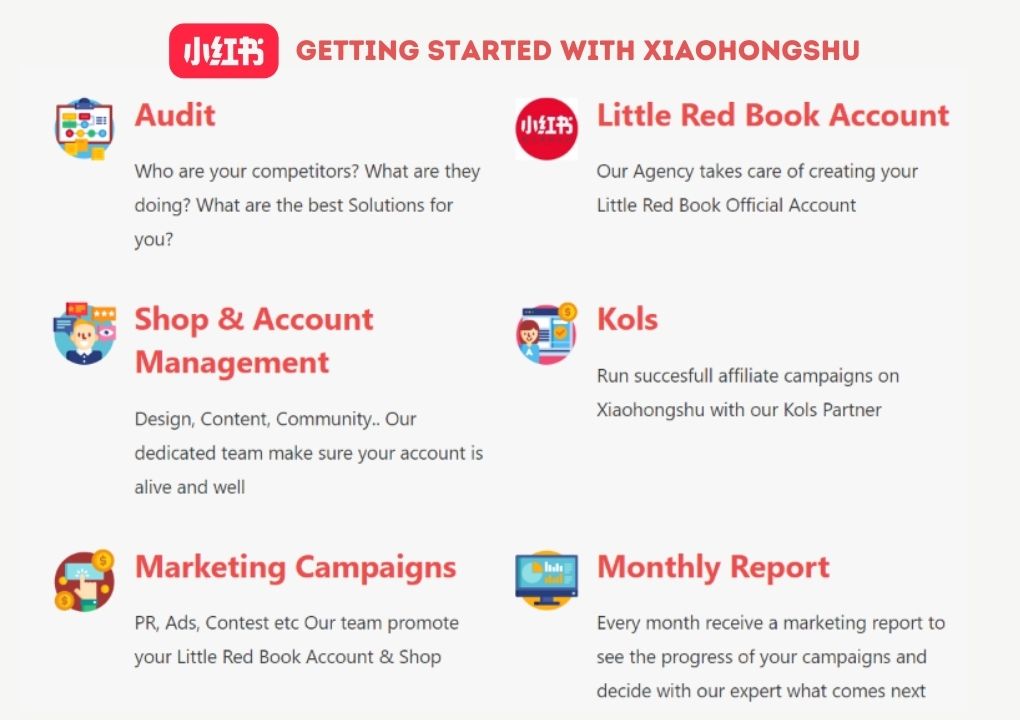
- Platform Expertise: We have a profound understanding of Xiaohongshu and its unique ecosystem. From user behavior to algorithmic nuances, our knowledge ensures your brand gains optimal visibility and engagement on RED.
- Tailored Marketing Campaigns: Xiaohongshu is more than just an e-commerce platform; it’s a community. Our campaigns aren’t just about selling; they’re about storytelling, creating genuine narratives that resonate with the RED community.
- Influencer Collaborations: Collaborations with key influencers can skyrocket your brand’s presence on Xiaohongshu. We leverage our extensive network of KOLs to foster partnerships that align with your brand and drive conversions.
- Data-Driven Strategies: With our finger on the pulse of trends and analytics, we craft strategies rooted in real-time data, ensuring that your campaigns are always one step ahead of the competition.
- Localized Content Creation: Xiaohongshu thrives on authentic and localized content. Our in-house team of content creators is adept at crafting posts, reviews, and videos that speak directly to the Chinese cosmetics consumer, ensuring your brand narrative hits the mark every time.
- Full-Spectrum eCommerce Solutions: Beyond just Xiaohongshu, we offer comprehensive e-commerce solutions, integrating platforms like Tmall, JD.com, and WeChat, ensuring a seamless shopping experience for your customers across all touchpoints.
The cosmetics landscape in China is vibrant, and Xiaohongshu is its shining star. With Gentlemen Marketing Agency by your side, navigate the RED waters with confidence, authenticity, and unparalleled expertise. Engage with us today, and let’s illuminate your brand’s path to success on Xiaohongshu.