

It is also an essential social network for visibility on the Chinese web WeChat can manage commerce, social networks, banking services, and travel reservations, among other tasks.
- By November 2015, more than 200 million users had linked their credit cards to WeChatPay, enabling them to transfer money between users, make online payments and buy items in-store.
- In March 2016, Tencent reported that it counted more RMB300m ($ 46 million) in a single month from commissions on WePay transactions.
EIGHT WEST BRANDS LAUNCH INNOVATIVE WECHAT CAMPAIGNS IN CHINA
WeChat takes 0.1% on all payments, which indicates that the users of the application realized nearly $ 50 billion in payments that month. In the third quarter of 2016, WeChat has an average of 846 million monthly active users, representing an annual growth of 30%.
Because of the enormous user base of the application and how it is embedded in people’s lives, Western brands often use WeChat as a way to get into the Chinese market.
If consumers usually use an application on a daily basis, it makes sense to try using that platform for marketing.
And to give an idea of how Western brands use the application, you will find 8 Luxury campaigns.
Read as well: WeChat Guide for Foreign (Cosmetics) Companies in China
The Burberry brand
To coincide with the Chinese New Year in February 2016, Burberry sent all its customers a picture of a letter linked to a pink bow.
The user was prompted to “Shake, Strike and Slide” to try to open the gift.
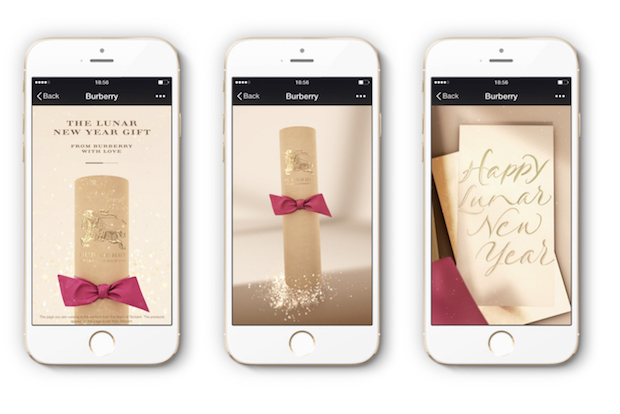
Once opened, the letter gave users the opportunity to send a personalized Burberry greeting to a friend to celebrate the Chinese New Year
They could then buy the brand’s New Year collection in Burberry’s WeChat.
The brand Coach
The Coach brand has focused on the promotion and loyalty program on WeChat.
- WeChat was used to help run its Chinese loyalty program, asking all new subscribers to enter their mobile number for the chance to win a handbag.
The marketing strategy that Coach is undertaking is very well thought out, for Mother’s Day in 2015, the brand launched a campaign called “#MyFirstCoach” recalling that mothers are the first “coaches” for their daughters.
- Weibo users who were posting a photo of them with their mother had a chance to appear on Coach’s home page and win a Coach brand bracelet.
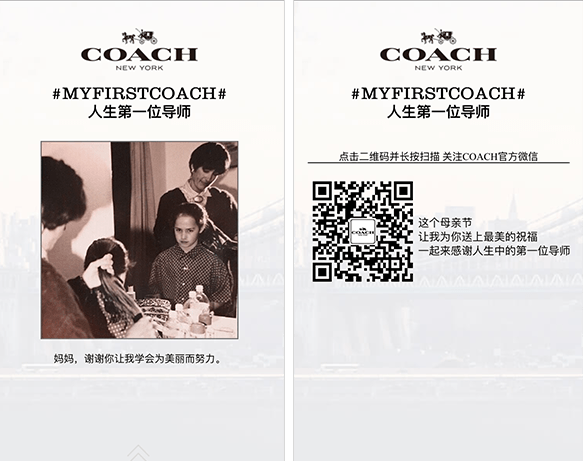
Supported by the paid media, the campaign increased Coach’s WeChat followers of 35,000 people.
The brand Mont blanc
The Swiss accessories brand Montblanc has led a WeChat campaign that has tied the Chinese cultural association to the phases of the moon.
Brand followers had to enter their gender and date of birth to receive information about their personal moon phase and their impact on their personality, love, leisure and work.
A Chinese astrology expert was hired to send the results.
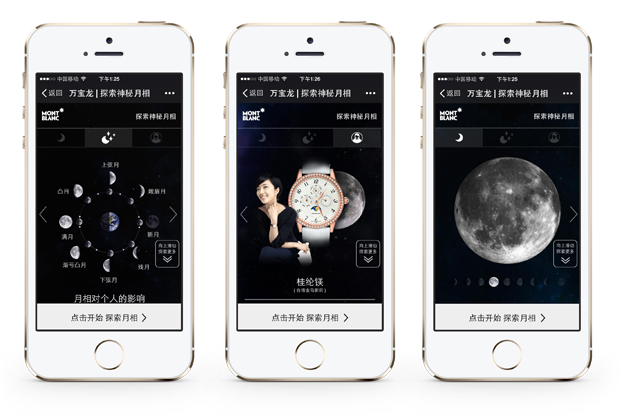
The campaign consisted of promoting the new Perpetual Calendar of the Meisterstück of Montblanc and the Watches Calendar Bohèm, which feature a dial displaying the specific phase of the moon.
In a separate campaign, Montblanc used WeChat to tell the story behind its range of luxury fountain pens.
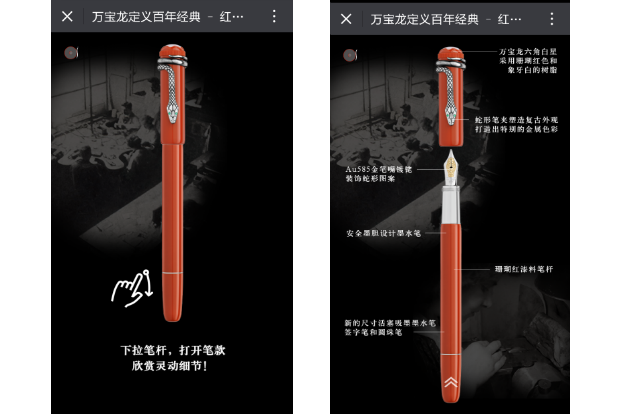
Users were invited to browse an interactive history lesson that begins with the Industrial Revolution and ends with a showcase of the brand’s Red and Black range of pens.
The story is meant to mark the Montblanc heritage and luxury credentials.
The Roger Dubuis brand
Roger Dubuis launched a campaign last year entitled “Who is Your Bold Partner?”, Which aimed to provide users with product suggestions that fit their personalities.
When they arrived on the dedicated landing page, users had to answer a series of questions.
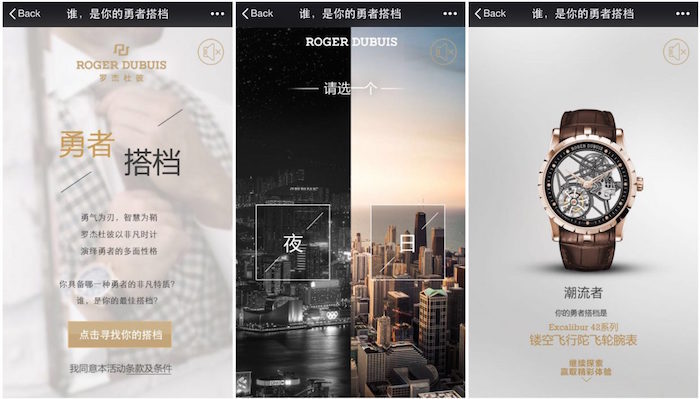
- After answering all the questions, users had to shake their phones to reveal the Roger Dubuis watches with which they had been associated.
- There was no option to buy the watch within WeChat, the users being rather directed in-store.
- Participants could also earn trips to various brand events by sharing an image of themselves.
The Michael Kors brand
In April 2016, Michael Kors launched a WeChat campaign in China to promote his spring/summer collection.
The “Chic Together” campaign featured five Chinese celebrities wearing the brand’s bags and shoes.
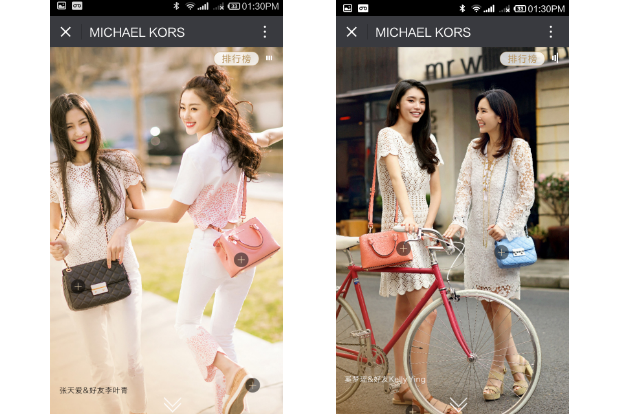
Users can scroll through the interactive application, complete with optional music, and click on each image to learn more about the presented products.
At the end of the series of photos, users were encouraged to realize a selfie with a friend, to win a free gift if they had purchased Michael Kors products.
Users could also vote for their favorite photo by sharing it on social networks.
The brand Estee Lauder
Estée Lauder worked with the renowned Chinese model “Liu Wen” for an “EyeQ” campaign to promote her eye care products.
- Brand messages encouraged users to click on a newspaper.
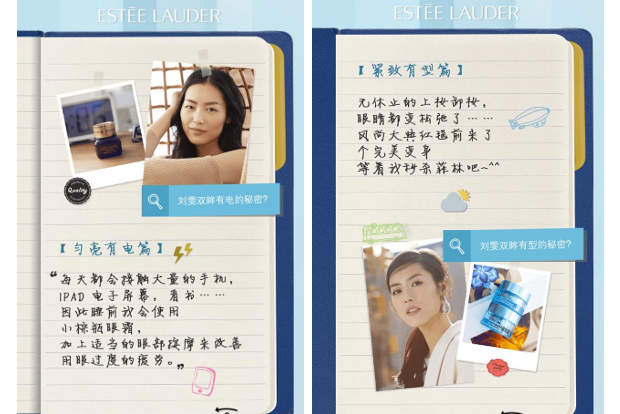
- The open newspaper revealed Liu Wen’s “handwritten” notes, which involved an entire Estée Lauder eye care product.
After browsing through all the photos, multiple-choice questions were asked from users to ensure that they had been successful.
If they had answered the questions, users had the chance to win a surprise gift in exchange for their phone number and city of residence.
Clinical Wechat China
Another brand of cosmetics on the list, Clinique has created a retro snake game to entice consumers to learn more about its “Even Better Clinical Dark Spot Corrector & Optimizer”
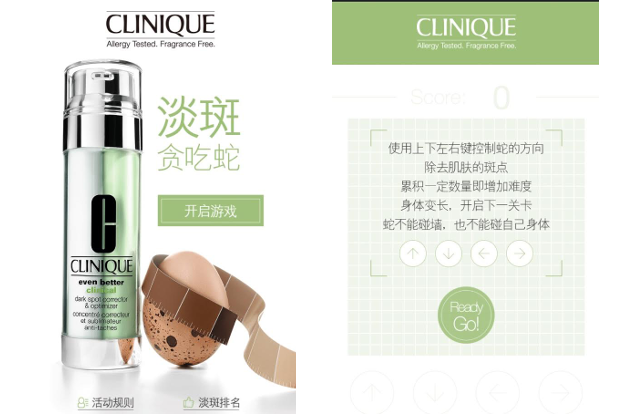
- If the players scored more than 300 points, they won a limited edition sample of the product and could also share their score to compare to other WeChat users.
- It is the tendency to create games or competitions in WeChat to encourage user engagement.
British Airways
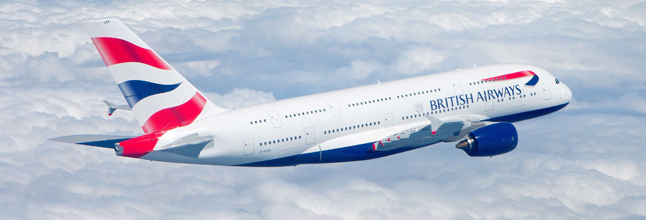
British Airways used WeChat as part of a wider marketing campaign around Chinese students using the airline to go to college in England.
- In the video, we can observe a Chinese woman studying in England and discussing Wechat with her parents living in China.
- Then, the Chinese parents fly with the British Airways company in order to surprise their daughter.
- Everything seems simple with the company since it has created a practical travel guide that could be downloaded in WeChat.
- At the end of the video, a QR code appears and details all that the traveler needs to know when flying with British Airways, including information on what they should bring, airport signaling translations, immigration …
The guides could also be customized and printed.
As is the case with the examples of this list, British Airways also organized competition games.
In this case, users could earn flights from China to the UK by sharing an image with a specific hashtag.
Further readings