
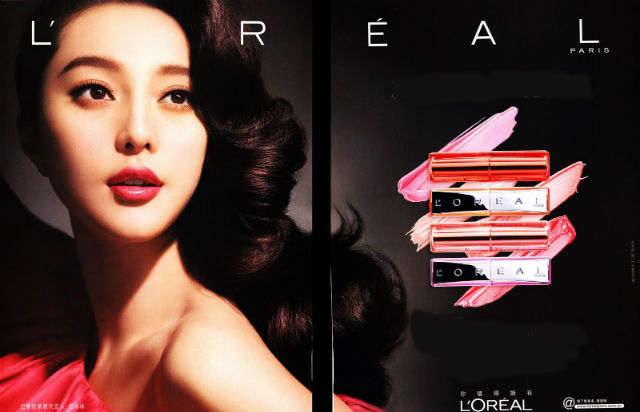
For foreign companies entering the Chinese cosmetics market remains an obstacle course, especially if they limit themselves to the knowledge acquired in the West, like in France for example where finding a distributor is by far the best option when you want to sell cosmetics. Here, the reputation does everything! You should promote yourself first and then you will be able to trade with Chinese distributors or sell directly to the consumer in a B2C e-commerce logic, for example. One of the major elements than can help you pass these obstacles is to get exposure on the appropriate networks and platforms.
Meilishuo
Meilishuo is probably the biggest community about cosmetics in China. It has become a reflex similar to a westerner’s reflex to immediately go searching on Google. When Chinese young people between 20 and 30 years, who constitute the majority of the users of this platform want to inform themselves, that is where they go.
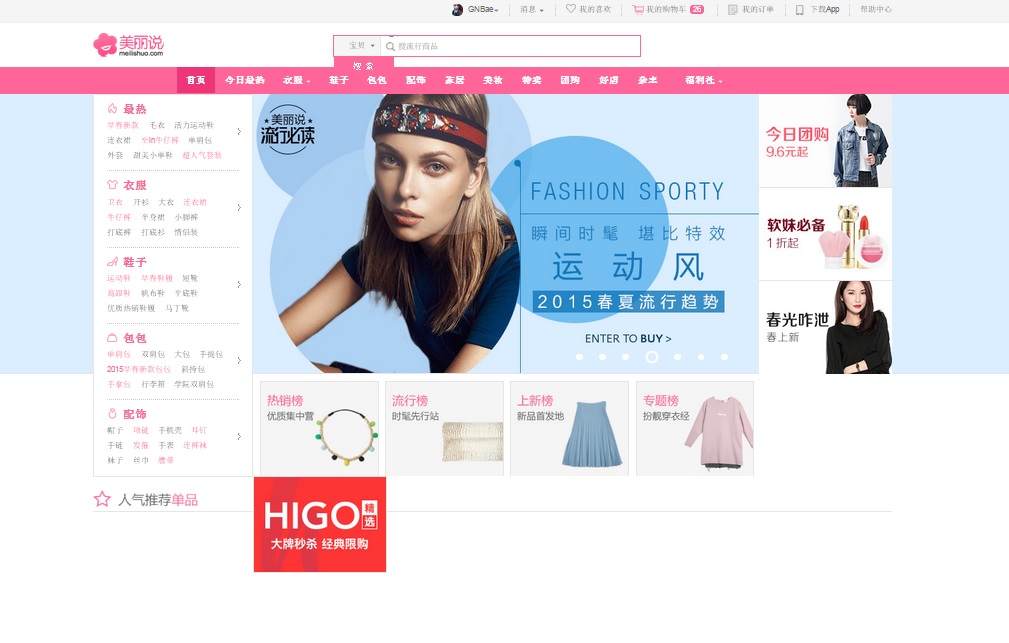
Users can give their recommendations, share, check prices and also learn about the latest trends of the cosmetics market or how to properly use these products. This is mainly how many young Chinese girls learn how to wear makeup, while western girls check on youtube’s tutorials. Meilishuo is therefore a must. Indeed, being present in this community means you can influence consumers in their early use of makeup, it is such an important factor in the customers’ loyalty process.
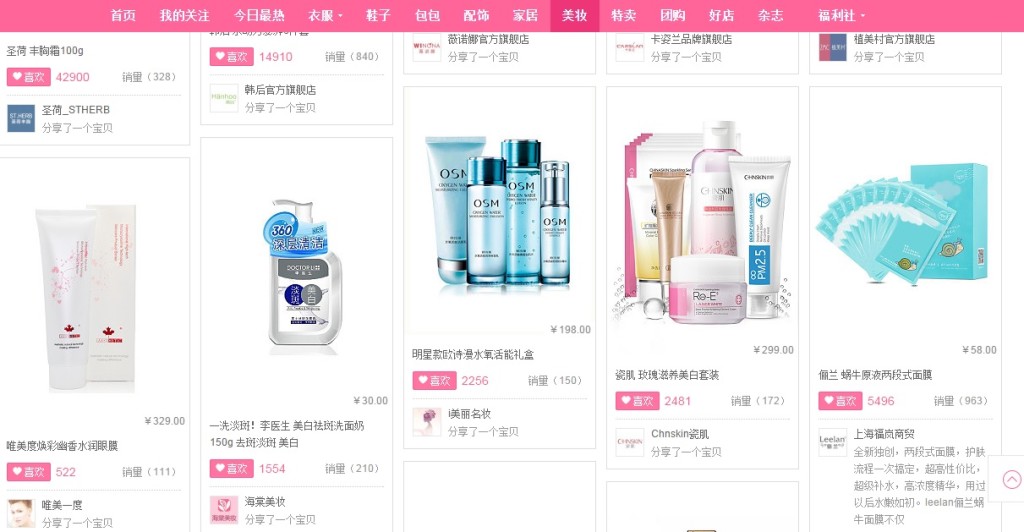
As you can see above, each products can be liked and shared, and just under the products’ pictures there are users comments, which will help to avoid “bad products”. Today Meilishuo register more than 32 million of users, mainly students or belonging to the White Collar socioprofessional category located in great cities like Beijing Shanghai or Guanghzou.
With a conversion rate much higher than on other e-commerce platform in the beauty products and fashion fields, it is the platform on which any cosmetics brand must be. Being a fashion and cosmetic specialized network, it therefore attracts a more qualified traffic to e-commerce sites.
So having a community manager team posting nice photos and user guides to encourage users to try the products can give very good results. A true Business to Community bound.
Weibo basically have a place in every industry sectors, yet we’ll talk about Weibo’s role in cosmetics, which will be reflected in this article. Why? Simply because in China, brands must provide high-quality multimedia content (highly mastered videos and high resolution photos, etc….). And this is where Weibo intervene. Indeed, this Chinese mix of Facebook and Twitter allows a brand to maintain contact with the entire community, as a cosmetic brand should. Regular publication of multimedia content, animated conversations will both enable a continuous improvement of your brand’s e-reputation in China, something that any brand selling cosmetic products should be aware of before starting trading in China.
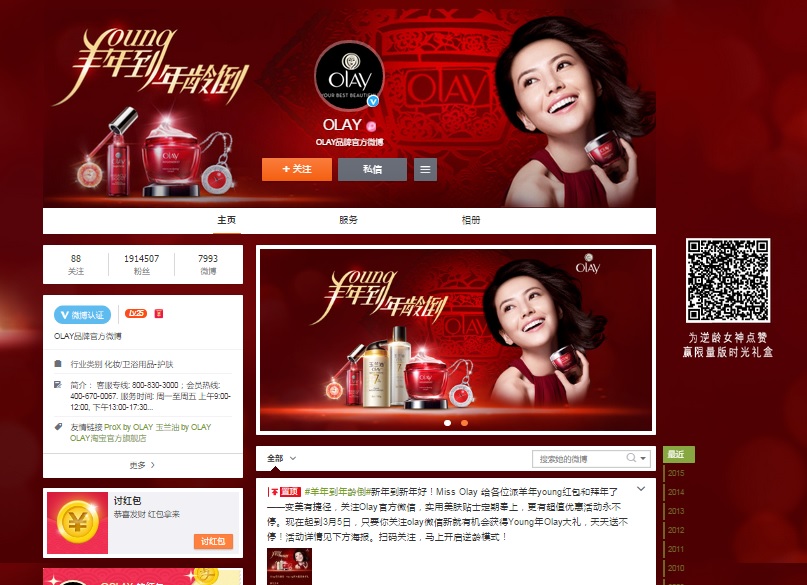
Here you have Olay’s Weibo account. You can easily see the community size, the posts number or the amount of accouts followed, unlike WeChat. Thus, Olay is followed by almost 2 million of people and posted nearly 8000 comments.
Some figures on Weibo :
- Over 500 millions users
- 56 million daily active users
- More than 100 million posts everyday
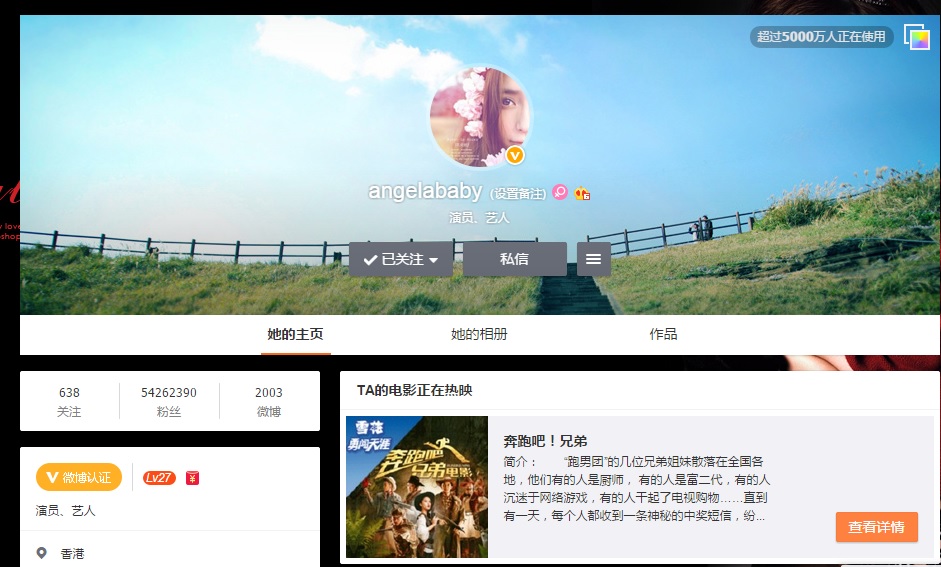
On Weibo, Key Opinion Leaders (KOLs) are very numerous and influential compared to what can be found in the West. KOLs are having communities with impressive sizes they can influence. Arrogate the services of these KOL allows to drastically improve your online reputation by taking advantage of the reputation of a KOL, expert in its field.
Ex: Angelababy, KOL who participated in reality shows in China.
Mogujie
Mogujie is a platform which have similar features to Meilishuo but is much more selective in the selection of brands settling on it.
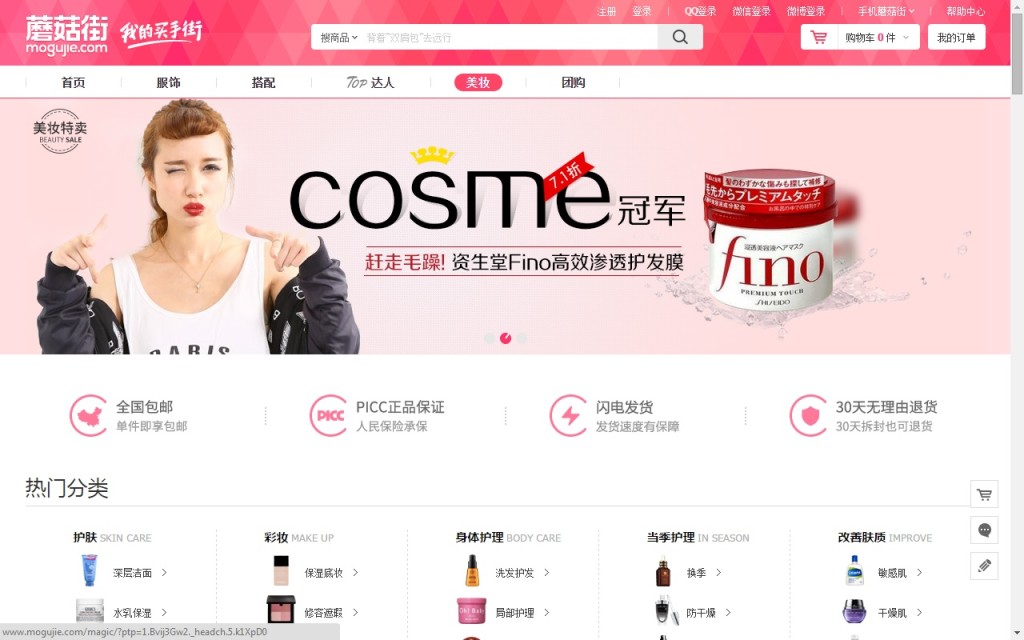
Mogujie is in direct competition with Meilishuo, except Meilishuo is responsible of 60% of Cosmetics purchases. However both of these apps are necessary to penetrate the Cosmetics market in China.
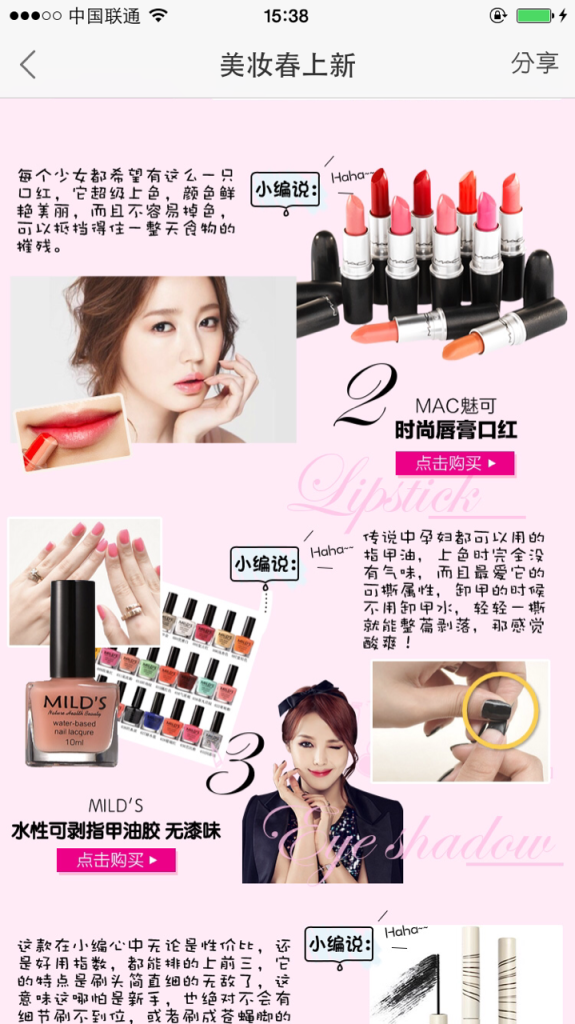
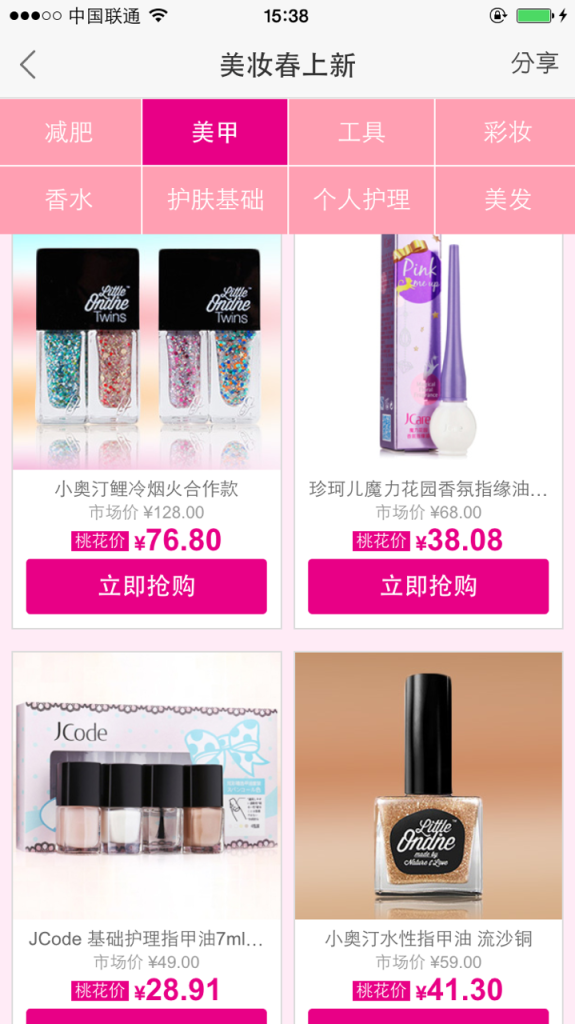
On Mogujie, users can also find advice on how to properly use their favorite products
Like Meilishuo, you can find a Pinterest like products featuring.
Case Study : Lancôme
The brand Lancôme launched its social media campaign after having established a Chinese translated website.
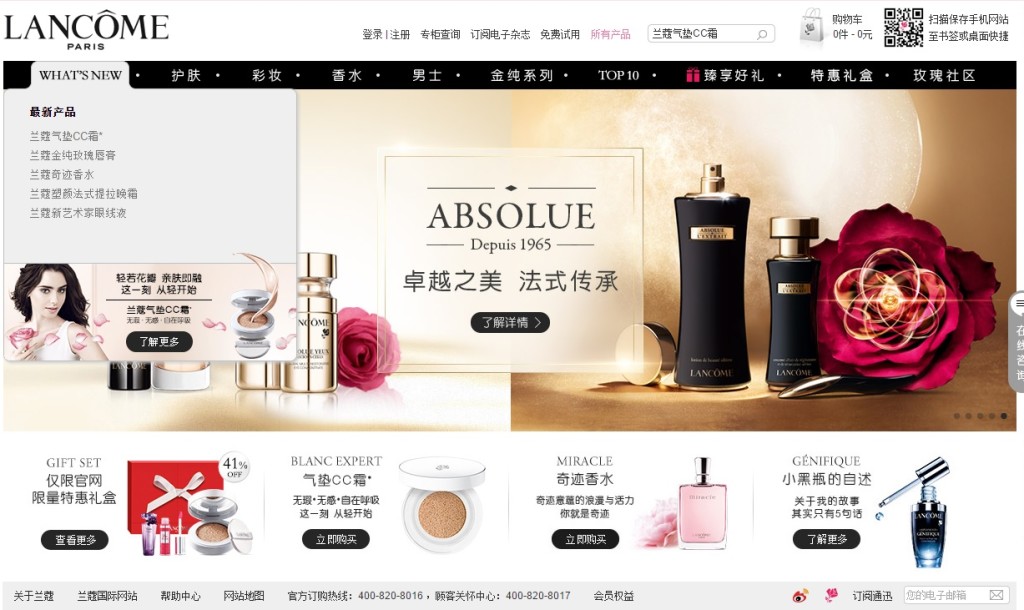
Once its website well stelled (hosted in China, as you can see by the .cn in its URL) and fitting the local standards, Lancôme finally started its campaign on Chinese social networks.
For Women’s day, Lancôme has launched a promotional campaign starting with a QR code on the top right corner of the screen. The QR code leads to a mobile version of the website focused on promotions and on easy purchases. Moreover, an easy to use tool has been installed to help Chinese women to find the best cosmetic products for their skin, according to their complexion, for example. Once their complexion found, advised foundation colours appear. If the user clicks on the foundation for further information, he will be able to find the corresponding Lancôme product with the price.
This strategy is still based here on the consumer education while showing the expertise of Lancôme which will teach consumers how to properly use their products. Thus, the business logic is set a little back to the benefit of an educational one. Users can then share it on social networks to show which products they use.
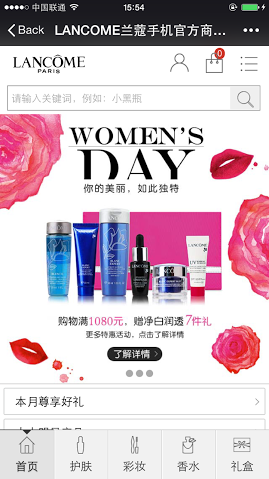
Promotion page for Women’s Day
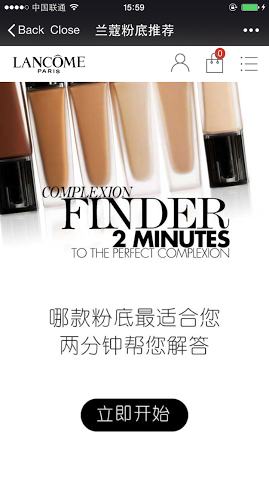
The tool used to quickly find which skin products to use.
Video Strategy
In addition to its social networking actions as an advertising strategy for the Women’s Day, the French brand has implemented a fairly aggressive video advertising strategy. Indeed, every video on Youku / Douban is interspersed with advertising time from 15 to 40 seconds depending on the length of the video. Knowing that Youku is the first video platform in the country, it is easy to imagine the impact that this kind of short advertisement can have.
For a more regular advertisement, Lancôme often posts videos like this one:
Regarding the kind of new products, this kind of content is then shared on other multimedia websites like Weibo.
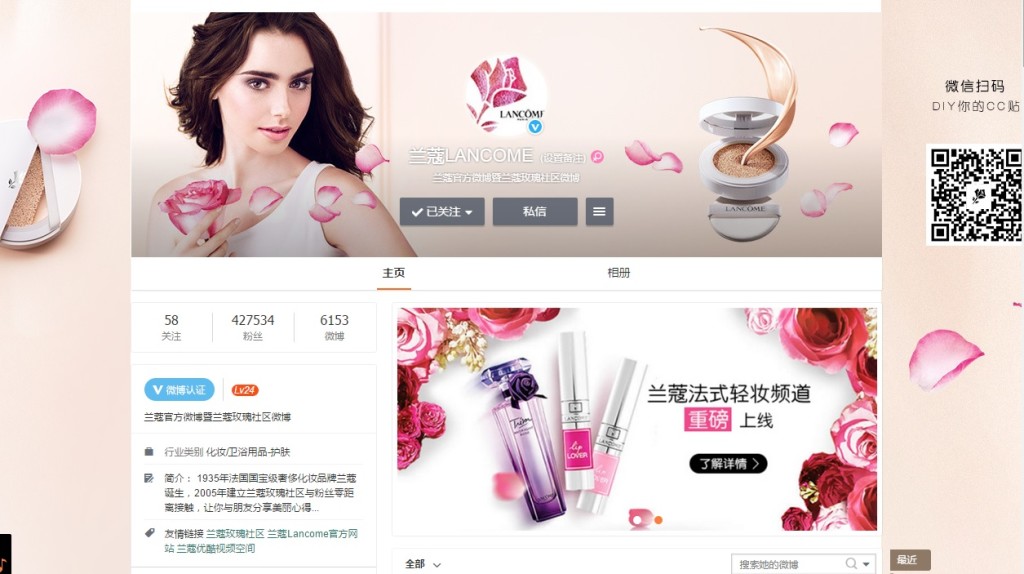
The account of Lancôme is very lively and has a very activity community as you can see by the almost 500,000 followers and 6153 messages. On the right we can see a QR code that leads directly to the online app WeChat giving access to other promotions only accessible via mobile.
This overview can really indicate you how much Social Medias are important to succeed in the Chinese Cosmetics sector.
Source: